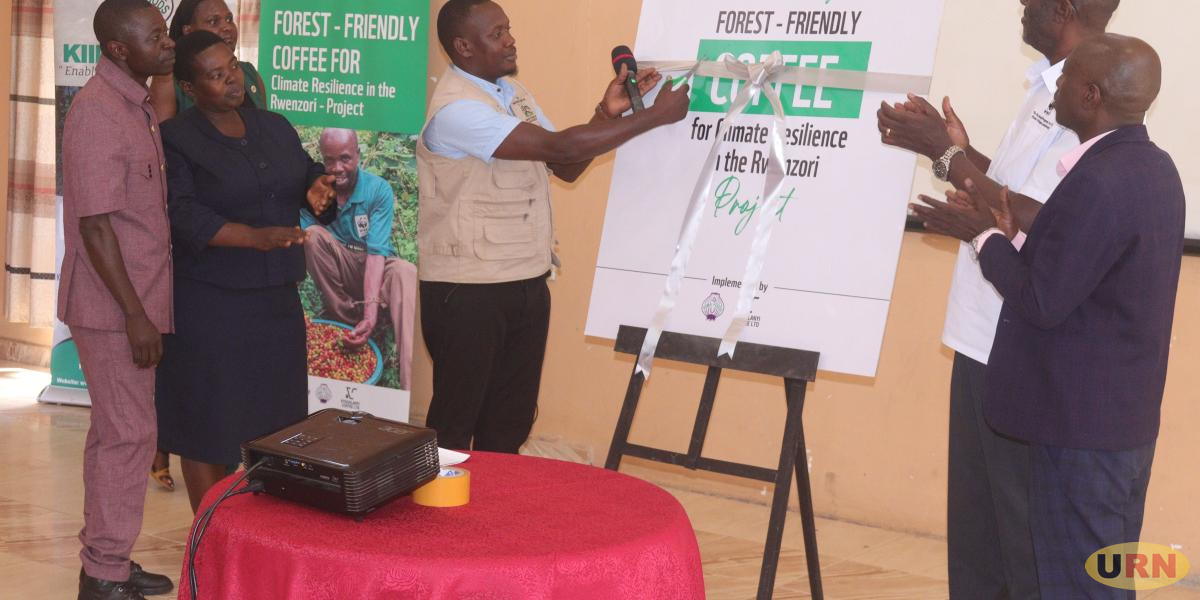
A new project in Kasese and Bunyangabu districts is targeting 2,500 coffee-growing households with climate-smart farming practices intended to improve coffee quality, raise household incomes and restore degraded landscapes in the Rwenzori region.
The Forest-Friendly Coffee for Climate Resilience in Rwenzori project is being implemented by Worldwide Fund for Nature-Uganda, Kima Foods and Kyagalanyi Coffee Limited with funding from Denmark’s Ministry of Foreign Affairs through the Danish Green Business Partnership. The project will run from 2026 to 2029 at a cost of 1.46 million US dollars, equivalent to about 5.3 billion shillings.
WWF project coordinator Harriet Kokugonza said poor agricultural practices have contributed to land degradation, declining biodiversity, low household incomes and food insecurity in the project area.

She said the project will help farmers adopt climate-smart practices while improving productivity and strengthening their ability to cope with climate-related shocks.
The project will establish demonstration farms and community nurseries, improve access to financing, and strengthen coffee traceability and quality systems.
It will also support landscape restoration and the management of ecosystems considered important for communities and agricultural production.
Janet Harriet of Kima Foods said the project is expected to improve the supply of quality coffee seedlings while helping farming households strengthen village savings and loan associations and diversify their sources of income.
She said community participation will be important in restoring and managing priority ecosystems.
WWF-Uganda Country Director Ivan Tumuhimbise said the project is intended to demonstrate that coffee production can provide greater economic benefits to farming households while supporting environmental conservation.
He said coffee should not only be viewed as a cash crop, but also as a source of improved household welfare when farmers increase productivity and adopt sustainable production practices.
Sandra Bry, the focal person for the Triple Benefits Project and the Forest Regeneration for Enhanced Carbon Absorption in the Albertine Rift under the Danish Embassy, said international coffee markets are imposing increasingly demanding quality standards.
She said the project will promote climate-smart coffee production while helping Ugandan coffee producers meet international market requirements. Kasese LCV representative Kisolhu Yonasani welcomed the intervention, saying it could strengthen the district’s coffee sector.
However, he raised concern about farmers harvesting immature coffee, which he said affects the quality of coffee and the prices farmers receive. He also commended government support for farmers through the provision of fertilisers.
Kasese Chief Administrative Officer Edward Kasagara said the project was important because it links agricultural production with environmental protection.He urged district leaders to support partnerships aimed at sustainable development and called on extension workers to maintain a consistent presence in communities.
Agriculture extension officer Alfred Basanga, who works in Kyarumba Sub-county, asked the partners to consider expanding the project to cover more households.
Community Development Officer Ali Moshi urged the implementing organisations to involve community development officers in the project, saying they could help mobilise communities and strengthen participation.
Charles Amooti Mugabi, the Regional Agricultural Officer for Kasese under the Coffee Department of the Ministry of Agriculture, Animal Industry and Fisheries, said the project would complement government efforts to reach farmers, particularly in areas where the ministry has limited staffing. He urged communities and other stakeholders to actively participate in the project to ensure that it delivers lasting benefits-URN. Give us feedback on this story through our email: kamwokyatimes@gmail.com