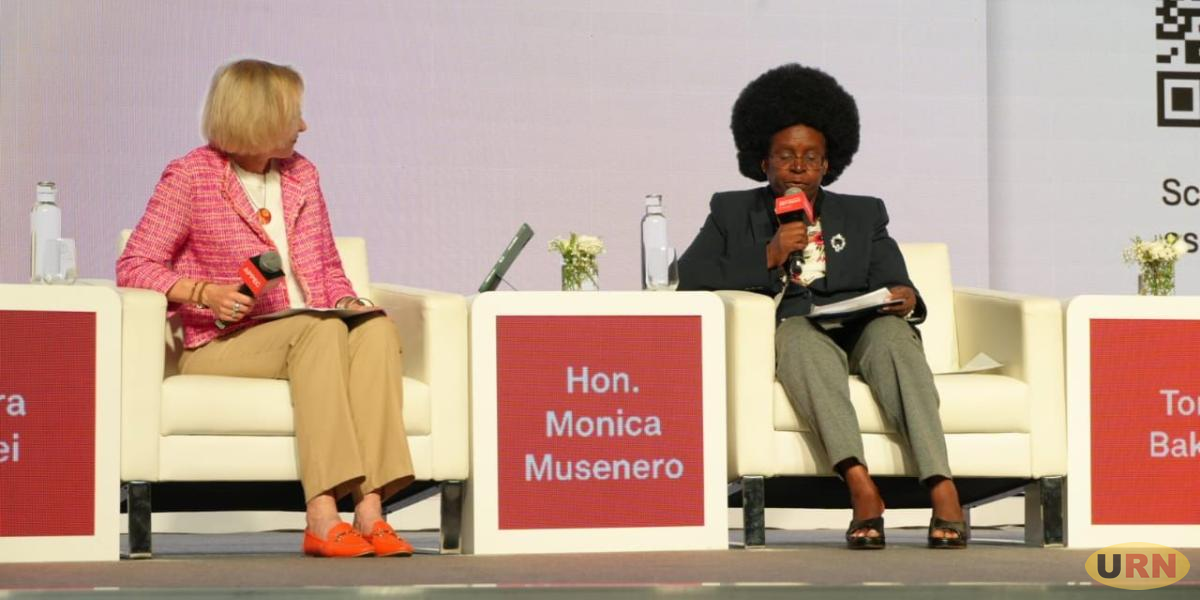

Uganda has formally introduced its crude oil, branded Pearl Sweet, to the global petroleum market at the Asia Pacific Petroleum Conference (APPEC) 2026 in Singapore, as the country moves closer to first oil production. The unveiling on Tuesday followed President Yoweri Kaguta Museveni’s naming of Uganda’s crude oil as Pearl Sweet during his recent visit to the Kingfisher Development Area.
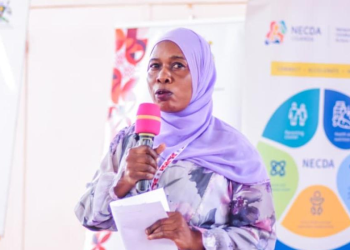
Minister of Energy and Mineral Development, Dr Monica Musenero Masanza, unveiled the crude before international refiners, traders, investors and other petroleum industry players attending the conference. “It is my great honour and privilege to be here at APPEC 2026 for this historic occasion: the unveiling of Uganda’s crude oil to the global market,” Musenero said.
The name Pearl Sweet combines Uganda’s identity as the “Pearl of Africa” with the crude’s low sulphur content of 0.12 per cent. Pearl Sweet is classified as a heavy, sweet crude with high wax content and low acidity. According to the ministry, these characteristics give refiners strong upgrading potential in secondary processing units, reduce corrosion and make the crude suitable for producing Very Low Sulphur Fuel Oil under the IMO 2020 standard.

“Pearl Sweet therefore offers refiners across Asia, the Middle East and Europe a reliable and competitive feedstock, with a strong balance of operational flexibility, product value and refinery economics,” Musenero said. The unveiling comes as Uganda prepares for first oil, effectively taking the country’s crude from its domestic naming ceremony to the international market and placing it before potential buyers, refiners and traders.
Uganda’s petroleum resource base is estimated at 6.5 billion barrels of oil in place, of which approximately 1.4 billion barrels are recoverable, alongside about 500 billion cubic feet of natural gas. The resources have so far been confirmed in less than 20 per cent of the Albertine Graben, leaving further potential for exploration and investment.
Uganda’s crude oil commercialisation plan includes upstream production capacity of approximately 230,000 barrels per day at peak, a planned 60,000-barrel-per-day refinery and crude oil exports through the East African Crude Oil Pipeline (EACOP). Since the Final Investment Decision for the Tilenga, Kingfisher and EACOP projects in February 2022, the government, investors, contractors and Ugandan professionals have been working to advance the developments towards production.
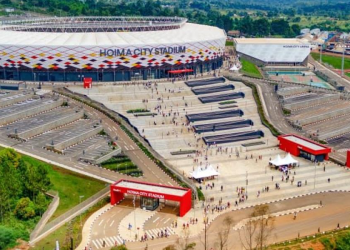
Together with the planned refinery and associated infrastructure, investments in Uganda’s oil and gas sector are estimated at $20 billion. EACOP will transport Uganda’s crude over 1,443 kilometres from Hoima to the marine export terminal at the Port of Tanga in Tanzania. Construction of the pipeline and export terminal has surpassed 90 per cent completion.
Uganda’s petroleum development programme also includes a planned 60,000-barrel-per-day refinery at Kabaale in Hoima District, a 211-kilometre multi-products pipeline and a petroleum products storage terminal. “The Government of Uganda is determined that our oil and gas sector must not operate as an enclave. It must be a catalyst for industrialisation, not simply an extractive activity,” Musenero said.
Beyond the current developments, exploration is continuing in the Moroto-Kadam, Lake Kyoga and Hoima basins, while preparations are underway for Uganda’s Third Petroleum Licensing Round. Musenero urged refiners, traders and investors attending APPEC to consider Pearl Sweet crude and explore investment opportunities in Uganda’s wider oil and gas sector. “I invite all of you to interest yourselves in Pearl Sweet crude, and in the other exciting opportunities in oil and gas in Uganda, the Pearl of Africa,” she said-URN. Give us feedback on this story through our email: kamwokyatimes@gmail.com