Kenya is increasingly turning to Uganda for milk supplies as a prolonged dry season continues to depress domestic production and push the country into a supply deficit. Kenya’s Cabinet Secretary for Trade, Lee Kinyanjui, on Saturday confirmed that the country was importing milk from neighbouring Uganda to bridge the shortfall.
“Locally, we are not able to meet our demand, so we are actually importing from our neighbouring countries like Uganda, and we believe that this is not where the country should be,” Kinyanjui said at an event in Nakuru. The development comes as Ugandan livestock farmers grapple with the effects of a prolonged dry spell, raising concerns that increased exports to Kenya could further tighten supplies for Ugandan consumers and dairy processors.
Kinyanjui’s remarks came a day after Jesa Farm Dairy, one of Uganda’s major dairy processors and exporters, reported what it described as a “temporary shortage” of milk caused by the prolonged dry period. The company said the dry conditions had affected dairy farming communities and resulted in reduced milk production.

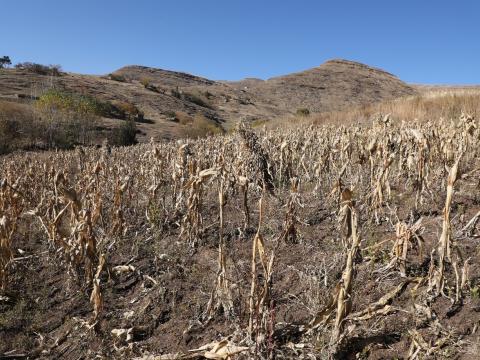
The Dairy Development Authority (DDA) says milk production in most parts of the cattle corridor normally falls by between 40 and 50 per cent during the dry season. The first dry season of the year, which began in some areas in May, has continued into September, an unusually prolonged period compared with the normal dry spell from June to early August.
DDA Managing Director Samson Akankiza Mpiira said nearly all dams in the cattle corridor had dried up, forcing farmers to move their animals long distances in search of water and pasture. “In some areas, farmers are having to walk their animals long distances in search of water and pasture,” Mpiira said.
In Kenya, the Kenya Dairy Board (KDB) reported that formal milk deliveries to processing plants fell by 3.7 per cent in July 2026, with the board expecting supplies to have declined further in August and September because of persistent dry and cold conditions. Much of the milk Kenya imports from Uganda is used for processing for both the domestic and export markets.
Uganda, which now has about 145 milk processing plants, has increased its annual milk production over the past decade to about 5.4 billion litres, roughly the same level as Kenya. However, Uganda’s lower domestic milk consumption—estimated at 64 litres per person annually, compared with about 120 litres in Kenya—leaves the country with a substantial surplus that can be exported.
Mpiira said the government was sensitising livestock farmers to adopt sustainable feed-management practices, including producing and storing fodder and hay to cushion them against prolonged dry seasons. He said the current situation was expected to ease as some areas had started receiving rainfall.
Kenya’s renewed reliance on Ugandan milk also marks a significant shift after years of trade restrictions that have limited Uganda’s access to the Kenyan market. Between 2023 and 2025, the Kenya Dairy Board repeatedly suspended import permits for Ugandan processed and powdered milk, forcing some major processors, including Brookside Uganda, to scale back operations and prompting Uganda to explore alternative export markets such as Nigeria and Algeria.
Even after some restrictions were lifted, Ugandan exporters continued to face delays in obtaining mandatory import permits and other trade-related barriers, including levies imposed on milk imports. The restrictions have often been viewed as seasonal, with Kenya tightening controls when domestic production rises, particularly during periods of good rainfall, and easing them when local supplies fall sharply.
The current situation highlights the interconnectedness of the dairy markets in the East African region, where changes in weather conditions and domestic production in one country can quickly affect supplies and prices in neighbouring markets. The wider region has also been affected by prolonged drought conditions, with Somalia, Ethiopia and Kenya among the countries hardest hit, according to the IGAD Climate Prediction and Applications Centre (ICPAC).
Some areas across the region have recorded severe livestock losses, with reports indicating that up to 80 per cent of animal populations have been wiped out in the worst-affected areas. Although Uganda has also been affected by dry spells, particularly across the Cattle Corridor, its livestock mortality rates have generally remained lower than those recorded in some neighbouring countries, partly due to relatively more reliable water tables and the availability of natural wetlands-URN. Give us feedback on this story through our email: kamwokyatimes@gmail.com