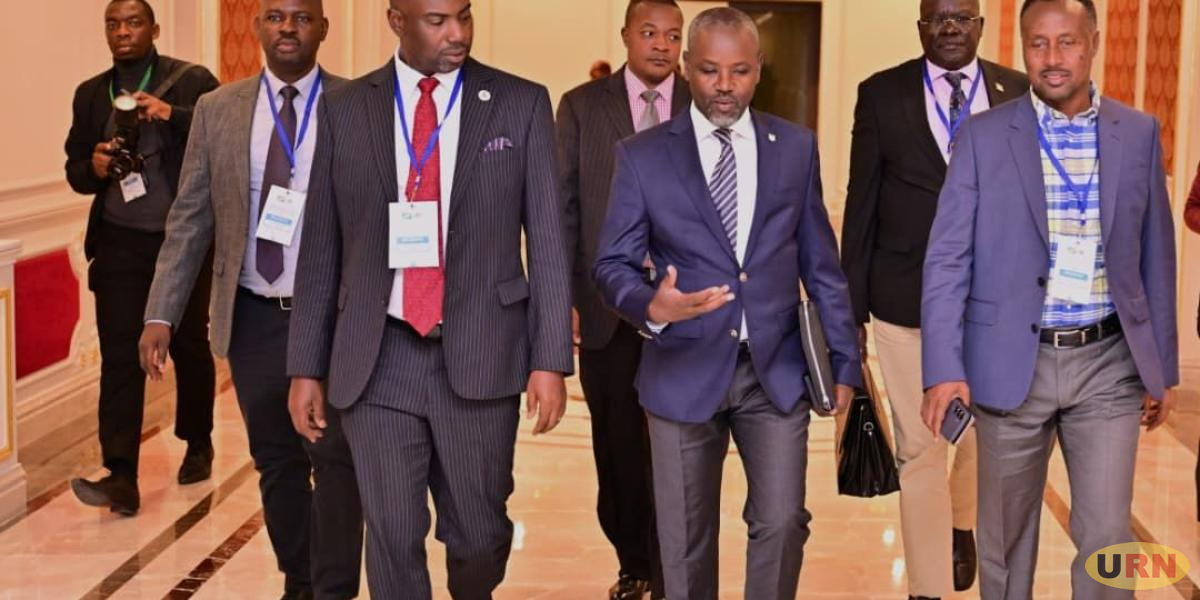
Calls for African legislators to unite against what was described as growing interference by the European Parliament in the domestic affairs of African states dominated discussions at a meeting of the Eastern Africa Regional Parliamentary Group under the Organization of African, Caribbean and Pacific States (OACPS) in Eswatini.
Speaking in the Ezulwini Valley on Friday, Uganda’s Deputy Speaker of Parliament, Thomas Tayebwa, said continued external political pressure risks undermining the principle of equal partnership between Africa and Europe. Tayebwa, who also serves as President of the OACPS and Co-President of the OACPS–EU Joint Parliamentary Assembly, criticized the European Parliament over what he termed “contradictory and intrusive” actions toward Uganda and other African countries.
He cited the European Parliament’s recent resolution questioning Uganda’s January general elections and its decision to summon Uganda’s ambassador despite earlier reports by European Union election observers acknowledging the polls as largely free and fair. According to Tayebwa, such actions conflict with the spirit of mutual respect and non-interference embedded in the Samoa Agreement, the framework governing political and economic cooperation between the European Union and OACPS member states.

“The relationship between Africa and Europe should be anchored on mutual respect, equality, and constructive engagement rather than punitive resolutions and political pressure,” Tayebwa told legislators. Tayebwa’s remarks revive a long-running debate over the extent to which Western governments and institutions should comment on governance, elections, human rights, and environmental policies in African states.
While European institutions argue that their positions are guided by commitments to democracy, rule of law, and human rights under international agreements, African leaders have increasingly accused Europe of applying double standards and using parliamentary resolutions to influence domestic policy decisions. The Deputy Speaker also referenced the European Parliament’s controversial 2022 resolution seeking to halt construction of the East African Crude Oil Pipeline (EACOP), saying it threatened the economic interests of Uganda and Tanzania.
The European Parliament had raised concerns over environmental degradation, climate change, and alleged human rights violations linked to the oil project. However, Uganda and Tanzania rejected the resolution, accusing Europe of attempting to frustrate Africa’s industrialisation while continuing to benefit from fossil fuel projects elsewhere. Tayebwa said the resolution was later challenged during an OACPS meeting in Maputo, Mozambique, where African representatives pushed back against what they viewed as unfair external interference.
“That experience demonstrated the importance of African countries standing together whenever their strategic interests are threatened,” he said. Political analysts say Tayebwa’s remarks reflect a broader shift among African governments seeking to assert greater geopolitical independence amid changing global power dynamics.
The call also comes at a time when several African states are strengthening South-South cooperation and demanding reforms in global governance institutions they believe disproportionately favour Western powers. However, governance and human rights advocates maintain that international scrutiny remains legitimate, especially where states are signatories to international treaties committing them to democratic standards and civil liberties.
Under the Samoa Agreement signed in 2023 to replace the Cotonou Agreement, both the European Union and OACPS states committed themselves to principles including human rights, democratic governance, sustainable development, and partnership based on equality and sovereignty. Uganda’s Constitution also emphasizes national sovereignty. Article One provides that all power belongs to the people, while Article 208 obliges state institutions to protect Uganda’s independence and territorial integrity.
Uganda has nevertheless continued to face criticism from Western governments and rights organisations over election conduct, restrictions on political opposition, media freedoms, and civic space. The tensions surrounding EACOP and election-related resolutions further reflect broader global competition over Africa’s resources, energy transition policies, and strategic alliances.
African leaders have increasingly argued that developed nations are pressuring the continent to abandon fossil fuel exploitation without providing adequate financing for industrialisation and alternative energy development. Uganda projects that its oil sector, including the EACOP project, could significantly boost government revenues, infrastructure development, and employment once commercial production begins-URN. Give us feedback on this story through our email: kamwokyatimes@gmail.com