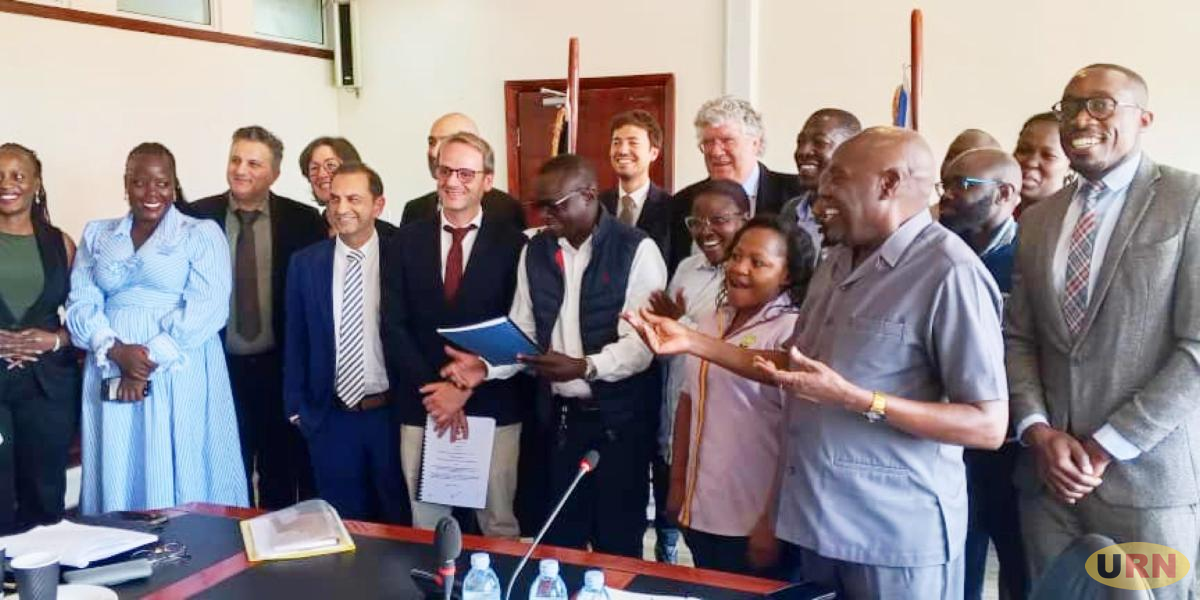
A fast-tracked feasibility study and Environmental and Social Impact Assessment (ESIA) for the proposed 400-megawatt Kiba Hydropower Project has officially been launched by the Government. Speaking during the flag-off meeting at Amber House in Kampala on Friday, officials from the Ministry of Energy and Mineral Development said the study will examine not only the project’s power generation potential but also critical environmental, geological, and transmission challenges linked to developing a hydropower project within the sensitive Murchison Falls National Park ecosystem.
Representing Permanent Secretary Eng. Irene Pauline Bateebe, Principal Energy Officer Eng. Emmanuel Nsubuga Sande said earlier studies conducted by the China Africa Investment Development Company provided useful baseline information, but did not sufficiently address key technical and environmental concerns required for government decision-making. “We were not entirely satisfied with the earlier proposal, and that is partly why we are undertaking this study,” Nsubuga said.
One of the major issues under consideration is whether the project should adopt a conventional surface powerhouse design or shift to an underground configuration similar to the Karuma Hydropower Project. According to Nsubuga, Uganda’s Hydropower Master Plan recommended an underground arrangement because the project area is relatively flat and prone to flooding, particularly within the protected national park landscape.

He cited the Karuma project, whose projected generation capacity reportedly increased from 250 megawatts to 660 megawatts after the powerhouse was redesigned underground. The study will also assess dam layout optimisation, hydrology, geology, seismic activity, biodiversity sensitivity, and the transmission infrastructure required to evacuate electricity from the remote project area without disrupting wildlife habitats.
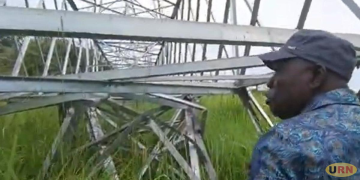
The government is also placing significant focus on transmission planning to ensure minimal environmental damage while maintaining reliability. Nsubuga warned against depending on a single evacuation line, referencing past transmission failures affecting the Karuma and Olwiyo substations.
“We do not want a situation where a power plant depends on only one transmission evacuation line,” he said. The Kiba project forms part of a wider hydropower development corridor that also includes the proposed Ayago and Oryang projects along the River Nile.
Energy Minister Dr. Ruth Nankabirwa Ssentamu said Uganda’s electricity demand is growing rapidly and cautioned that the country’s reserve margins are shrinking despite having an installed generation capacity of about 2,094 megawatts. According to the ministry, Uganda’s dependable firm capacity currently stands at approximately 1,450 megawatts against a peak demand of more than 1,337 megawatts recorded in February 2026.
The ministry projects electricity deficits of 146.9 megawatts by 2026/27 and 217.4 megawatts by 2027/28 if additional generation projects are delayed. Nankabirwa attributed the rising demand to expanding industrial activity, regional electricity exports, and new data centre investments whose projected power requirements exceed 887 megawatts.She warned that delayed investment in generation infrastructure could expose the country to costly thermal generation, power rationing, and export curtailments. “It is against this background that the government has prioritised Kiba under the National Development Plan IV and the NRM Manifesto,” she said.
State Minister for Energy Sidronius Okaasai Opolot urged consultants to explore technologies capable of generating more than the initially projected 400 megawatts. “I am pleased with the move from 380 to 600 megawatts. But I expect that we should go beyond 600 megawatts, nothing less,” Okaasai said.
Okaasai also stressed the need to protect tourism and biodiversity within the wider Murchison ecosystem, warning that energy development should not undermine one of Uganda’s key tourism destinations. “Tourism must continue even as we pursue energy development,” he said.
Italian engineering consultancy SERING Ingegneria Srl, together with Iranian dam engineering specialists from Avan Pajouh Consulting Engineers, is leading the assignment. The consultants said preliminary site visits and technical assessments had already been completed and that they were preparing an accelerated implementation plan to deliver results ahead of schedule.
Soleyman Emami, Principal Engineer of Hydraulic Structures at Aban Pazhouh Consulting Engineers Co., said the team understood both the ecological sensitivity and strategic importance of the project area. “We must maximise hydropower generation while fully respecting environmental constraints,” Emami said.
The government expects the study to be completed within 18 months and to provide a technically sound, environmentally sustainable, and financially viable roadmap for eventual development of the Kiba project and its associated evacuation infrastructure.
The Ministry of Energy has already initiated formation of a multi-sectoral Project Technical Committee involving agencies, including the Uganda Wildlife Authority, National Environment Management Authority, Uganda Electricity Generation Company Limited, and Uganda Electricity Transmission Company Limited.
The findings are also expected to guide future development of the Ayago and Oryang projects as Uganda works toward its target of generating 52,000 megawatts of electricity by 2040 and achieving universal electricity access by 2032-URN. Give us feedback on this story through our email: kamwokyatimes@gmail.com