The National Social Security Fund (NSSF) is dealing with a new land ownership dispute in Temangalo, Wakiso District, with Members of Parliament worried about how unresolved claims could affect workers’ savings and the Fund’s investments.
This comes after the family of the late Daniel Saku Mugwanya Kato asked Parliament to help arrange an out-of-court settlement with NSSF over 666.2 acres of land it says it owns, even though there is still a court case about the property.
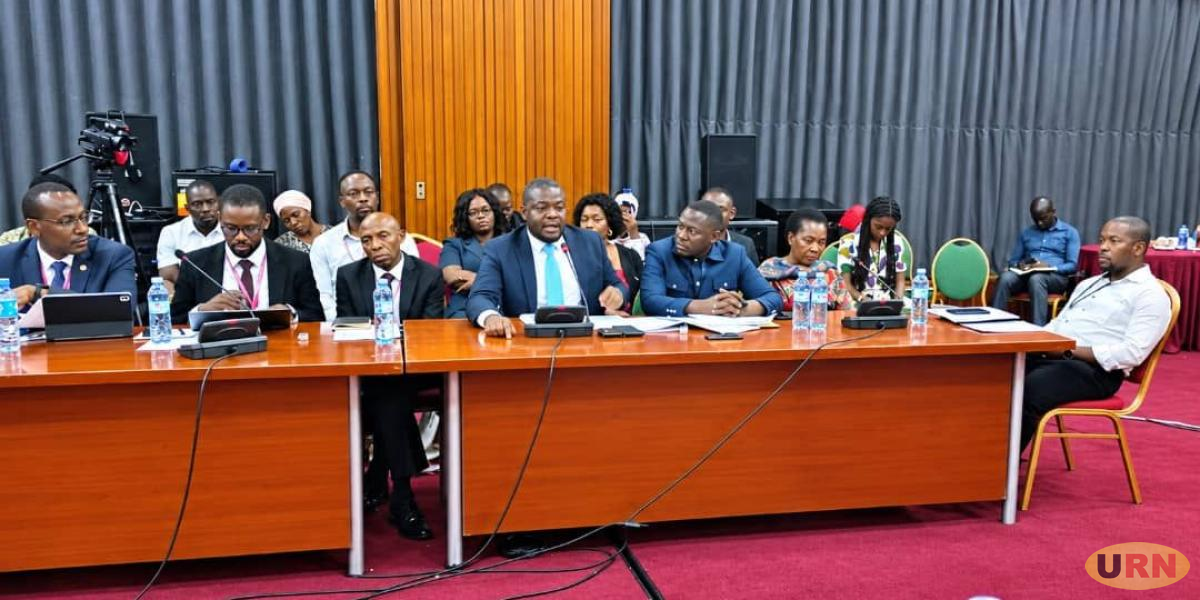
The family, comprising seven members, including the widow, Proscovia Namutebi Mugwanya, appeared before Parliament’s Committee on Commissions, Statutory Authorities and State Enterprises (COSASE), accompanied by their lawyer, David Lufunya of Lufunya Associated Advocates.

Lufunya told the committee that the family holds historical Mailo titles covering Plot 3 and Plot 4 on Block 296 at Temangalo, measuring 366.20 acres and 300 acres respectively. He said the titles are registered in the name of Daniel Saku Mugwanya Kato, who was registered on the land in 1944.
According to Lufunya, the late Mugwanya leased the land to Temangalo Tea Estate, with the lease eventually expiring. The family maintains that the reversionary interest in the land should have returned to the estate after the expiry of the lease.
The claim adds another layer to the long-running controversy surrounding ownership of land in Temangalo, an area that has previously been the subject of parliamentary inquiries, court proceedings and investigations.
NSSF’s involvement in the wider Temangalo controversy dates back to 2008, when the Fund purchased 463.87 acres of private Mailo land in six parcels from businessman Amos Nzeyi and Arma Limited for about Shs11 billion.
The transaction subsequently came under scrutiny over the ownership history, valuation and acquisition of the land.
NSSF later became embroiled in a separate dispute with Nzeyi over approximately 55 acres of the land. The Fund said Nzeyi had retained possession of part of the property under an arrangement that provided for alternative land.
The matter went to arbitration and, following years of negotiations and renewed mediation by COSASE, NSSF and Nzeyi reached an agreement in principle in August 2026 to resolve the dispute.
Under the proposed settlement, Nzeyi would transfer 10 acres of suitable alternative land to NSSF and purchase the remaining 45 acres at a value based on assessments by the Government Chief Valuer and a private valuer.
The settlement, however, did not resolve the Mugwanya family’s separate claim over 666.2 acres. It is this claim that has now brought NSSF back before COSASE, with the family asking MPs to facilitate a settlement similar to the one reached between NSSF and Nzeyi.
Lufunya said the family decided to approach Parliament after observing the committee facilitate settlements involving NSSF and other parties over Temangalo land.
Lufunya argued that Parliament could facilitate mediation without determining the ownership dispute before court. “Once we saw these settlements, if an understanding between NSSF and the family can be attained by this committee, that will not affect the sub judice rule,” he said.
The committee, however, expressed caution because the Mugwanya family’s case is already before the courts and has been fixed for hearing.
COSASE Chairperson Muwada Nkunyingi cited Parliament’s Rule 75 on sub judice, which restricts discussion of active civil or criminal proceedings where such discussion could prejudice their fair determination.
NSSF Executive Director Patrick Ayota also asked the committee to allow the judicial process to proceed. The dispute nevertheless raised broader concerns among MPs over competing Mailo titles and the potential risks to investments made using workers’ savings.
NSSF confirmed that it holds Mailo titles over land in Temangalo, while the Mugwanya family maintains that it also holds valid historical titles covering the same property.
Rubanda West MP Bruce Baraba Kabaasa said the existence of competing titles presents a serious ownership problem that Parliament cannot determine while the matter is before court.
The MPs said the issue was particularly important because NSSF is mandated to invest members’ savings and generate returns for workers.
They cautioned that prolonged disputes over land acquired using workers’ savings could expose the Fund to financial and investment risks, particularly if developments are undertaken on property whose ownership is subsequently challenged.
Other MPs suggested that Parliament’s Lands Committee could examine the wider problem of competing and potentially duplicate land titles without determining the specific ownership dispute before the judiciary.
The MPs also encouraged NSSF and the Mugwanya family to consider dialogue, saying an amicable settlement could prevent prolonged litigation and protect the value of the Fund’s investment.
Lufunya said the family’s immediate interest was compensation based on the current market value of the land.
He added that the family would be willing to allow NSSF to continue with its investment on the property if the Fund recognises the estate’s interest and reaches an appropriate compensation arrangement.
The lawyer said the family had previously raised its claim before the Justice Bamugemereire Commission of Inquiry into Land Matters and during the Eighth Parliament.
He expressed concern that NSSF continues to invest heavily in Temangalo while ownership claims over portions of the land remain unresolved.
“The investment at Temangalo is no mean investment. This is a big workers’ savings investment,” Lufunya said.
He questioned what would happen if the family eventually succeeded in court after NSSF has committed further resources to developments on the disputed property. The committee acknowledged that it cannot determine which of the competing titles is valid because that question is already before the judiciary-URN. Give us feedback on this story through our email: kamwokyatimes@gmail.com