By KT Reporter
The National Curriculum Development Centre (NCDC) has released a new guidebook aimed at helping teachers intentionally use games as a structured method of teaching, following years of declining play-based learning in Ugandan classrooms.
The guide comes at a time when many early-grade classrooms have shifted from guided play to rote memorisation, leaving young learners disengaged and teachers uncertain about how play fits into lesson objectives.

Joyce Nansubuga, a Curriculum Specialist in charge of Pedagogy and Innovation at NCDC, says play never completely disappeared from schools, but its purpose did. “Children still play during break time, but very few teachers plan games as learning tools linked to literacy, numeracy, or social skills. The guide seeks to close that gap,” Nansubuga said.
According to NCDC, the guide was developed after curriculum reviews and classroom observations revealed heavy reliance on repetition, note-copying, and drilling, even among children aged three to eight. This, officials say, undermined the development of creativity, problem-solving, and practical skills that are central to early learning.
The publication, titled Gamification: A Pedagogical Approach, clearly distinguishes between free play and instructional play. While free play allows children to explore without guidance, instructional play is structured around clear goals, rules, and reflection. NCDC notes that confusion between the two weakened learning outcomes, particularly in lower primary classes.
The book provides practical, step-by-step lesson examples. One section demonstrates how counting games can strengthen numeracy, while another illustrates how word games support phonics and early reading, both in technological and non-technological learning environments. Teachers are also guided on assessment, showing how learning can be observed and evaluated during play.
Nansubuga says the guide primarily targets pre-primary and lower primary teachers, equipping them with practical methods to support literacy, numeracy, social skills, and problem-solving through play. She adds that the approach aligns with Uganda’s competence-based curriculum, which emphasises learning by doing rather than memorisation.
//Cue in: “Reaching out to…
Cue out…time, teachers.”//
Nansubuga notes that learning through play demands careful planning, clear objectives, and reflection, urging teachers to broaden their teaching approaches to actively involve learners. She added that with the right support, teachers can move away from rote learning, cater for all categories of learners, and help children learn with purpose.
//Cue in: “The approach is…
Cue out: …in life.”//
Teacher educators have welcomed the guide, saying it addresses long-standing gaps in classroom practice. Joan Nuwagaba, a teacher trainer at Kibuli Teachers College, says many educators received limited preparation on how to use games effectively. As a result, some feared that games would waste time or lead to disorder.
“With tools like this handbook, teachers will better manage classrooms and understand how structured play actually enhances focus and discipline,” Nuwagaba said.
She adds that the approach encourages teachers to draw on everyday activities and familiar experiences, allowing learners to participate actively rather than passively memorise content. This, she says, helps children connect classroom concepts to real-life situations.
Martha Ishanut, a teacher and expert in alternative education, says equipping teachers with practical support enables them to move beyond the traditional talk-and-chalk approach. She notes that learner-centred methods foster curiosity, participation, and deeper understanding, especially for children who struggle with conventional teaching styles.
Ishanut adds that the guide arrives at a critical moment, as early learning assessments continue to show low literacy and numeracy levels in lower primary. Research, she says, consistently shows that well-planned play-based learning improves retention, confidence, and engagement.
At the classroom level, teachers say the shift is long overdue. Irene Nakato, a teacher at Kayiwa International School in Buloba, says many educators still rely on low-interaction methods. She believes gamification will turn lessons into lively, interactive sessions that encourage participation and creativity.
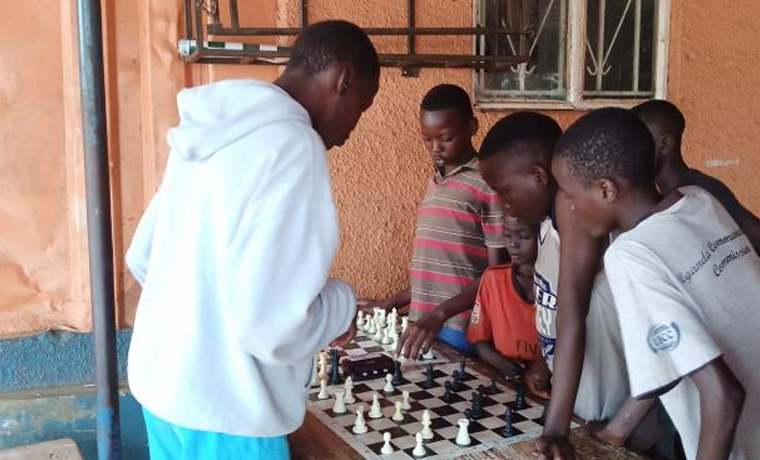
Beyond the classroom, the renewed focus on play has also revived interest in indigenous games. Once viewed purely as recreation, these traditional games are increasingly recognised for their educational value.
In previous interviews, Professor Proscovia Namubiru, Acting Deputy Vice Chancellor for Academics at the Uganda National Institute of Teacher Education (UNITE), said her research shows traditional games build critical skills such as communication, numeracy, problem-solving, conflict resolution, and teamwork. She emphasised that these life skills are essential not only for academic success, but also for preparing learners to thrive in society and the workplace.
-URN. Give us feedback on this story through our email: kamwokyatimes@gmail.com