By KT Reporter
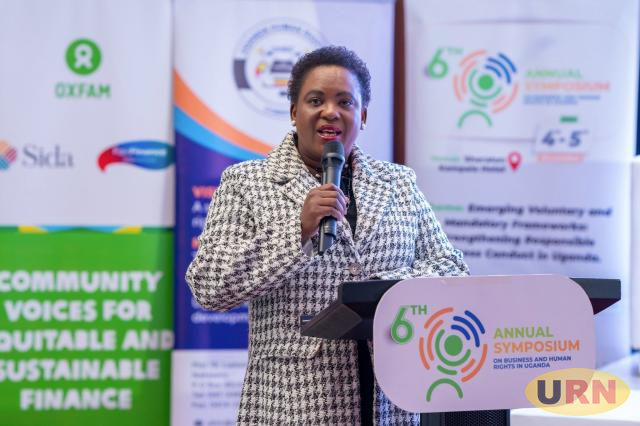
The Minister of Gender, Labour, and Social Development, Betty Amongi, has highlighted the government’s success in tackling youth unemployment through a strategic, dual-pronged apprenticeship model.
Speaking on the outcomes of recent pilot initiatives during the International Labour Day celebrations in Buikwe district, the Minister said that the program is effectively bridging the divide between academic theory and the practical requirements of the modern workforce.

Amongi said the apprenticeship program is a basis of the government’s job creation strategy. The program is structured into two distinct components (Work Placement Initiative and Graduate Volunteer Scheme (GVS) to address different segments of the labor market.
Under the Work Placement Initiative, the government facilitates the placement of applicants within established firms to gain hands-on experience, while in the Graduate Volunteer Scheme (GVS), the Ministry provides an upkeep stipend to volunteers, removing the financial burden from host organizations.
“The goal is for them to gain the necessary experience, so they can start their own businesses or expand existing ones,” Amongi explained.
The Minister revealed that the pilot phase of the GVS has seen 71.73 percent of volunteers hired permanently by their host companies.
Following the Cabinet’s approval of the Uganda National Apprenticeship Framework (UNAF) in 2018, the Ministry has recruited and supported 934 apprentices and 242 graduate volunteers with funding from the Government of Uganda and development partners, including the UNDP, ILO, CSC Koblenz, and Enabel, among others.
According to Amongi, the government is now moving to decentralize these professional opportunities. “Because of these results, we are now expanding the scheme to districts, cities, and municipalities across the country,” Amongi noted.
The Apprenticeship Program represents a shift toward a model that emphasizes subsidized entry into the workforce. This will see graduates placed within district administrations and municipal offices.
Under this program, the government takes 30 percent of students with certificates and diploma qualifications, 60 percent bachelor’s degree holders, and 10 percent postgraduate students. All the categories must be graduates within four years after completion of the course.
According to the program, all courses, especially science-related, are considered depending on the available slots advertised.
The youth unemployment rate in Uganda has recently increased to 17.9% – 18% for those aged 15 to 24, according to the Uganda Bureau of Statistics (UBOS) 2025 Labour Market Survey Report. This represents a significant portion of the working-age population struggling to find formal work.
-URN. Give us feedback on this story through our email: kamwokyatimes@gmail.com