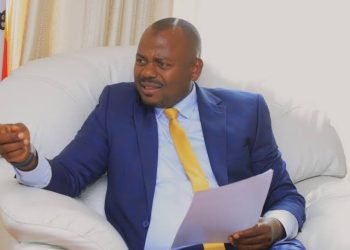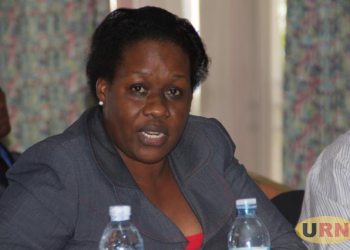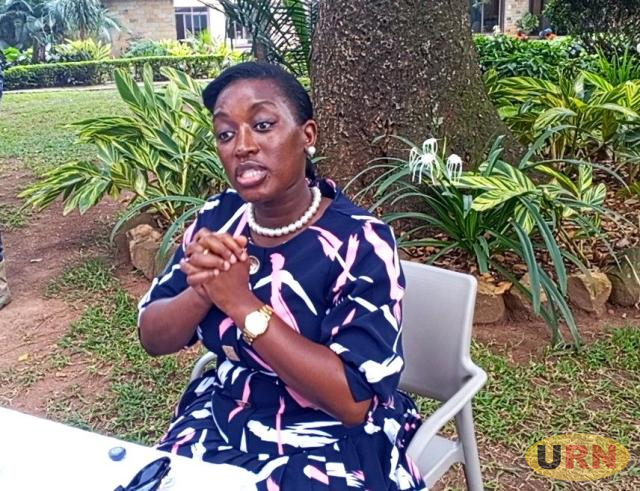
The state minister for Local Government, Justine Nameere, has defended her current approach of publicly confronting and filming officials during anti-corruption investigations, insisting the operations are backed by credible evidence and do not “violate” any law.
In an interview with Uganda Radio Network on Friday during her visit to the Acholi Sub-region, Nameere said the ongoing crackdown on alleged corruption is based on verified intelligence and professional investigations. Nameere dismissed criticism that public exposure of suspects amounts to trial by media.
Nameere, who also serves as the Masaka City Woman Member of Parliament, has in recent weeks been leading anti-corruption inspection tours across the country alongside the Minister of Local Government, Balaam Barugahara. Their visits have seen several public officials questioned on camera over alleged misuse of public funds, shoddy government projects, and payroll irregularities. Defending the operations, Nameere said every inspection is preceded by extensive investigations conducted by technical experts and security agencies.

According to Nameere, the investigations rely on information gathered from whistleblowers and verified by engineers, officials from the State House Anti-Corruption Unit, the Chieftaincy of Military Intelligence (CMI), and other security teams. She argued that the arrests directed during the recent inspections are supported by complete case files ready for prosecution.
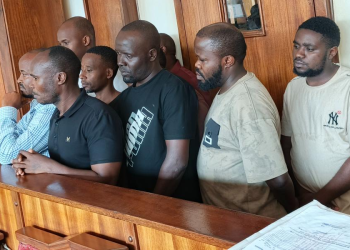
“All the files are ready. Some suspects have already appeared in court, others are being arraigned. A State Attorney cannot sanction a file without sufficient evidence because they know they will have to defend it in court,” she said. Nameere noted that in some cases, suspects have admitted wrongdoing during inspections.
In Gulu district particularly, she referred to an incident where a clinical officer at a government health facility allegedly admitted that his professional certificate was being used by another individual employed at Reproductive Health Uganda. Nameere also defended the government’s decision to publicly record and broadcast the inspections, arguing that “no law” prohibits exposing individuals suspected of corruption.
Beyond prosecution, Nameere said the government’s new anti-corruption campaign aims to ensure that stalled or fraudulent public projects are completed even before court cases conclude. “If money meant for a road was stolen, we shall arrest the culprit but also return to the community and complete the road. If it is a bridge or maternity ward, we shall ensure it is completed so that the people do not continue suffering while court processes go on,” she said.
The government’s high-profile anti-corruption inspections have generated mixed reactions, with supporters praising the approach to tackling graft, while critics argue that publicly confronting suspects before they are convicted risks undermining the constitutional presumption of innocence. However, Kelly Komakech, a lawyer in Gulu City, criticized the ministers’ approach, arguing that publicly exposing suspects before the completion of formal investigations is contrary to established legal procedures.
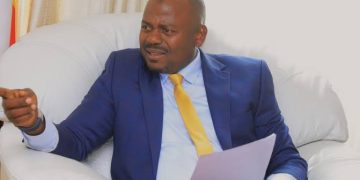
Komakech said while fighting corruption is important, investigations and enforcement should be undertaken by legally mandated institutions following due process rather than through public confrontations. “Legally, it is not right. There are bodies that are tasked with carrying out investigations, and there are laws that clearly outline how those investigations should be conducted,” Komakech told Uganda Radio Network in an interview over the weekend.
According to Komakech, the ministers are exceeding their mandate by publicly directing arrests and interdictions of officials based on allegations that are yet to be independently investigated. “Whatever they are doing is illegal because they do not have the powers to execute anybody or direct arrests. I even saw permanent secretaries being directed to interdict officers based merely on suspicions. If we interdict everyone based on suspicion, who will be safe?” he said.
Uganda’s Constitution doesn’t expressly prohibit the public exposure of suspects before they are arraigned in court. However, Article 28(3)(a) of the 1995 Constitution guarantees every person charged with a criminal offence the right to be presumed innocent until proven guilty. Article 28(1) further provides that every person is entitled to a fair, speedy and public hearing before an independent and impartial court-URN. Give us feedback on this story through our email: kamwokyatimes@gmail.com