Local brewers in Moroto District have asked the government to exempt traditional drinks such as malwa and kwete from a new directive restricting alcohol sales before 3:00 pm on working days, saying the measure threatens their livelihoods and interferes with a long-standing cultural practice.
The appeal follows a directive issued last week by Minister for Local Government Balaam Barugahara requiring bars, malwa joints and other alcohol-selling points to remain closed until 3:00 pm on regular working days. The directive also targets vendors who sell alcohol to minors and restricts the operating hours of betting shops. Businesses that violate the measures risk closure and legal action.
However, women who depend on brewing and selling local drinks say the restrictions could leave them with unsold products and wipe out their main source of income. Mary Gorreti Longora, a local brewer in Nadunget Sub-county, said the government should distinguish between commercial alcohol such as beer and waragi and traditional brews such as malwa and kwete.

“We brew in large quantities knowing that customers will take it the whole day. If we start at 3:00 pm, customers will not finish it because time is limited. At the end we just have to pour it, and that’s a loss,” Longora said.
Longora said local brew contains no preservatives and cannot be stored overnight without going bad. She added that kwete is also consumed by some residents as breakfast before they leave for casual work. Longora appealed to the government to allow local brewers to begin selling from 10:00 am, saying most of them already close their businesses early in the evening.
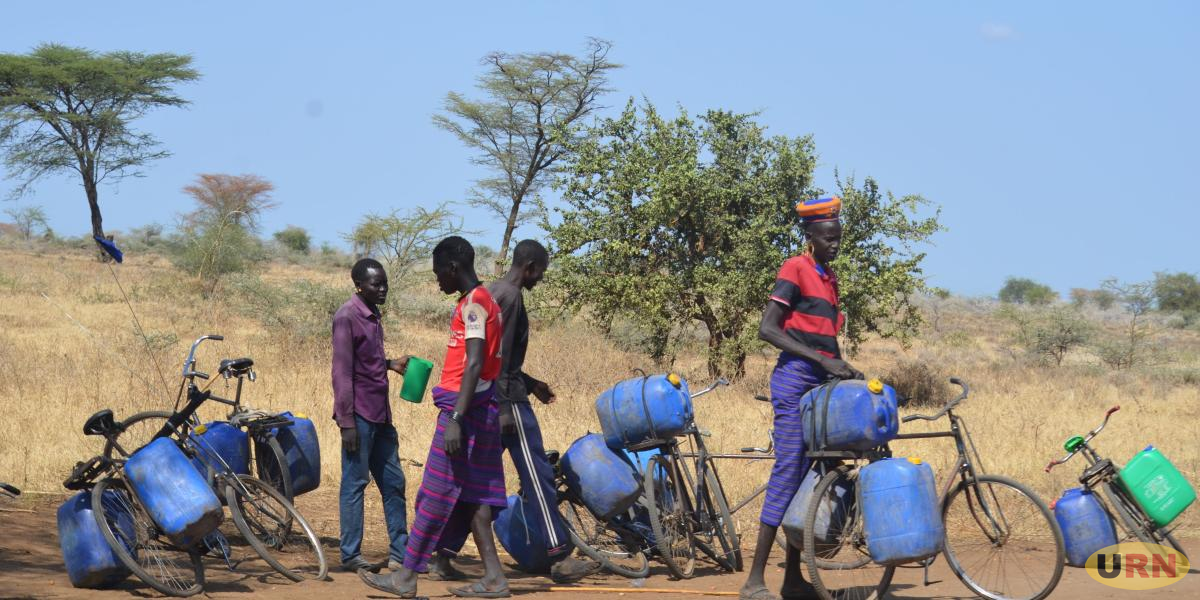
“It is very hard for us to sell local brew late at night. Our time usually stops at 8:00 pm,” she said. Sarah Napeyok, a brewer from Kakoliye Ward, said the regulation could severely affect her business, which produces up to 20 jerrycans of kwete a day. Napeyok said village wholesalers normally arrive as early as 7:00 am to buy the brew.
“I wake up at 4:00 am to brew. By 7:00 am, my customers are already at my door with jerrycans,” Napeyok said. “With this regulation, I’m worried the business will not be the same. If it sleeps, it can’t be used the next day.” She appealed to the government to allow local brewers to sell kwete earlier, saying the business supports their families.
The call for an exemption is also being supported by community leaders who argue that local brew plays a broader economic and cultural role in Karamoja. Emmanuel Koyel, an elder in Nakapelimen Ward, Moroto Municipality, said that while the government’s effort to regulate alcohol consumption was welcome, the region required a different approach.
“Alcohol is the biggest source of income for households here. After selling, people buy food and pay school fees,” Koyel said. Koyel said kwete is also regarded by many residents as food and is carried to gardens by workers as an energy boost. He urged the government to exempt Karamoja from the restriction, saying many households have few alternative sources of income.
Mark Angella, the LC1 Chairperson of Lolain Village in Nadunget Sub-county, said enforcing the directive in rural communities could prove difficult because morning consumption of local brew is deeply rooted in the area’s culture. “In the markets, local brew makes the highest percentage. In Nadunget cattle market, dealers make jerrycans of brew and make a lot of money for their families,” Angella said.
He said although similar restrictions may work in neighbouring Kenya, communities in Karamoja would need time to adjust to the new regulations.
The directive is also affecting businesses that depend on customers crossing into Uganda from Kenya. Richard Okello, a bar operator in Moroto Town, said his business relied partly on customers from Turkana and Pokot who cross into Uganda to buy beer.
“They come in groups of 4 to 6 as early as 12:00 pm and take crates of beer until evening before going back to Kenya. We call it the ‘Kenyan style’,” Okello said. He said the new restrictions had already affected his business. “Since the news about the regulations broke, all my Kenyan customers have withdrawn. This thing is already biting me,” he added. Local brewers and community leaders are now calling for the government to review the directive and consider earlier operating hours for traditional brews.
They argue that applying the same restrictions to commercial alcohol and locally produced drinks could deepen economic hardship in Karamoja, where many households already face limited income opportunities and food insecurity-URN. Give us feedback on this story through our email: kamwokyatimes@gmail.com