By KT Reporter
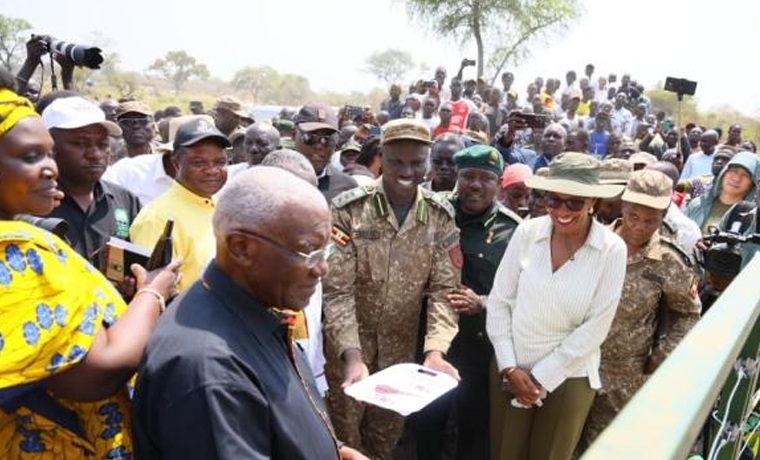
The return of white rhinos to Ajai Wildlife Reserve has sparked celebration in Madi Okollo District, but local leaders warn that poor road infrastructure could limit tourism and investment benefits from the milestone. The concerns were raised on Monday, January 12, 2026, during the official launch of the rhino restoration programme, following the successful translocation of four out of the planned 20 rhinos to Ajai Wildlife Reserve by the Uganda Wildlife Authority (UWA).
Ajai Wildlife Reserve, once a thriving habitat for northern white rhinos, lost the subspecies to poaching and insecurity in the late 1970s, rendering it locally extinct for more than four decades. Leaders say the return of the animals restores not only ecological balance but also cultural heritage.

Madi Okollo, LC5 Chairperson, Ismail Drabe Adirisi, said the district’s road network is in poor condition, making access to the reserve difficult for tourists and investors. He stressed that temporary repairs are insufficient and called for proper tarmacking to enable the district to fully benefit from the rhino restoration.
Meanwhile, Ronald Afidra Olema appealed to the government to honor its pledge to tarmac the proposed Wanseko–Panyimur–Pakwach–Rhino Camp–Obongi security road, which he said would significantly boost tourism access to Ajai Wildlife Reserve.
Woman MP Joanne Aniku Okia described the rhino restoration as a major milestone for tourism development, not only in Madi Okollo but across the entire West Nile sub-region.
Minister of Tourism, Wildlife and Antiquities, Hon. Col. (Rtd) Tom R. Butime, assured leaders that the government remains committed to improving road infrastructure in the district, noting that the rhino restoration is intended to stimulate tourism growth in West Nile.
Ajai Wildlife Reserve is named after Chief Ajai, a local leader who in the 1930s declared the area a game sanctuary to protect wildlife. It was officially established in 1962 as the White Rhino Sanctuary and later expanded in 1965 into Ajai Game Reserve. At its peak, the reserve hosted up to 60 rhinos before the population disappeared by the early 1980s. The current translocation programme is part of a national effort to restore rhinos to their former habitats and enhance Uganda’s tourism potential.
-URN. Give us feedback on this story through our email: kamwokyatimes@gmail.com