The Uganda shilling has recovered strongly against the US dollar after weeks of depreciation, with the Bank of Uganda expressing confidence that the local currency will stabilize over the coming financial year as commercial oil production, robust coffee exports and rising foreign investment boost foreign exchange earnings.
The shilling strengthened to trade at 3,676.5/3,686.5 to the dollar on Wednesday, a sharp improvement from nearly 3,780 three weeks ago when traders feared the currency would breach the 3,800 mark.Official Bank of Uganda figures show the local currency briefly appreciated to about 3,646 against the dollar earlier this week before giving up some gains amid renewed demand for foreign currency.
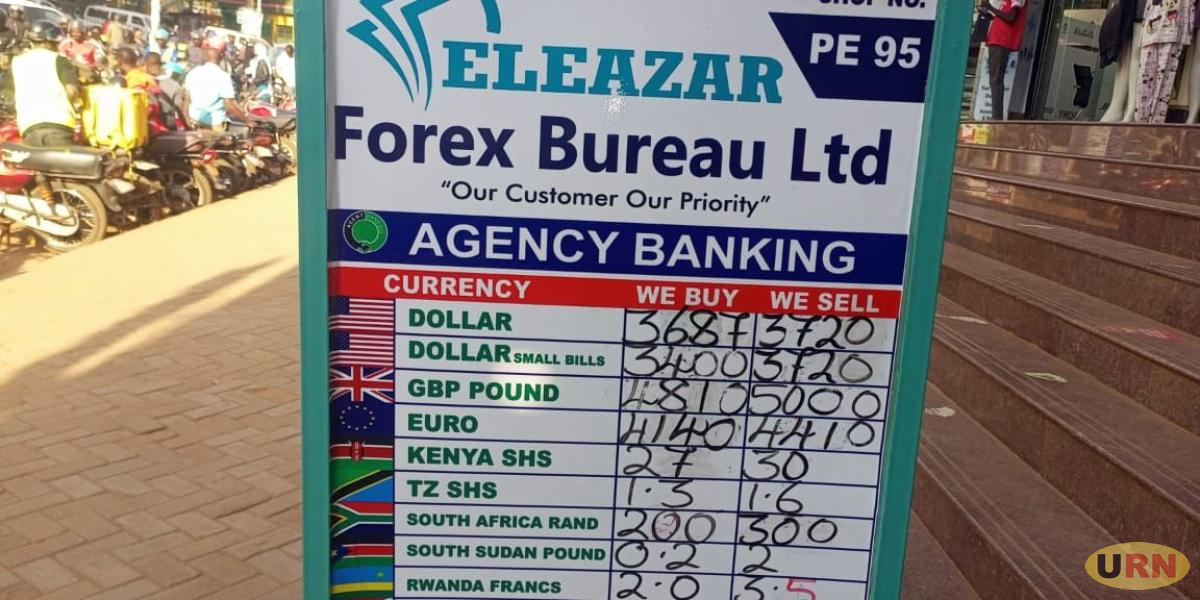
Despite the recovery, foreign exchange bureaus continued quoting significantly higher rates on Thursday, selling the dollar at 3,720 shillings or more, reflecting persistent demand in the retail market.

The shilling had come under sustained pressure earlier this year as the US dollar strengthened globally and geopolitical tensions in the Middle East drove up oil prices, freight charges and demand for foreign currency by importers.
According to the Ministry of Finance, the currency depreciated by nearly three percent in April compared to the previous quarter as manufacturers and energy companies increased demand for dollars to finance higher fuel imports and shipping costs.
The situation worsened following the outbreak of conflict in the Middle East, with uncertainty over oil supplies triggering volatility in global energy markets. However, easing tensions and improving foreign exchange inflows have helped reverse some of those losses.
Bank of Uganda Governor Michael Atingi-Ego says the central bank expects the shilling to strengthen further over the medium term as Uganda prepares to begin commercial oil production.”The shilling could appreciate on the back of a significant and anticipated boost to foreign exchange inflows. Commercial oil production is expected to materialise in July 2026, with key infrastructure nearing completion.”According to the Governor, the country’s oil production infrastructure is now more than 95 percent complete, while additional foreign exchange is expected from mining investments and increased tourism ahead of Uganda’s preparations to co-host the 2027 Africa Cup of Nations (AFCON).”
Beyond oil, sustained foreign direct investment into the mining sector and growing tourism services credits linked to AFCON preparations are expected to provide additional dollar inflows,” he said.
Coffee exports are also expected to continue supporting the shilling. Uganda remains Africa’s largest coffee exporter and one of the world’s top ten producers. Bank of Uganda data shows coffee export earnings reached 2.4 billion dollars in the twelve months to mid-2026 despite a recent moderation in global prices as production recovered in Brazil and Vietnam.
Analysts, however, caution that the shilling remains vulnerable to global developments. Richard Nsubuga, Acting Head of Trading at Absa Bank Uganda, said renewed corporate demand for dollars and reduced inflows had contributed to the currency’s slight weakening over recent days.
“The Uganda shilling continued to trade under pressure, primarily driven by sustained corporate demand amid weaker dollar inflows. Additionally, offshore investor appetite for foreign currency remained elevated amid global dollar strength.”Global developments are also expected to influence the exchange rate in the coming weeks. Oil prices have retreated following diplomatic efforts to ease tensions involving Iran, with benchmark Brent crude falling below pre-conflict levels as shipping through the Strait of Hormuz gradually resumed.
Lower global oil prices could eventually reduce Uganda’s import bill and ease pressure on the demand for dollars, although analysts say it may take time before the benefits are reflected in domestic fuel prices and the wider economy-URN. Give us feedback on this story through our email: kamwokyatimes@gmail.com