By KT Reporter
The government has proposed a fine of 110 million Shillings for casinos, sports betting, and gaming companies that fail to integrate with the centralized payment system managed by the Bank of Uganda.
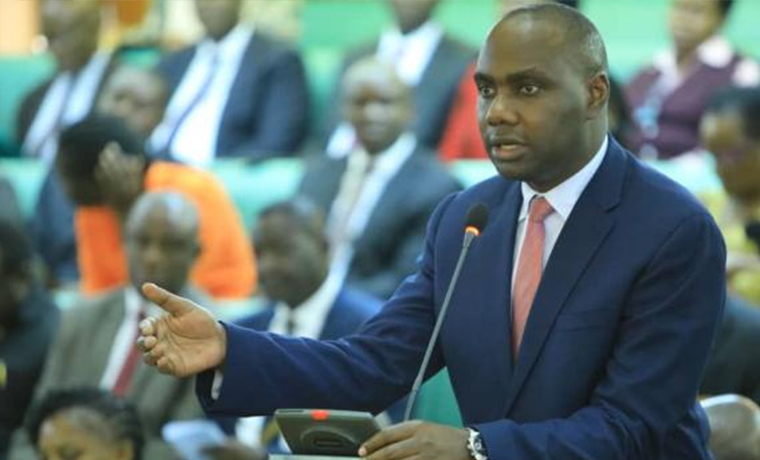
This proposal is embedded in the Tax Procedures Code (Amendment) Bill, 2025, which was presented before Parliament by Henry Musasizi, the State Minister for Finance. According to the proposal, the Bank of Uganda will be granted authority to oversee the centralized payment system for wins and stakes within the betting and casino sectors.

Minister Musasizi emphasized that any operator who does not comply with this system will face severe financial penalties. “An operator of a casino, gaming, or betting activity who does not use or is not integrated with the gaming and betting centralized payments gateway system is liable to pay a penal tax equivalent to double the gaming or withholding tax due or five thousand five hundred currency points, whichever is higher,” Musasizi stated.
The Ministry of Finance has also tabled three additional tax bills alongside the Tax Procedures Code (Amendment) Bill, 2025. These include the Income Tax Bill, 2025, the Hides and Skins (Export Duty) (Amendment) Bill, 2025, and the Value Added Tax (Amendment) Bill, 2025. Among the key proposals is the introduction of the National Identification Number (NIN) issued by the National Identification and Registration Authority (NIRA) as a Tax Identification Number (TIN).
This move aims to streamline tax compliance and enforcement. Additionally, the government seeks to extend the tax exemption for Bujagali Electricity Limited until 2032. This extension is part of broader fiscal policy adjustments aimed at maintaining energy sector stability.
To provide tax relief, the government has introduced a provision under Clause 47B of the Tax Procedures Code Act to waive interest and penalties on tax payments under specific conditions. The proposal states: “Any interest and penalty outstanding as of 30th June 2024 shall be waived where the taxpayer pays the principal tax by 30th June 2026. Where the taxpayer pays part of the principal tax outstanding as of 30th June 2024 by 30th June 2026, the payment of interest and penalty shall be waived on a pro-rata basis.”
The proposed amendments also aim to tighten rules around tax exemptions. Taxpayers who fail to meet the conditions necessary for exemption will be required to pay taxes for the period during which they were non-compliant. “A taxpayer exempted from tax under a tax law shall at all times maintain the requirements for the taxpayer to be granted an exemption under the tax law. A taxpayer that fails to comply shall be liable to pay the tax due for the period of non-compliance,” Musasizi explained.
The new measures reflect the government’s intensified efforts to enhance tax compliance, streamline revenue collection, and curb tax evasion in various economic sectors-URN. Give us feedback on this story through our email: kamwokyatimes@gmail.com