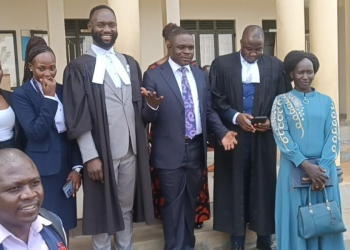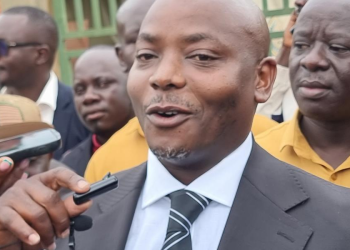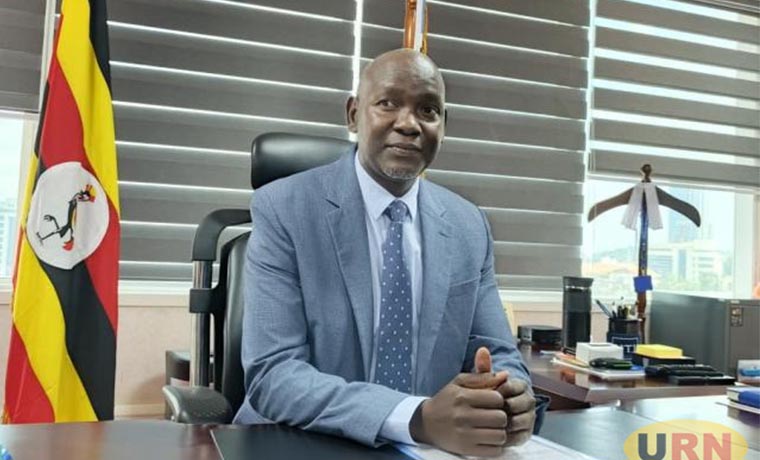
The Director of Public Prosecutions-DPP Lino Anguzu has revealed that his office is facing legal and procedural challenges in handling files transferred from the General Court Martial by order of the Supreme Court that barred the trial of civilians in military courts. Speaking to journalists on Friday ahead of the Annual Prosecutors Symposium and the Joan Kagezi Memorial Lecture scheduled for next week, DPP Anguzu said the biggest challenge stems from the fact that the Constitution does not empower the DPP to directly take overactive matters from the court martial.
Anguzu explained that although the Supreme Court ordered the transfer of such cases, it did not specify who should effect the transfer process.“The Supreme Court made a judgement and said those cases should be transferred, but it didn’t say who should transfer them,” Anguzu said. The Supreme Court in January 2025 ordered the military to halt all ongoing trials of civilians and to transfer them to the civilian court system.
After the ruling, Parliament passed the Uganda Peoples’ Defence Forces (Amendment) Bill 2025 reinstating the trial of civilians before military courts. The Bill has since been assented to by President Museveni. Despite this, Many of the suspects who were under trial before the Supreme Court ruling remain in jail and some never been taken back for trial and their families are living in uncertainty.

However, according to Anguzu, the DPP can only prosecute matters after receiving investigation files, yet many of the affected cases remain under the control of the military court system.“I do not have powers to take over a matter which the court martial has already taken cognizance of. If somebody is remanded by the court martial, on what basis do I take over that matter?” he asked.
Anguzu added that the Constitution expressly bars the DPP from exercising prosecutorial powers over matters before the court martial. “The Constitution says I can exercise my functions in all courts and all matters except matters in the court martial. I cannot withdraw the cases, I cannot take over the cases,” he said.
Anguzu described the situation as a legal conundrum noting that unless the court martial itself initiates the transfers, the DPP’s office remains unable to intervene. “Unless the court martial decides and says this matter is now transferred to the Office of the DPP, I am afraid my hands are tied,” he said.
The DPP also pointed to procedural difficulties arising from the nature of investigations conducted in the military justice system. He explained that many of the files were investigated by military agencies such as the Military Police and the Chieftaincy of Military Intelligence-CMI, making them difficult to prosecute in civil courts where investigations are ordinarily conducted by the Uganda Police Force.
“The procedures in the court martial are completely different from the procedures in the civilian justice system,” Anguzu said. Anguzu disclosed that the Office of the DPP has so far received more than 40 investigation files from the court martial and has been reviewing them individually to determine which cases can proceed in civilian courts.
“We have reviewed those cases and some of them required us to do a little bit of panel beating,” he said. According to Anguzu, some files were found to contain credible evidence, particularly where police officers had participated in investigations or handled exhibits during the earlier stages of the cases. “A number of them we have already approved and sent to the regions and districts where the cases originated for the suspects to appear,” said Anguzu.
He revealed that all the files had been referred back to police for further investigations where gaps were identified, adding that some suspects have already appeared before civilian courts. However, Anguzu noted that several files still require additional investigations before prosecution decisions can be made.
“We are still determining whether I issue production warrants for them to appear now on these cases or not,” he explained. He also disclosed that some of the transferred files involve violent crimes allegedly committed using firearms and other weapons. “If you look at those cases, some of them are really violent crimes and involve hardcore criminals,” Anguzu said.
Despite the challenges, Anguzu expressed optimism that the review process would soon be concluded. “We are hopeful that in the next couple of days we will conclude with them,” said Anguzu. “Then we either take them to court, have the accused summoned and discharged where necessary, or proceed with trial the matters are concluded.” He appealed for patience from the public as prosecutors and investigators continue processing the transferred files within the confines of the law-URN. Give us feedback on this story through our email: kamwokyatimes@gmail.com