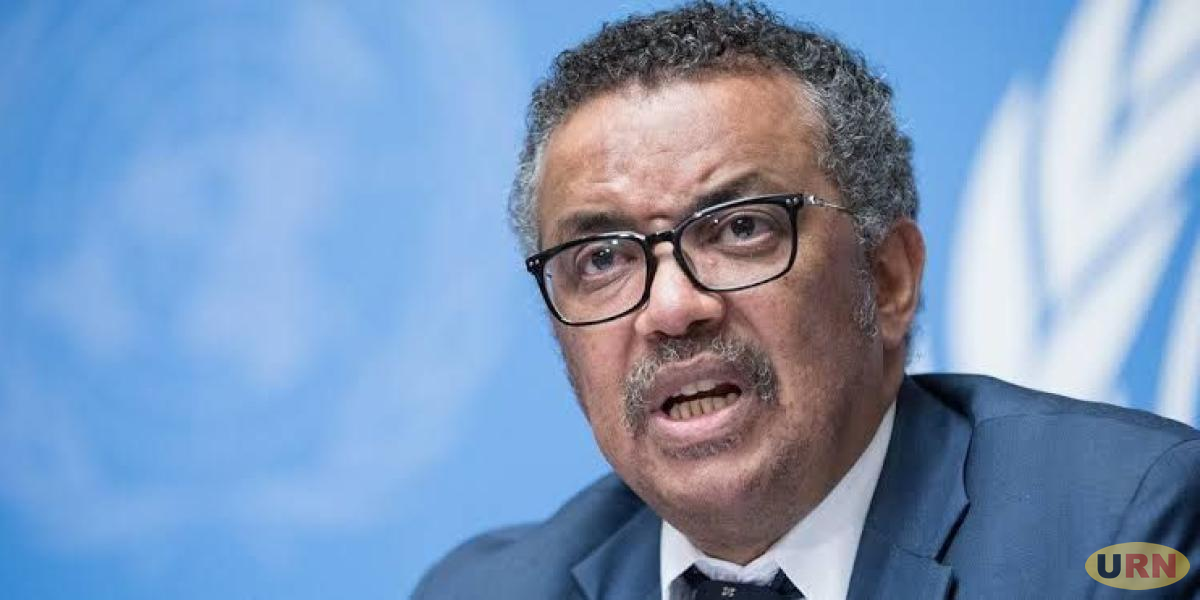
The World Health Organization has warned that the world remains dangerously vulnerable to another pandemic, saying governments have reduced investment in health security even as global spending on military defence continues to rise. WHO Director-General Dr Tedros Adhanom Ghebreyesus said the COVID-19 pandemic exposed major weaknesses in global health security, but warned that many of the measures introduced in response to the crisis remain incomplete.
He said the next pandemic was not a question of if, but when, and cautioned that a respiratory pathogen could cause damage on the scale of COVID-19. Tedros was speaking on Thursday at a WHO press conference following a high-level meeting on pandemic prevention, preparedness and response.
He said COVID-19 killed at least 20 million people and caused more than 10 trillion dollars in economic losses, exposing weaknesses in the world’s ability to prevent, detect and respond to infectious disease outbreaks.

WHO has since established 12 initiatives aimed at strengthening pandemic preparedness, including the Pandemic Fund, improved epidemic intelligence, vaccine and medical countermeasure initiatives, pathogen-sharing arrangements and the Global Health Emergency Corps. But Tedros said the system remains under construction. “So, I can say with these initiatives, the world can be better prepared, but still, we are very vulnerable because the 12 things are under construction yet.”
He said one of the greatest concerns was that the sense of urgency generated by COVID-19 had weakened. Tedros described the pattern as a “cycle of panic and neglect”, in which countries increase health spending during a crisis and then scale it back once the immediate threat appears to have passed.
“As you may remember, when COVID hit, the whole world was panicking, and many countries invested a lot of money. But as soon as COVID was declared over, the investment in health, and especially in health security, started to decline,” he said. Tedros contrasted the declining investment in health security with global military expenditure, while investing comparatively less to prevent and contain infectious disease threats.
“The very alarming part is that countries are investing a lot of money- trillions. I think last year’s military expenditure globally was 2.7 trillion; insecurity to kill each other- while investment in health security to prevent a virus or to manage a virus, which is an enemy to all humanity, is being ignored and being neglected,” he added.
He said the scale is not as one would expect, and the speed also is not as fast as what the global health body expects. The WHO chief said countries needed to strengthen surveillance, early detection and response capacity at the national level because weaknesses in one country could expose the rest of the world.
He said investment in health security should not be viewed as charity because infectious diseases can cross borders within hours.
“Because we are as strong as the weakest link. Unless we invest especially in countries that are vulnerable, the whole world will be affected by the weaknesses you see in some places. That’s why also you know, investment in health security is not charity,” said Tedros.
The warning comes as the Democratic Republic of Congo continues to battle an Ebola outbreak that WHO officials say remains active despite an overall decline in cases.
WHO Africa Regional Director Professor Mohamed Janabi said seven provinces and 63 health zones in DRC are currently affected, with two additional health zones identified as affected during the previous week. As of September 23, officials reported 7,890 confirmed cases and more than 3,799 deaths, giving a case fatality rate of 48.1 percent.
Janabi revealed that more than 2,000 people have recovered and the outbreak remains concentrated in Ituri and North Kivu, with North Kivu experiencing an increase in cases.
He added that Uganda remains among the countries being closely monitored because of its proximity to the outbreak and that ten countries have been classified as high risk and are receiving preparedness support. He said the DRC outbreak is particularly difficult to control because of insecurity, displacement and weaknesses in the health system.
More than one million people have been displaced, making contact tracing and other outbreak-control measures more difficult. Tedros said health workers could not effectively control Ebola when conflict prevents them from reaching affected communities. “If you don’t have access and you’re missing contacts, then the transmission continues,” he warned.
He also said displaced populations living in crowded conditions face additional risks of transmission. But Tedros said the response had made progress, noting that Ebola had remained contained within DRC after a spillover into Uganda was controlled.
He cautioned, however, that the situation should not be viewed only through the overall decline in cases because transmission is still occurring in some areas. The WHO chief also said communities in affected parts of DRC are dealing with conflict, hunger and other health emergencies alongside the outbreak.
Tedros said some communities viewed Ebola as a lesser threat than the other crises affecting them. He recalled one community member telling him that international support increases when Ebola appears because other countries fear the virus spreading beyond DRC. The WHO chief said the response must therefore address Ebola alongsi-URN. Give us feedback on this story through our email: kamwokyatimes@gmail.com