The Uganda Revenue Authority (URA) says Uganda can achieve its ambitious domestic revenue targets over the next four years, provided government, businesses and taxpayers play their part in expanding the country’s tax base. The domestic revenue target was set at 46 trillion shillings for the 2026/27 financial year, with URA expected to collect 40.16 trillion shillings in taxes.
The government has embarked on one of its most ambitious revenue mobilisation drives, seeking to increase tax collections from 14.2 percent to 20 percent of GDP within four years. That is one of the most ambitious domestic revenue mobilizations drives Uganda has undertaken. The country is entering a period where the government seeks to finance more of its development from domestic resources rather than debt.
The change is due to the fact that public debt has risen over the past decade, making debt servicing one of the fastest-growing budget expenditures. External financing for projects is becoming more expensive as concessional loans decline and commercial borrowing costs remain high. Development partners have also become more cautious in lending and grant financing, increasing pressure on domestic resource mobilization.

Uganda expects to begin earning oil revenues, but those revenues alone will not be enough to finance government ambitions, meaning tax revenue remains the backbone of the budget. The ambitious plan comes as the government tries to reduce reliance on borrowing and finance its development agenda from domestic resources.
The target means businesses and taxpayers should expect tighter enforcement, broader tax compliance measures and continued reforms aimed at bringing more economic activity into the tax net.
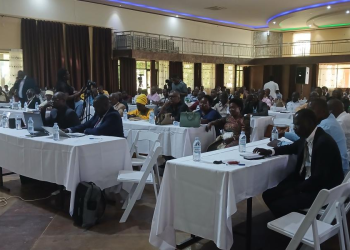
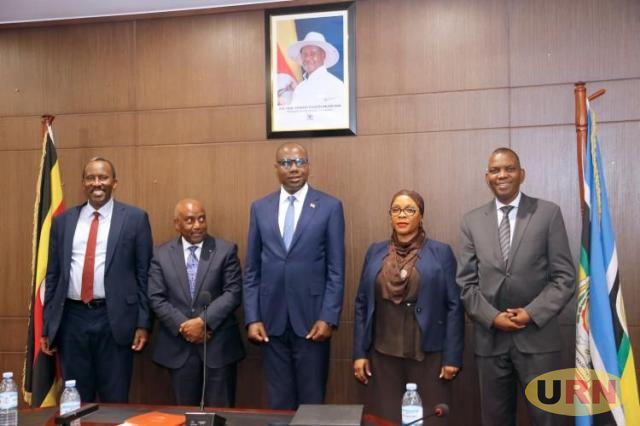
Speaking at the launch of the National Post-Budget Dialogue in Kampala, Finance Minister Henry Musasizi said increasing domestic revenue will enable the government to reduce dependence on borrowing and finance more development projects using locally generated resources.
He said success will depend not only on stronger tax administration but also on improving public services so that citizens willingly pay taxes.
Musasizi said government is committed to fighting corruption and ensuring tax revenues translate into visible investments in infrastructure, health, education and programmes that create jobs.
URA Commissioner General John Musinguzi said achieving the revenue targets would significantly reduce borrowing and debt servicing costs, allowing government to allocate more resources to essential public services.
He attributed the optimism to recent tax reforms approved by Parliament, which he said will improve tax compliance while creating a better environment for businesses.
Although the 2025/26 financial year closed with a slight revenue shortfall, Musinguzi said tax collections increased from about 13 percent of GDP to 14.2 percent, demonstrating that the medium-term target is attainable.
Among the reforms is a revision of penalties under the Electronic Fiscal Receipting and Invoicing Solution (EFRIS). The penalty for failing to comply has been changed from a flat five million shillings to twice the tax due on the goods or services involved, or ten currency points, whichever is higher.
Musinguzi acknowledged that some of the amendments may initially affect businesses but said they are intended to improve compliance while creating a fairer tax system. He added that several other amendments are designed to make tax administration more predictable and easier for compliant taxpayers.
As part of efforts to improve taxpayer services, URA also launched a new Client Service Charter, which sets service standards and outlines taxpayers’ rights and obligations.
The charter provides mechanisms for resolving tax disputes without litigation, improves access to tax exemptions and customs services, expands digital support through URA’s online platforms, and establishes clearer channels for reporting staff misconduct.
The Ministry of Finance says government is strengthening URA through improved technology, data analytics and digital systems to enhance compliance while making tax administration more efficient.
Moses Kaggwa, Director of Economic Affairs at the Ministry, said the objective is to broaden the tax base rather than increase tax rates.
“Our focus is not simply increasing taxes. It is expanding the tax base fairly by identifying economic activities that are currently outside the tax net while supporting compliant taxpayers,” Kaggwa said.
He said voluntary tax compliance can only be sustained if more Ugandans are economically empowered through initiatives such as the Parish Development Model and other wealth creation programmes.
“As we mobilise revenue, we must do it humanely. Government should relate with taxpayers as partners in national development, not as though every taxpayer is a suspect,” he said.
Kaggwa added that effective implementation of the national budget is critical because economic growth, job creation and increased business activity ultimately generate higher tax revenues.
Civil society organisations welcomed several measures contained in the budget but urged government to improve accountability in the use of public resources.
Julius Mukunda, Executive Director of the Civil Society Budget Advocacy Group, encouraged Ugandans to take advantage of government financing opportunities while paying their fair share of taxes.
“We want to see a Uganda where every citizen pays their fair share of taxes, but we also want to see how those taxes are utilised,” he said.
Grace Kobusingye, Programmes Manager at Uganda Debt Network, said transparency in public spending is essential for building public trust and encouraging voluntary tax compliance.
“Taxpayers want to know that every shilling they contribute is used efficiently. Improved accountability and quality public service delivery will strengthen public confidence and encourage greater tax compliance,” she said.
She added that stronger domestic revenue mobilisation remains essential as Uganda seeks to reduce its reliance on borrowing amid a growing public debt burden-URN. Give us feedback on this story through our email: kamwokyatimes@gmail.com