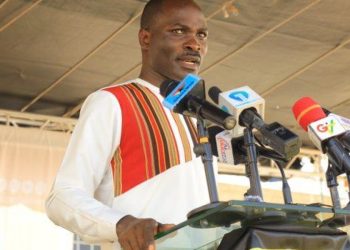
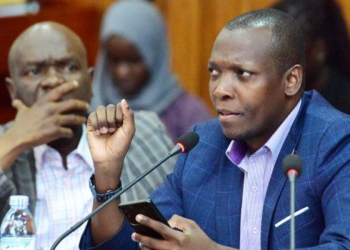
The Umukuuka of the Bamasaba cultural institution, Jude Mike Mudoma, has called for traditional leaders to be formally involved in monitoring government programmes, arguing that their extensive clan networks and public trust can help mobilise communities and improve implementation.
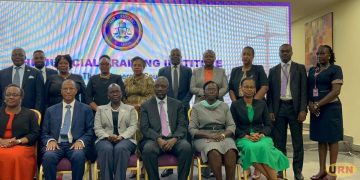
Mudoma proposed this at the National Budget Conference for the financial year 2027/28 at Speke Resort Munyonyo, where traditional and cultural institutions participated in the conference for the first time. He was the only cultural leader who turned up for the consultation on Thursday. He said traditional institutions have a unique reach into communities that government programmes could use to improve mobilisation, accountability and implementation.
Mudoma said traditional leaders should not be confined to their cultural functions when their institutions have established structures that can be used to support national development.

“Because traditional institutions command an asset that money can’t buy. Absolute public trust.” He said government could use clan networks to mobilise communities around development priorities, particularly where local participation is critical.
Mudoma cited environmental protection on the slopes of Mount Elgon as one area where traditional institutions could play a greater role. He said clan structures could be used to mobilise communities to protect landslide-prone areas and promote environmental conservation.
He also proposed that traditional leaders participate in protecting the quality of Uganda’s coffee, including through mobilisation and oversight along the value chain. “We can directly police control of our quality of coffee, including value chains to protect national export value,” Mudoma said.
He said traditional institutions could also help government expand cultural tourism, which he said could create employment and generate economic opportunities for communities. He, however, said government cannot expect traditional institutions to take on such responsibilities without giving them the institutional capacity to operate.
Mudoma criticised the current arrangement under which traditional leaders receive personal honoraria while the institutions they head remain inadequately funded. “The current honorarium model funds us as individuals. But it leaves our institutions empty.” “Because traditional institutions command an asset that money can’t buy. Absolute public trust.” Said Mudoma.
He said this limits the ability of kingdoms and other organised traditional institutions to maintain professional secretariats capable of supporting development work.
Mudoma called for a shift from individual welfare payments to institutional grants, arguing that government should establish a permanent framework for supporting traditional institutions.
He proposed a two-tier funding mechanism consisting of an institutional statutory fund or coordination budget, and a conditional budget vote under the Ministry of Gender, Labour and Social Development to support professional administrative secretariats of organised kingdoms. He also proposed that government formally fund a National Advisory Council of kings and traditional leaders to serve as a state advisory body on national cohesion and wealth creation.
Mudoma said the proposal would change the relationship between government and traditional institutions from one based largely on political goodwill to a more structured partnership. “Let us transition from political goodwill to structural economic efficiency. By empowering our institutions through the budget framework, you transform cultural capital into national wealth.”
Mudoma pointed to Ghana as an example of a country where traditional leaders have been given formal institutional roles, including in local arbitration and alternative dispute resolution.
He said such structures could help government address local conflicts while reducing pressure on the central justice and administrative systems. Mudoma also used the budget conference to call for a permanent solution to longstanding boundary disputes around Mount Elgon, particularly tensions between communities and the Uganda Wildlife Authority.
He proposed a comprehensive, heavily funded one-off physical demarcation of the boundaries to prevent recurring confrontation between communities and conservation authorities. “I speak of the longstanding impasse of boundary disputes and the painful confrontation between UWA and the communities.”
Mudoma said traditional institutions are prepared to work with government but need to be recognised and equipped to perform that role. He said the institutions should be treated as partners in national development, particularly because of their ability to mobilise communities through longstanding cultural and clan structures.
“We should be serious partners in development of this nation.” Mudoma’s proposals come as the government prepares the 2027/28 national budget, with ministries and other stakeholders submitting priorities during the national consultation process. Responding to the suggestion, the Minister of Finance Henry Musasizi said the government will have to deliberate on the matter.
He tasked his technical team to involve cultural and traditional leaders during the upcountry budget consultations. The proposals by the Bamasaba cultural leader would require the government to determine the legal, administrative, and financial framework for any expanded role and funding of traditional institutions-URN. Give us feedback on this story through our email: kamwokyatimes@gmail.com