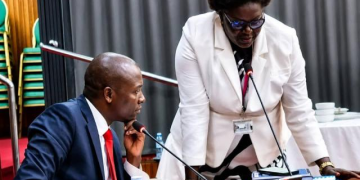
The Ministry of Health has urged Ugandans to embrace waste sorting at the household and workplace level to reduce the amount of garbage sent to disposal sites ahead of the National Cleaning Day, held on the last Saturday of every month.
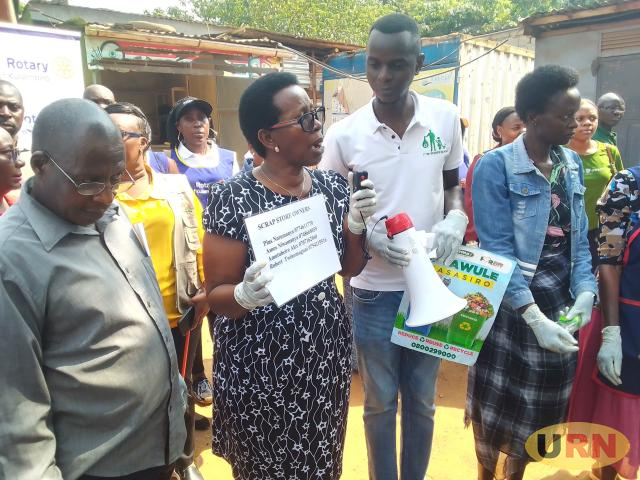
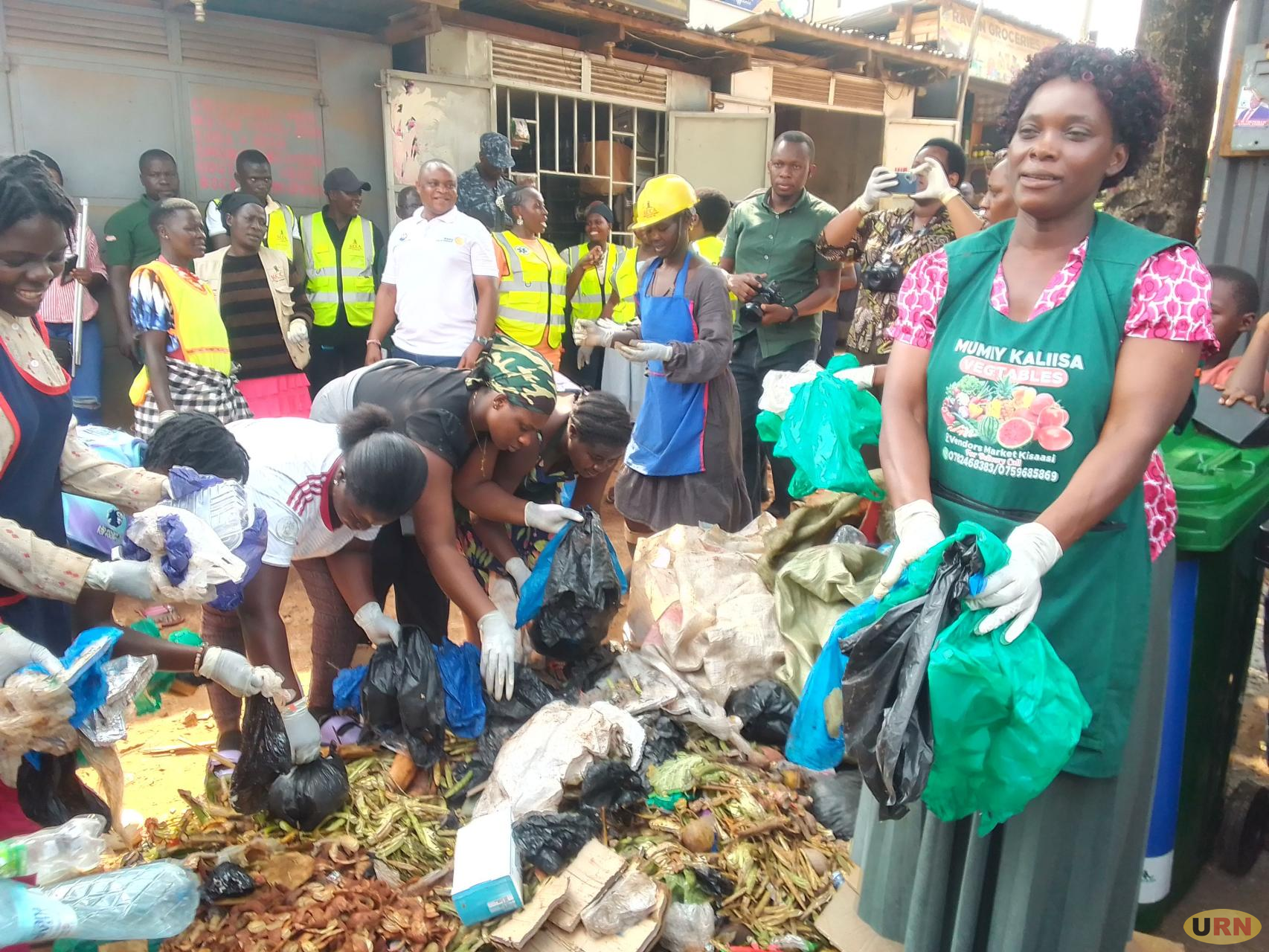
During a waste sorting demonstration at Kulambiro Market in Nakawa West, Permanent Secretary in the Ministry of Health, Dr. Diana Atwine, said Uganda still lagged behind other countries in proper waste management.
Dr. Atwine said during the inaugural National Cleaning Day, mainly in urban areas, residents generated large volumes of waste that had accumulated in homes before being brought out at once, creating challenges for collection and disposal.

She urged residents to begin sorting waste at the point of generation and to adopt better waste-management practices.
Residents were encouraged to separate plastics from other waste and sell them to recyclers instead of burning or dumping them. Paper, glass and metal can also be collected separately for recycling.
For biodegradable waste, Dr. Atwine encouraged residents with compounds to establish compost pits where food waste, fruit peels and other organic materials can decompose naturally. People living in apartments were advised to engage waste collectors who can put sorted organic waste to uses such as animal feed.
Dr. Atwine strongly warned against burning plastics, saying the practice poses serious risks to human health and the environment.
“We want you to make sure that if you have plastics, let them be taken for recycling. Don’t burn,” Dr. Atwine said, noting that fumes from burning plastics can contribute to respiratory problems and environmental pollution.
She also raised concerns about an increase in people suffering from lung-related problems at Mulago Hospital, attributing part of the increase to practices such as burning plastics, although the specific claim was not independently substantiated.
She further cautioned against mixing potentially hazardous materials, including medicines, old computers and other electronic waste, with ordinary household rubbish.
Meanwhile, Kampala Capital City Authority (KCCA) Director of Public Health, Dr. Sarah Zalwango, highlighted digital platforms designed to connect residents with waste collectors.
She said the Weyonje app and the Towa Uchafu na Nusu app, which is linked to Weyonje, help residents identify waste collectors operating in their areas and arrange the collection of recyclable materials.
Dr. Zalwango said KCCA is in the final stages of mapping waste entrepreneurs across Kampala to enable residents to easily identify recyclers and waste collectors operating in their neighborhoods.
She added that the nine companies licensed to collect waste in Kampala are mandated to sensitise residents and promote waste sorting at source to reduce the amount of waste transported to the Buyala disposal site.
Hadson Alinaitwe of Ecoserve Limited, a company mandated to collect waste in Nakawa West, said the constituency generates about 187 tons of garbage daily.
He said Ecoserve would deploy a 20-tonne garbage truck to each parish in the constituency to improve waste collection.
Alinaitwe also urged residents of Kulambiro and other parts of Nakawa West to embrace the polluter-pays principle promoted by the National Environment Management Authority (NEMA), saying it would encourage people to take responsibility for the waste they generate.
Fahad Sserumpanise of Towa Uchafu na Nusu said the company works with companies and institutions to educate communities about waste segregation and connect them to waste collectors who purchase recyclable materials.
Sserumpanise said the company has so far mapped about 600 waste buyers across Kampala, with the exercise still ongoing.
He said the collectors buy segregated materials including paper, cardboard boxes, sacks, metals and PET bottles, which are later transported to recycling and processing facilities.
“If you have segregated materials, you have papers, boxes, sacks, metals, PET bottles, any inorganic material that is segregated can be bought by our agents,” Sserumpanise said.
He said many waste collectors have traditionally operated informally, but Towa Uchafu na Nusu is working with KCCA to explore ways of formalising their businesses and integrating them into the formal waste-management sector.
According to Sserumpanise, the collectors are contributing to environmental protection while creating employment opportunities, particularly for women and young people.
He said during national cleaning exercises, the collectors would continue buying recyclable materials from communities, with residents able to locate collectors through the company’s website, WhatsApp services, applications and telephone contacts.
Sserumpanise said the company’s network of agents has the capacity to collect segregated materials across the Greater Kampala metropolitan area and channel them to factories for further processing.
KCCA, the Ministry of Health, and waste-management companies are urging residents to view recyclable materials not simply as rubbish but as a potential source of income, while encouraging communities to make waste sorting a routine practice beyond the monthly National Cleaning Day-URN. Give us feedback on this story through our email: kamwokyatimes@gmail.com