The United Nations Trade and Development agency has warned that rising public debt interest costs are increasingly squeezing spending on health, education and other development priorities in developing countries, with Uganda among the countries facing a particularly heavy interest burden.
In its latest A World of Debt 2026: Rising debt costs and stalling development report released this week, UN Trade and Development (UNCTAD) says developing countries paid nearly one trillion US dollars in net interest on public debt in 2025.
The report released on Wednesday puts the figure at 995 billion dollars, more than double the amount developing countries paid a decade earlier.

It says interest payments accounted for a median 8.1 percent of government revenue in developing countries in 2025, nearly twice the level recorded in 2010.
UNCTAD says 51 developing countries now spend more on interest payments than on either health or education, affecting 3.7 billion people.
The agency warns that the growing cost of borrowing is reducing the resources available to governments to invest in development. “ Debt should help countries invest in their future. But in many developing countries, the servicing of external debt now exceeds new inflows,” UNCTAD says.
The report says borrowing costs in developing countries are structurally higher than those in developed economies, with the gap widening the financial pressure on governments.
UNCTAD estimates that developing countries could save about 500 billion dollars each year if they were able to borrow at the same rates as developed economies.
The agency says this could create substantial fiscal space for investment in health, education, infrastructure and other development priorities.
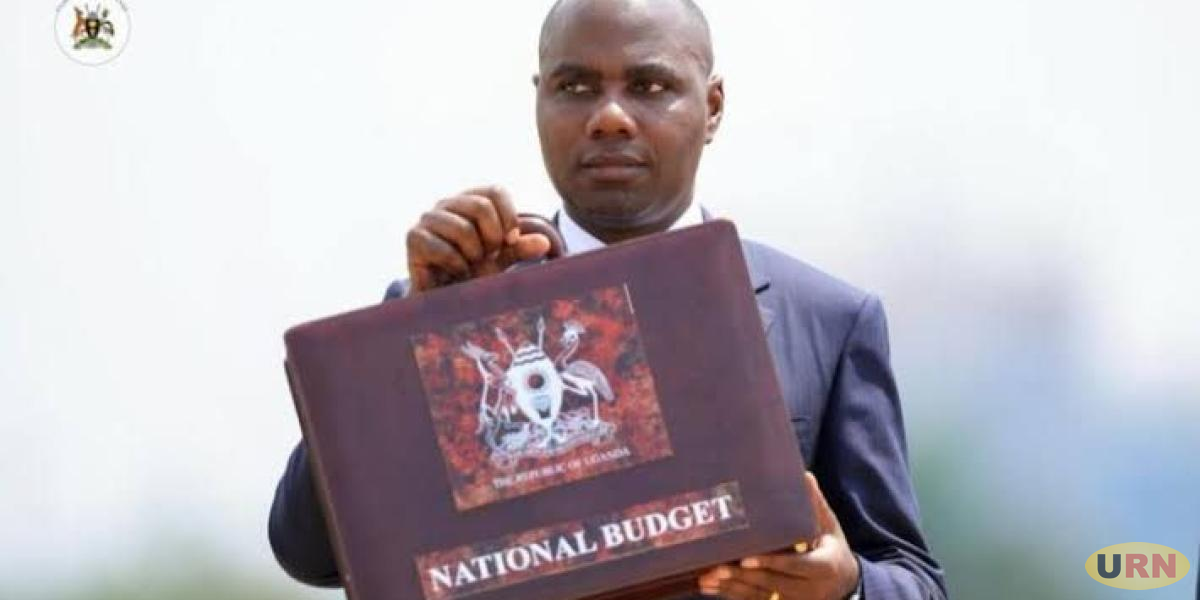
The warning has particular relevance for Uganda, where government figures show that the cost of servicing public debt has become a growing pressure on the national budget.
Uganda’s FY2026/27 Budget Framework Paper says interest payments accounted for 26.2 percent of government revenues in the financial year 2024/25. The proportion is projected to rise to 30.2 percent in FY2026/27.
The Ministry of Finance also reported that Uganda’s public debt had reached 116.2 trillion shillings by June 2025, equivalent to 51 percent of GDP, above the 50 percent ceiling set under Uganda’s Charter for Fiscal Responsibility.
The government says the rising debt burden has influenced its decision to reduce planned domestic borrowing in FY2026/27, partly to address the growing burden of interest payments and avoid crowding out private-sector borrowing.
Uganda’s debt costs have continued to rise. The Ministry of Finance’s December 2025 debt bulletin shows that interest payments as a share of GDP increased from 4.7 percent in September 2025 to 5 percent in December, driven mainly by domestic debt.
The weighted average interest rate on the debt portfolio also increased from 8.9 percent to 9.5 percent.
In Kenya, the National Treasury’s debt service data shows that the country paid 1.72 trillion Kenyan shillings in domestic and external debt service during FY2024/25.
The figure included more than 1 trillion shillings in domestic debt service and 580.2 billion shillings in external debt service.
Kenya’s FY2025/26 borrowing plan budgeted about 1.1 trillion shillings for interest payments alone, equivalent to 5.7 percent of GDP. Domestic interest was projected at 851.4 billion shillings and external interest at 246.3 billion shillings.
Tanzania’s debt position is comparatively less severe in terms of interest costs. Its Medium-Term Debt Management Strategy puts total interest payments at 2.47 percent of GDP in 2025, with the government targeting 2.26 percent in 2026. Its nominal public debt was equivalent to 48.96 percent of GDP in 2025.
Rwanda, however, has also faced significant external debt-service pressure. Earlier UNCTAD analysis showed that Rwanda’s interest payments on public and publicly guaranteed external debt rose from 1.3 percent of exports in 2009–2011 to 2.8 percent in 2019–2021.
Tanzania’s ratio was lower over the same period, although its overall debt-service burden remained significant.
The East African picture reflects the tension between borrowing to finance development and the rising cost of that borrowing.
These figures were derived from searched with budgets and policy statements from Uganda and it neighbor. President Museveni and William Ruto of Kenya have been at the forefront of the campaign for reform in the global debt architecture.
UNCTAD’s latest report says that in Africa, the proportion of people living in countries where governments spend more on interest than on health or education increased sharply, from 24 percent in 2010 to 65 percent by 2023.
The agency says the problem is not simply the size of public debt but the cost at which governments can borrow.
Since 2020, developing regions have generally borrowed at rates two to four times higher than the United States, according to UNCTAD.
This creates what the agency describes as a structural disadvantage for developing economies: governments must devote a growing share of their revenues to creditors while having fewer resources available for development.
UNCTAD is calling for action at both the national and international levels.
At the global level, it recommends reversing declines in official development assistance, expanding lending by multilateral and regional development banks, strengthening technical assistance and advancing the Borrowers’ Platform and international principles on responsible sovereign lending and borrowing.
At the national level, it calls for stronger macroeconomic management and public institutions, better debt-portfolio management and greater use of innovative financing instruments.
The agency says addressing the cost of borrowing could help restore fiscal space in countries where debt service is increasingly competing with basic public services.
The warning comes as governments across East Africa continue to borrow to finance infrastructure, energy, transport and other long-term investments, raising questions over whether the economic returns from new borrowing will be sufficient to cover the growing cost of servicing existing debt.
It should be noted that the 2026 UNCTAD overview currently available publicly does not give a country-by-country table for Uganda, Kenya, Rwanda and Tanzania-URN. Give us feedback on this story through our email: kamwokyatimes@gmail.com