Parents in Napak District say they are losing authority over their children because police intervene whenever they attempt to discipline them, while police insist that parents have a responsibility to guide their children but cannot use violence as a form of discipline.
The disagreement emerged on Thursday during a Police Baraza at Kangole Middle Village in Kangole Town Council, supported by International Justice Mission Uganda.
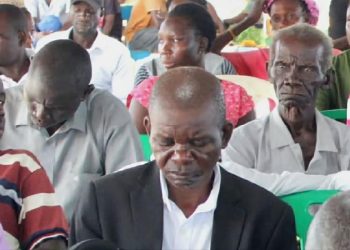
Parents told police that interventions over child discipline have made it difficult for them to control their children, whom they say increasingly disregard parental authority.

Joseph Lokwang, a Village Health Team member, said alcohol abuse and what he described as declining respect for elders were contributing to growing conflict between parents and children.
“The behaviour is caused by alcohol abuse, and the situation is made worse by the youth. Even when we threaten to arrest the youth, they say police cells are their home,” Lokwang said.
He said some young people are arrested but are released shortly afterwards, making it difficult for parents and community leaders to address persistent indiscipline.
Another parent, Abiba Moru from Kangole Chini, said some children openly insult their parents and resist attempts to discipline them.
“Children can publicly abuse us with painful words. Some parents have even ended their lives through suicide. Adolescent children treat parents like we are useless. When we try to be tough, they run to the streets,” Moru said.
Moru said mothers were particularly vulnerable, alleging that some grown-up boys physically assault their own mothers.
She said communities previously played a collective role in guiding children and maintaining respect for elders, but that system had weakened.
Jacob Lokong, another parent, narrated how his attempt to discipline his child resulted in his arrest.
He said he returned from work and found that his child had not completed an assignment he had given him. When he picked up a stick to discipline him, the child ran to police and accused him of intending to kill him.“I followed him confidently, not knowing they were waiting to arrest me,” Lokong said.
He said he subsequently stopped trying to discipline the child, who later dropped out of school and now lives with relatives in Kaethelem Village.
Lokong accused police of siding with children against parents instead of helping families resolve disciplinary problems.
However, police officials said protecting children from violence does not mean parents have been stripped of their responsibility to guide and discipline them.
Mt. Moroto Regional Police Commander Edirisa Kyeyune said parents have a duty to raise their children, but warned that physical violence cannot be justified as discipline.
“It’s the role of parents to discipline the child and show the right path, not to torture. Parents should talk to their children and lead by example,” Kyeyune said.
Kyeyune also linked violence against children and women to alcohol abuse, saying children can adopt violent behaviour they observe at home.
The police position highlights the central challenge facing families in the district: parents want to retain authority over their children, while authorities are required to intervene when discipline crosses into abuse.
John Robert Ojang, the Officer in Charge of the Child and Family Protection Unit at Kangole Police Station, said police had been working with village structures to strengthen child protection and promote awareness of the rights of women and children.
He said adults also contribute to the problem through abusive language, which children can copy.
Ojang said police were additionally dealing with child trafficking and children who leave their homes for urban areas.
“I was shocked to learn from Kampala authorities that about 482 children who went to Kampala streets are not accounted for. It’s not clear whether they are alive or dead,” Ojang said.
He said police were working with district authorities to address child trafficking and gender-based violence.
But some young people at the meeting said parental responsibility should also include providing children with education and other basic support.
Mercy Akol, a youth, said some young people leave home after repeated rejection when they seek support from their parents.
“Whenever we ask parents for support, the response is negative, and sometimes we are harassed. That forces us to leave home and live on the streets,” Akol said.
She also alleged that some vulnerable children miss out on scholarships during district-level verification, with better-off families benefiting instead.
Elder Matayo Lowal said high school fees were making it difficult for families to keep children in school, warning that children without access to education could become increasingly vulnerable to street life.
He also raised concerns about the distribution of scholarships intended for vulnerable children.
Okule Loru, the LC1 chairperson of Nakulero Village, said some parents had become reluctant to discipline their children because of concerns about child-rights laws.
“Children always tell their parents about their rights whenever we try to discipline them. Because of that, we have left police to take charge,” Loru said.
The concerns raised at the meeting point to a wider challenge in Napak, where parents, children and authorities are struggling to balance parental responsibility with the protection of children from violence and abuse.
Police and community structures say continued engagement with families is necessary to help parents understand acceptable forms of discipline while addressing the underlying problems of alcohol abuse, school dropout, child trafficking and violence in homes-URN. Give us feedback on this story through our email: kamwokyatimes@gmail.com