By KT Reporter
Nabilatuk District is grappling with a severe health care crisis, with staffing levels at just 24 percent capacity, forcing residents to travel long distances to access even basic medical services.
The staffing shortages and inadequate health facilities have left much of the district’s population struggling for essential health care. In Natirai and Kosike sub-counties, residents completely lack access to health services, while others trek over 20 kilometres to reach the nearest facility.

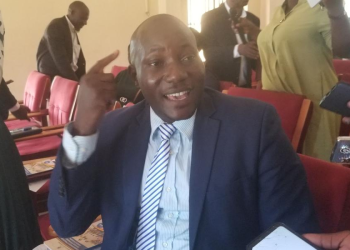
Our reporter found that facilities such as Lorengedwat Health Centre III operate with only four medical staff despite serving a large population. Dr. Peter Lokwang, Nabilatuk District Health Officer, told URN that staffing gaps hinder the delivery of essential medical services.
“Staffing rates are at 24 percent, which is below the average, making it difficult to cover the entire population,” Lokwang said. “Our Health Centre IV has 33 staff out of the required 130, while Health Centres III operate with 11 staff instead of 55.”
Lokwang attributed the gaps to lack of wage funds for recruiting health workers. He also noted that the location of health facilities is another barrier. “A big number of the population is unable to access available health facilities due to the long distances. Health facilities are established along highways far away from community settlements,” Lokwang said.
He emphasised the need to support recently established health facilities such as Sakale Health Centre III, which delivers services closer to the community. Lokwang pointed out that Kosike sub-county has no health facility, while Natirai’s health centre is far from settlements, making access difficult.
Hussein Malunda, Deputy Chief Administrative Officer for Nabilatuk District, acknowledged that the health care system is crippled, undermining efforts to reduce infant and maternal mortality. “Human resource gaps are enormous, with the entire district operating with only ten midwives,” Malunda said.
He revealed that a wage harmonisation exercise found a deficit of 63 million shillings under the Primary Health Care system. Although funds were reallocated from other departments, the situation remained critical. Malunda explained that wage limitations have hindered recruitment in the health sector.
“When we concluded the wage harmonisation, we secured 140 million shillings as a surplus. This enabled us to identify two enrolled nurses and one midwife for recruitment,” he said. He noted that the request for recruitment has already been submitted.
The crisis in Nabilatuk highlights the urgent need for increased funding and targeted interventions to address the severe shortage of health workers and the inaccessibility of health facilities.
-URN. Give us feedback on this story through our email: kamwokyatimes@gmail.com