The World Health Organization (WHO) says the Ebola outbreak in eastern Democratic Republic of Congo (DRC) remains a serious public health emergency, with ongoing transmission, limited contact tracing, community mistrust, and the absence of approved vaccines or treatments for the Bundibugyo strain complicating efforts to contain the disease.
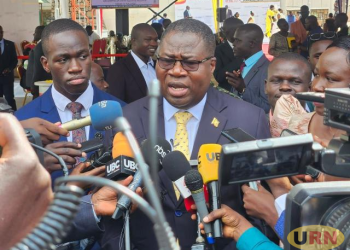
Speaking to journalists after a visit to the outbreak’s epicenter in Ituri Province, World Health Organization (WHO) Director-General Dr. Tedros Adhanom Ghebreyesus called for stronger international support to contain an Ebola outbreak in the Democratic Republic of Congo (DRC), warning that major challenges remain despite progress in scaling up the response.
Dr. Tedros said the WHO remains cautiously optimistic but stressed that efforts to control the disease are still playing catch-up. “We need to move faster,” Tedros said during a WHO press briefing. “The virus is ahead of us, and we need to catch up.” He said the outbreak, caused by the Bundibugyo strain of the Ebola virus, has so far resulted in 344 confirmed cases and 60 deaths across 24 health zones in the provinces of Ituri, North Kivu, and South Kivu.

In Uganda, authorities have reported 15 confirmed cases and one death. He said that the WHO is working with health authorities in Uganda and the United Arab Emirates to assess the risk of exposure during travel and to facilitate contact tracing. The WHO boss said their risk assessment of the situation remains unchanged. He said the risk is very high at the national level, high at the regional level and low at the global level.
“The outbreak had a big head start, and we’re still behind, but under the leadership of the government of DRC, we’re catching up,” Tedros told reporters during a WHO press conference. According to Tedros, six people in DRC and two in Uganda have so far recovered from the disease.
According to the WHO, the outbreak has resulted in 344 confirmed cases and 60 deaths across 24 health zones in Ituri, North Kivu, and South Kivu provinces. Uganda has reported 15 confirmed cases and one death, while health authorities are also investigating possible international exposure linked to travel.
Dr. Tedros reported that suspected cases have fallen significantly as testing capacity expands, reducing a backlog of investigations. He says contact tracing remains a key challenge with about 45% of identified contacts currently being followed, far below the 90–95% coverage public health experts consider necessary to break chains of transmission. WHO officials attributed the shortfall to insecurity, population displacement, and frequent movement across borders.
The outbreak is unfolding in one of the most unstable regions of the DRC, where active armed conflict and humanitarian crises have complicated disease surveillance and response operations.
Tedros noted that nearly one million people have been displaced in the affected region, including more than 100,000 in recent months alone. He repeatedly emphasized that controlling the outbreak will depend as much on public trust as on medical interventions.
“Although vaccines and therapeutics would be a big help, the key to ending this outbreak is not biomedical. It’s leadership, ownership, partnership, and trust.” “Some community leaders told me that they believe Ebola is not real,” Tedros said. Health officials described widespread misinformation and distrust of outside responders as significant obstacles.
Dr. Teresa Zakaria of WHO’s Health Emergencies Programme said maintaining essential healthcare services is also critical to building confidence in affected communities. More than 50 health-sector partners, many of them Congolese organizations, are continuing to provide care through approximately 500 health facilities across the three affected provinces. Regional Response Intensifies.
WHO’s Regional Director for Africa, Dr. Mohamed Yakub Janabi, said neighboring countries are strengthening surveillance and preparedness measures. Health ministers from the DRC, Uganda, and South Sudan are coordinating closely through WHO-led meetings, while countries considered at highest risk have updated contingency plans and begun preparedness exercises.
WHO has deployed staff to South Sudan, provided emergency funding to several countries, and is pre-positioning personal protective equipment across the region. Countries have also identified treatment sites that could be activated if Ebola cases are detected.
Janabi urged governments to keep borders open for humanitarian assistance and essential supplies while enhancing health screening and information sharing. “Solidarity and cooperation are the backbone of this outbreak control,” he said. The outbreak is caused by the Bundibugyo strain, a rare Ebola virus variant for which no licensed vaccine currently exists.
WHO officials reported that three vaccine candidates are under development. The most advanced programs are being led by Moderna and Oxford University in partnership with the Serum Institute of India. Clinical trial doses could be available within two to three months.
A third candidate being developed by IAVI is expected to require a longer timeline. Despite the absence of approved vaccines, WHO researchers said preparedness efforts undertaken after previous Ebola outbreaks have significantly accelerated the launch of research activities.
WHO officials also reported progress in therapeutic trials. It was revealed that preparations were underway to test MBP134, an experimental broad-spectrum monoclonal antibody treatment, as well as remdesivir, an antiviral drug previously used in Ebola research.
Researchers are also developing a trial involving Obeldesivir, an oral antiviral that could potentially be used to protect people recently exposed to the virus. WHO said treatment protocols had already been developed in Uganda and DRC before the outbreak, allowing studies to move forward more quickly than in past emergencies.
WHO released $3.9 million from its emergency contingency fund immediately after the outbreak was identified. However, officials estimate that $115 million will be needed during the first three months of the response, and only about 35% of that amount has been secured.
Dr. Chikwe Ihekweazu, Executive Director of WHO’s Health Emergencies Programme, said the response depends on sustained international support. “We anticipate that the world will come together, not as an act of charity, but as an act of solidarity,” he said.
One unanswered question is when the outbreak actually began. Health officials acknowledged that Ebola may have been circulating for weeks or even months before it was officially detected. Investigators are reviewing historical cases and deaths to establish a timeline. Tedros cautioned against focusing solely on the outbreak’s origins while response efforts remain underway.
The complexity of the situation, he said, stems from multiple factors: armed conflict, displacement, food insecurity, weak surveillance systems, overlapping symptoms with diseases such as malaria, and widespread mistrust. The Bundibugyo strain itself presents additional challenges because it is rare and has been associated with only two previous outbreaks since its discovery.
While WHO expressed confidence that the outbreak can eventually be contained, officials stressed that long-term prevention requires broader investments in health systems and efforts to reduce spillover events from animals to humans. Tedros said discussions with communities have already highlighted concerns around bushmeat handling, wildlife exposure, and funeral practices that may contribute to transmission risks.
“The real measure of success is not whether we stop this outbreak. We will,” Tedros said. “The real measure of success is what we do to prevent the next outbreak.”-URN. Give us feedback on this story through our email: kamwokyatimes@gmail.com