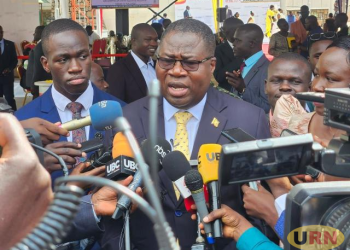
At least 516 households out of 46,000 in Lamwo District are expected to begin receiving cash grants this week under a government-supported animal restocking programme. William Komakech, the Resident District Commissioner (RDC), said the names of beneficiaries have been uploaded into the system and that households will start receiving Shs5 million each within the next two days to purchase livestock.
According to Komakech, the cash transfers will be disbursed in full and are expected to enable each household to buy five animals within a maximum of two weeks—two bulls for ploughing and three cows for herd multiplication. He warned beneficiaries to ensure that the money is used strictly for its intended purpose, noting that recipients will be monitored for one to two weeks after receiving the funds. Beneficiaries will also be required to sign commitments not to sell the animals for a period of five years.
Komakech further encouraged households to help revive communal grazing areas within villages to prevent animals from straying into people’s gardens and farmlands. He said the programme is designed to restore livelihoods, increase household assets, and support economic recovery among vulnerable families.

“The objective is to empower households to rebuild their livestock holdings and improve their sources of income. Livestock is a key asset for many families in Lamwo and plays an important role in food security and wealth creation,” Komakech said.
Lamwo District Chairperson Sisto Oyet Ocen said the beneficiaries were selected from sparsely populated sub-counties, while more densely populated areas will have about six households benefiting from the over 2.3 billion shillings allocated to the district. Ocen added that the district will continue sensitizing communities to ensure proper utilization of the funds and successful restoration of household wealth.
Many residents welcomed the initiative, saying it comes at a time when households are struggling to recover economically and rebuild assets lost over the years. Margaret Lanyero, a resident of Madi Opei Sub-county, said she was pleased with the programme, noting that livestock ownership has become increasingly difficult for many women due to poverty.
“I have always wanted to rear cattle, but I did not have the money. If I receive the money, I will invest in livestock because it can help me pay school fees for my children and plough larger gardens,” she said. Lanyero added that cattle provide multiple benefits, including manure for farming, milk for household consumption, and income from sales. Joyce Ayaa, a widow from Palabek Ogili Sub-county, said the programme offers an opportunity to recover livestock lost during years of conflict.
“We used to have animals before, but they were lost during the LRA conflict. This support gives us hope that we can rebuild our livelihoods and become self-reliant again,” she said. James Oryema, a farmer from Palabek Ogili, said livestock remain a key source of household income and resilience, especially when crop production fails due to drought or other shocks.
“When crops fail because of drought, livestock can still provide income. That is why many families are happy about this programme,” he said. However, Sarah Aciro from Lamwo Town Council urged authorities to ensure transparency in implementation and provide veterinary support to beneficiaries. “The programme is good, but farmers also need extension services, vaccination, and treatment for animals. Without that support, some people may lose the animals they buy,” she said.
The livestock restocking initiative aims to restore household wealth and strengthen livelihoods in the Acholi, Lango, and Teso sub-regions, which were heavily affected by years of armed conflict, cattle theft, and economic hardship. The programme follows a directive by President Yoweri Museveni issued in November 2025 and subsequent Cabinet approval of implementation guidelines designed to help vulnerable households rebuild livestock-based livelihoods, a key pillar of income and economic stability in northern and eastern Uganda-URN. Give us feedback on this story through our email: kamwokyatimes@gmail.com