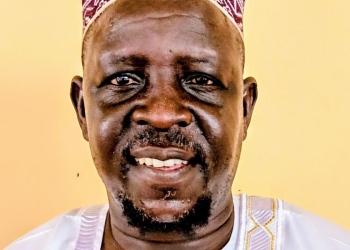
The Ministry of Finance has set a preliminary resource envelope of Sh79.22 trillion for the 2027/28 financial year. Henry Musasizi, the Minister of Finance, said the government is targeting economic growth of 9.1 percent. He is imposing tighter controls on how public resources are planned, allocated and spent.
The proposed resource envelope is lower than the Sh84.39 trillion framework for the current financial year, placing greater emphasis on domestic revenue mobilisation, private investment and more selective allocation of public resources.
The 2027/28 budget strategy was presented as part of preparations to implement the government’s Tenfold Growth Strategy, the Fourth National Development Plan, the NRM Manifesto for 2026–2031 and the Charter for Fiscal Responsibility. The budget theme is “Full Monetization of Uganda’s Economy through Commercial Agriculture, Industrialization, Expanding and Broadening Services, Digital Transformation and Market Access.”

The proposal was discussed on Friday by the Presidential Advisory Committee on Budget. The committee is chaired by Prime Minister Robinah Nabbanja with membership of several other technocrats. The strategy projects economic growth of 7.6 percent in the current financial year and 9.1 percent in 2027/28.
The Ministry of Finance attributes the higher growth projection principally to the expected commencement of commercial oil and gas production and the anticipated linkages with construction, services, manufacturing and exports. The government expects the higher growth target to be accompanied by tighter control of public expenditure.
The First Budget Call Circular issued by the Ministry of Finance, Planning and Economic Development requires Accounting Officers across government to prepare their Budget Framework Papers and preliminary estimates within specified resource ceilings and to demonstrate that proposed interventions are realistic, adequately funded and capable of delivering measurable results. Finance Ministry Permanent Secretary and Secretary to the Treasury, Ramadan Ggoobi, says the 2027/28 budget strategy is built around seven strategic shifts.
These include revenue-led fiscal consolidation, prudent management of oil revenues, mobilisation of private capital, faster implementation of the Tenfold Growth Strategy, creation of jobs and higher household incomes, sustained wealth creation and stronger budget discipline and accountability. The first shift puts domestic revenue mobilisation at the centre of budget formulation.
Government plans to broaden the tax base through data and technology, close revenue leakages, strengthen compliance and expand non-tax revenue. At the same time, ministries and agencies are expected to contain non-essential administrative expenditure, eliminate duplication and strengthen payroll controls while protecting priority development and service delivery.
This approach is partly a response to the smaller preliminary resource envelope. The 79.22 trillion shillings projected for 2027/28 is about 5.17 trillion shillings below the 84.39 trillion shillings framework for 2026/27. The Finance Ministry says the reduced envelope requires stronger domestic revenue mobilisation, reduced reliance on borrowing and external financing, and greater efficiency in the allocation of available resources.
Programme Working Groups and Accounting Officers are therefore expected to accommodate priorities through reprioritisation and reallocation rather than spreading resources thinly across competing programmes. The strategy also places oil revenues within a broader fiscal framework.
The government says oil revenues will be managed transparently and sustainably in accordance with the Public Finance Management Act and the fiscal rules under the Charter for Fiscal Responsibility. The revenues are expected to be directed primarily towards strategic, productivity-enhancing investments that support long-term economic growth and fiscal sustainability. Oil and gas are also included within the Mineral-Based Industrial Development priority.
The budget strategy calls for continued investment in oil and gas infrastructure, including the East African Crude Oil Pipeline and refinery-related investments, while strengthening transparency and accountability in the management of extractive revenues. Government also intends to quantify commercially viable mineral deposits, develop mineral markets and buying centres, and promote domestic value addition and linkages to local industry.
Beyond oil and minerals, the strategy identifies four principal drivers of the Tenfold Growth Strategy, grouped under ATMS: Agro-Industrialisation, Tourism Development, Mineral-Based Industrial Development, and Science, Technology and Innovation, including ICT and the creative industry. The government says interventions within these areas should be selected according to their contribution to production and productivity, productive employment, exports and foreign exchange earnings, import substitution, household incomes and private investment.
In agriculture, the budget priorities include increasing production and productivity, expanding irrigation and research, strengthening extension services, inspection, certification, standards and traceability. Government also wants greater emphasis on value addition and access to domestic, regional and export markets. In tourism, spending will focus on constraints that limit visitor numbers, tourist expenditure and length of stay.
The priorities include infrastructure at tourism sites, hospitality standards and skills, targeted tourism promotion and stronger economic and commercial diplomacy through Uganda’s missions abroad. Science, technology and innovation spending is expected to support the commercialisation and scaling of technologies that can raise productivity, create high-value jobs, substitute imports and increase exports.
The strategy identifies areas including e-mobility, local electronics, vaccine manufacturing, copyright enforcement, digitalisation of intellectual property administration and export-ready creative products. The government also identifies critical enablers that must support the four growth areas.
These include peace and security, roads and railway infrastructure, electricity, irrigation, industrial parks and human capital development covering health, education, water and social protection. Domestic revenue mobilisation, wealth creation funds, regional integration and export markets are also listed among the enablers, alongside legislation, oversight, accountability and administration of justice.
Environmental protection, forest and wetland restoration and alternative livelihood technologies such as fish farming are also included. The Parish Development Model remains part of the government’s wealth-creation agenda.
For 2027/28, the budget strategy says PDM resources should focus on enterprise sustainability, beneficiary productivity, loan recovery, value-chain development and market access. Government also wants stronger governance of PDM enterprise groups and SACCOs and measurable increases in household incomes. The strategy proposes using State of the Parish Economy and Asset Register reports and Parish Action Plans to guide implementation, while linking PDM enterprises progressively to markets and exporters through mechanisms such as the Area-Based Commodity Development portal.
However, the government is also introducing stricter rules on how ministries, departments and agencies prepare and execute their budgets. Accounting Officers have been instructed to prioritise ongoing commitments and high-impact interventions that are aligned with ATMS and its critical enablers, are implementation-ready and can produce measurable results.
They have been warned against spreading resources thinly across numerous interventions. Statutory and contractual obligations, essential services and viable ongoing commitments are to be adequately funded before new activities are introduced. The objective is to minimise budget reallocations, arrears and supplementary expenditure during implementation.
The First Budget Call Circular introduces a particularly strong emphasis on budget discipline. Under the principle of “No Budget, No Commitment”. Accounting Officers will not be allowed to enter into commitments without adequate provision in the approved budget and authorised cash limits. The Ministry also says supplementary budgets must remain exceptional and should not be used to finance foreseeable requirements, under-budgeted activities or expenditure arising from poor planning.
Another key rule is “Zero Tolerance for New Arrears”. Accounting Officers are required to prevent the accumulation of new domestic arrears, while existing verified arrears are to be progressively cleared according to the approved framework and available fiscal space.
The Ministry says domestic arrears undermine budget credibility, create fiscal risks and adversely affect private-sector cash flows. The circular therefore places personal responsibility on Accounting Officers for commitments and payments. The government is also introducing a “No Ready Project, No Budget” requirement.
Projects will not receive implementation financing unless they meet the required public investment management and project-readiness requirements. Project preparation may be financed, but implementation funding is to be tied to readiness.
This follows concerns over the performance of government projects. A review by the Budget Monitoring and Accountability Unit of 107 selected government projects found that 93, or 87 percent, were behind schedule. The Ministry identifies inadequate project preparation, procurement and contract management delays, right-of-way constraints, inadequate counterpart funding, delayed payments and failure to fulfil financing conditions among the causes of project delays.
The government has directed that new projects should not be allowed to crowd out viable ongoing commitments. Under the project management rules, projects should be completed before new ones are started, except where a new project is of exceptional strategic importance and receives the required approval.
Projects that are underperforming, stalled or non-viable can be subject to recovery or cancellation rather than automatically receiving additional funding. The Development Committee’s review of the Public Investment Plan has already resulted in changes to the project portfolio.
Fifty-six projects that had reached their end dates are to exit the portfolio. Another 154 projects are to be downgraded to the pipeline because of underfunding or failure to meet appraisal requirements. Twelve projects are to be downscaled because available financing cannot complete their scope within the remaining implementation period, while ten are to be rescoped because their interventions have changed.
A further 136 projects are to remain within the portfolio because they have outstanding contractual obligations or financing agreements within their implementation periods. The Finance Ministry has also raised concern about contracted external financing that remains undisbursed. Accounting Officers are expected to fulfil financing conditions, improve project readiness and address implementation bottlenecks so that contracted resources can be converted into productive assets and services.
The budget strategy also seeks to make revenue projections more realistic. Government departments and local governments are expected to base non-tax and local revenue estimates on historical performance, the existing revenue base and credible compliance measures.
The circular specifically warns against inflating revenue projections to create artificial fiscal space. Local governments are expected to improve taxpayer identification, property valuation, digital revenue collection, enforcement, reconciliation and integration with the Uganda Revenue Authority. The government is also tightening controls over recruitment and the wage bill. Recruitment in 2027/28 will generally be restricted to replacement of existing positions where approved wage provision is available.
New recruitment will only be permitted exceptionally and with clearance from the Ministry of Public Service.
Salary, pension and gratuity estimates are to be based on verified payroll and pension audit information and data validated through the Programme Budgeting System. Personnel records are also expected to be validated against National Identification records.
The budget process further requires prior clearance for government ICT goods, digital systems, software and infrastructure. The Government Digital Registry is intended to provide a central inventory of government digital systems and help identify duplication and overlap.
The Ministry says no budget should be provided for ICT investments that have not received the required clearance. The strategy also seeks to increase the role of private capital in financing Uganda’s development. Government plans to use public resources to crowd in private investment through public-private partnerships, equity partnerships, joint ventures and other bankable financing arrangements.
The approach is intended to reduce direct pressure on the national budget while accelerating investments that can contribute to growth. At the same time, the budget process requires government institutions to capture off-budget financing in the Programme Budgeting System and align it with approved priorities.
Accounting Officers are also expected to prepare full-cost budgets, including applicable taxes, rather than deliberately under-budgeting known requirements and later seeking virements or supplementary funding. The budget strategy combines an ambitious economic growth target with a more restrictive approach to public spending.
The government wants the economy to grow by 9.1 percent next financial year, but it is preparing to do so with a preliminary resource envelope that is smaller than the current year’s. The implication for ministries and agencies is that securing a larger allocation will increasingly depend on demonstrating the economic or service-delivery value of the proposed expenditure.
The government is also linking budget discipline to the performance of Accounting Officers. Under the Budget Discipline and Accountability Charter, breaches can affect performance assessments and, in some circumstances, the renewal of Accounting Officers’ contracts.
Non-compliant supplementary expenditure requests can be rejected. Commitments made without approved budget provision will not be authorised, while Accounting Officers who accumulate new arrears or undertake unauthorised recruitment may face administrative sanctions.
The strategy is also intended to protect programmes that government considers central to household wealth creation, including the Parish Development Model, Emyooga and Presidential Skilling and Industrial Hubs. The emphasis, however, is increasingly on results rather than simply allocating money to the programmes.
The Prime Minister has asked the Presidential Advisory Committee on Budget to identify priorities within priorities and ensure that public resources deliver measurable results. The Finance Ministry is now translating that direction into the detailed budget process. Programme Working Groups must allocate resources within the communicated Medium-Term Expenditure Framework ceilings and avoid simply reproducing historical Vote shares.
The agreed Vote-level allocations are due to the Ministry of Finance by October 15, 2026, while all Votes are expected to submit their Budget Framework Papers by November 13, 2026. The 2027/28 budget is therefore being built around two simultaneous objectives: financing an economic strategy that government says can deliver much faster growth, while tightening the rules governing the use of public money.
The government’s stated approach is to concentrate scarce resources on sectors and projects capable of increasing production, jobs, exports and household incomes, while reducing waste associated with poorly prepared projects, unrealistic budgets, arrears and unfunded commitments-URN. Give us feedback on this story through our email: kamwokyatimes@gmail.com