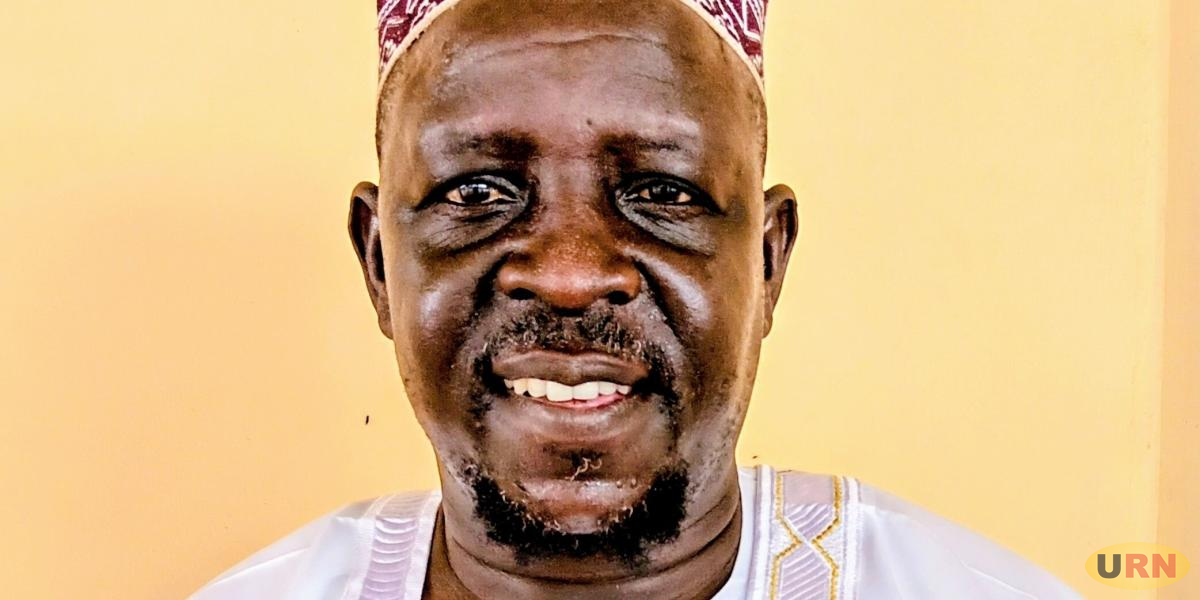
The Ministry of Education and Sports should urgently engage faith-based organisations over the implementation of the government’s free education programme, the Uganda Muslim Supreme Council (UMSC) Secretary for Education, Sheikh Juma Bakhit Cucu, has said, warning that continued restrictions on parental contributions could push Muslim-founded schools into the private sector.
Cucu said the government’s free education programme was a welcome intervention for families unable to afford school fees, but argued that schools still require additional resources to meet operational costs that are not fully covered by government funding. “We are asking the Ministry of Education to come immediately and sit down with the faith-based organisations and discuss this matter,” Cucu said during his Friday Khutubah at Gaddafi National Mosque on September 18, 2026.
His call comes amid a government crackdown on what authorities describe as illegal or unauthorised charges in government-aided schools, with several headteachers and school officials recently being investigated or arrested over money collected from learners. At the centre of the dispute is the question of how government-aided schools can meet costs beyond what is provided through government funding without violating the free education policy.

Cucu said the government pays teachers, but schools still face significant funding gaps, which he said have traditionally been bridged partly through contributions from parents. “The gaps that the government is leaving in the schools are too big, especially in government schools. We need to support our schools by parents giving money to the schools,” he said.
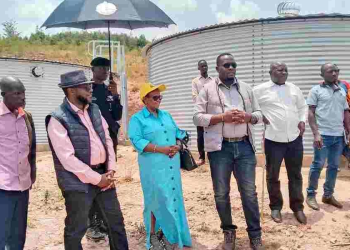
The issue has already affected Muslim-founded schools. In July, Local Government Minister Balaam Barugahara visited Nkoma Secondary School in Mbale, a school under the Uganda Muslim Supreme Council, following complaints over fees. Parents alleged that students were being required to pay between Shs100,000 and Shs190,000 despite the school being government-aided.
Barugahara ordered the disputed collections to stop and directed the school board and headteacher to seek additional government support. The school has also faced concerns over staffing, with reports indicating shortages of government-employed teachers and reliance on additional arrangements to meet teaching needs.
The scrutiny has also extended to Kawempe Muslim Secondary School, where a parliamentary team questioned the school administration earlier this month over fees of about Shs2.15 million per term for boarding students and Shs1.4 million for day scholars. The scrutiny of the two Muslim-founded institutions comes as government authorities step up enforcement against illegal charges across government-aided schools.
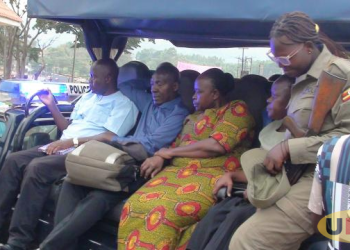
In August, the headteacher and School Management Committee chairperson of Kololo Public Secondary School in Maracha were arrested after authorities alleged that students were being charged Shs80,000 to pay teachers who were not on the government payroll. At Buheesi Secondary School in Bunyangabu, the headmaster and PTA chairman were also arrested over allegations that students were being charged construction fees every term without corresponding projects.
Namisindwa Secondary School was meanwhile ordered closed following an inspection in which authorities said students were being charged Shs65,000 despite the school being government-aided. The State House Education Desk has also warned administrators of UPE and USE schools against imposing illegal charges, saying those found violating the policy would face the law.
Cucu, however, warned that enforcement without addressing the funding gaps could have unintended consequences for schools. “Now they are stopping it, they are arresting teachers, arresting one, and things are becoming harder. Eventually, quite soon, our schools begin to collapse,” he said.
He said if government and faith-based organisations fail to agree on a sustainable financing arrangement, Muslim organisations could opt to run their schools entirely as private institutions. “If not, we should take care of everything at a private level rather than having this type of confusion, because it would be a big problem that is facing the children in the coming years,” Cucu said.
He nevertheless acknowledged the importance of free education, particularly for children from low-income families. “Free education is good for those who do not have money to go to school. It is good to send your children to school. That is the truth,” he said.
Cucu’s remarks came during a Khutubah centred on the importance of knowledge and education in Islam, which he described as essential to the development of individuals and societies. “Islam is a religion that rises on the deep waters of knowledge, but it can also sink in the shallow waters of ignorance,” he said, citing Quran 39:9, which asks whether those who know can be equal to those who do not know.
He said education should go beyond preparing people for employment, arguing that it should help individuals understand and fulfil the purpose for which they were created. “Education is preparation for the purpose for which Allah has created you,” Cucu said. He also traced the history of Muslim education in Uganda, saying the community had struggled to establish and maintain its own schools, particularly during the colonial period when many schools were controlled by missionary organisations.
Cucu said Muslims later established their own institutions and invested in developing professionals to manage them, making education a critical part of the community’s development. He urged the government and faith-based organisations to resolve the current dispute through dialogue, saying the sustainability of schools and the education of children should not be compromised by the funding disagreement-URN. Give us feedback on this story through our email: kamwokyatimes@gmail.com