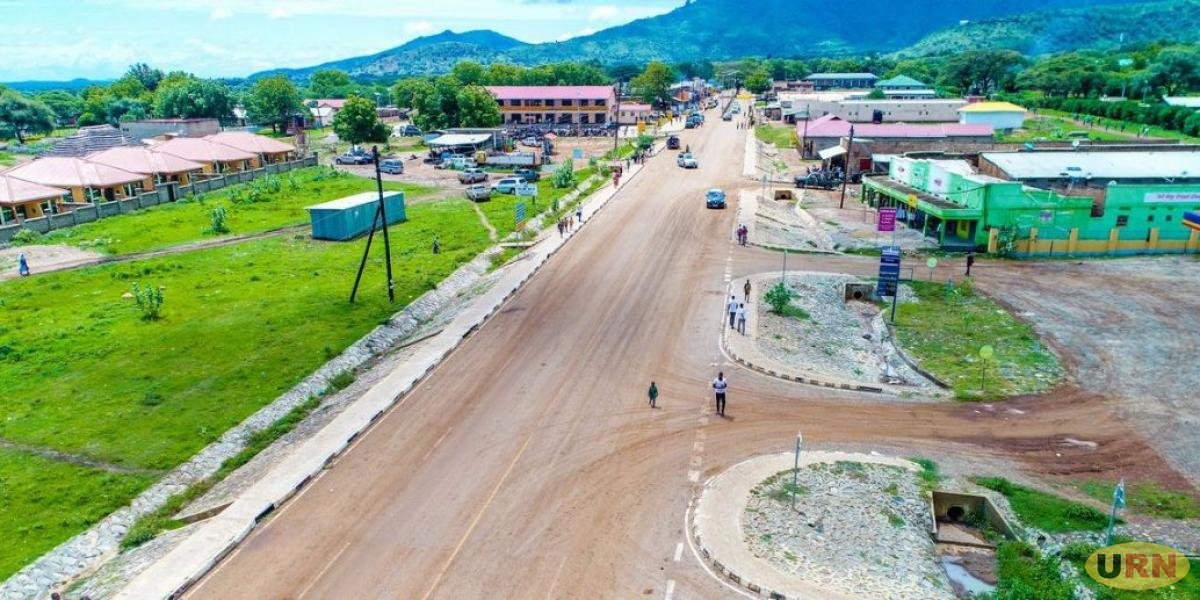
Leaders of Moroto Municipal Council have renewed calls for the expansion of the municipality, saying its small size is crippling development and blocking its long-awaited city status.
Moroto, one of the oldest municipalities in Uganda, established in 1974, is still operating within a 3-kilometre radius covering only 30.62 square kilometers, making it the smallest municipality in the country. In November 2019, the Ministry of Local Government gazetted 22 villages from Moroto District into the municipality to facilitate its growth.
The villages carved from Nadunget Sub-county to South Division included Nachogoram, Apetaoi, Lokwakwa, Natapar, Kocuc, Kalopwanya, Kanakomol, Awoimuju, plus Mount Moroto Village from Katikekile Sub-county. To North Division, villages included Nachele, Nabokat, Namijimij, Kaloi West, Katanga, Acholi-Inn, Army Barracks, Natopojo, Kwamong, Kalukalet, Kidepo, Natumkskou, Kaloi East, Singila and Nabuin.

Later in December 2020, nine parishes were annexed from Nadunget, Loputuk and Rupa Sub-counties, including Naitakwae, Nakadeli, Lobunoit, Lia, Nawanatau and Nacogorom, to push the municipal population to 118,500, a requirement for city status.
However, communities from Katikekile Sub-county in Tepeth County allegedly rejected the proposal to carve out some of their villages into the municipality, stalling the process.
Richard Eyaru, the Town Clerk of Moroto Municipal Council, has now appealed to local leaders and the Minister for Karamoja Affairs to expedite the clearing of the 22 villages.
Eyaru said the villages were already offered by Moroto District Council, but the matter of those who rejected it has never been resolved.
”The villages should be cleared so that we can start planning and road connectivity works. Moroto is currently the least funded because of its small radius,” Eyaru said. He revealed that under the Uganda Cities and Municipal Infrastructure Development (UCMID) project, Moroto was allocated only 9.8 billion shillings while other municipalities are receiving over 20 billion shillings because of their large size.
”A municipality should cover not less than 15 kilometres, but Moroto has remained at only 3 kilometres, making it very small. We need these villages to attract more funding from government,” he said.
Francis Adome, the Member of Parliament for Moroto Municipality, emphasized the need for cooperation among leaders and communities to achieve city status.
”There are so many things we need to fulfil, including geographical location and radius. The municipality is rapidly growing and has attracted a large business community, yet it is too small to accommodate them,” Adome said.
John Baptist Lokii, the Minister for Karamoja Affairs and MP for Matheniko County, where some villages were carved out, said he has already cleared all villages from his constituency.
”I could not object because I have always yearned for the expansion of the municipality. The municipality comes with a lot of infrastructural development, especially road networks which help to empower communities,” Lokii said. He urged other leaders to embrace the expansion.
The land crisis is now visible. The municipality lacks space for key services. It has no cemetery land and has to procure land from Rupa Sub-county for garbage dumping.
During the recent enforcement of the trade order, where containers and kiosks were removed from the streets, welders, carpenters and mechanics operating in containers had nowhere to be reallocated due to lack of space.
Mark Ssire, the Mayor of Moroto Municipality, acknowledged the crisis, saying they are stuck due to a shortage of land for development. He urged the district leadership to intervene by dialoguing with communities. However, Albert Lokoru, the MP for Tepeth County, accused of influencing the community to reject the expansion, defended himself, saying people needed sensitization.
”I welcome the proposal to expand, but it should be in line with the law. Article 79 of the constitution talks about consent,” Lokoru said.He said the district council resolved to expand the municipality without involving local communities to understand the benefits.
”Tepeth is rapidly developing on its own, which shows we support development, but we need community awareness, so people don’t think about compensation for their own development,” he said. Lokoru added that municipal leadership has never moved to the affected communities to explain the expansion and has failed to deliver the expansion plan and map to his office.
Municipal expansion and boundary changes are governed by the Local Government Act, which requires formal discussions, local consultations, and approval from relevant central and local government authorities-URN. Give us feedback on this story through our email: kamwokyatimes@gmail.com