Corruption in Uganda’s infrastructure and public service delivery systems has once again come under sharp focus following pledges by newly appointed ministers to crack down on graft, which they say continues to undermine the quality and timely completion of government projects.
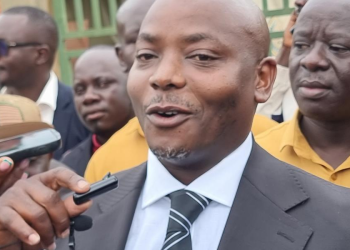
The concerns were amplified after Fred Byamukama, the newly appointed Minister of Works and Transport, highlighted alleged corruption within the engineering and contracting chain, shortly after appearing before Parliament’s Appointments Committee. He warned that corrupt practices in procurement and supervision were directly affecting infrastructure quality and value for money.
“We have seen engineers demanding percentages from contractors. A contract of Shillings 30 billion, they ask for six percent. Indirectly, it affects the quality of the project,” Byamukama said.

Byamukama pledged a crackdown on corruption involving engineers, supervisors, and officials in the transport sector, arguing that the practice contributes to premature road failures and abandoned projects. He said he would not ignore what he described as entrenched corruption within some entities under his ministry.”We have seen roads commissioned, and they break within one or two years. Government pays for roads done in a poor way because supervisors are compromised,” he said. “I know entities in my ministry where corruption is a state. We shall not close our eyes.”
The Ministry of Works and Transport has long been cited in corruption reports, with parliamentary investigations, Auditor General findings, and anti-corruption agency reports repeatedly pointing to weaknesses in procurement, contract management, and project supervision.
These gaps have often resulted in delayed projects, cost overruns, and poor workmanship across major infrastructure developments. Several flagship projects have faced such challenges, including the Mityana–Mubende Road, which has experienced prolonged delays, the Kampala–Jinja Expressway, which has faced repeated setbacks, as well as works on Karuma Bridge and Katonga Bridge, both of which have encountered disruption and criticism over execution timelines.
Government accountability reports tabled in Parliament have also indicated that numerous road and bridge projects remain behind schedule due to funding gaps, compensation disputes, contractor challenges, and administrative bottlenecks. Although corruption is difficult to quantify, transparency advocates argue that kickbacks demanded during procurement and supervision often push contractors to cut corners in order to recover unofficial payments.
The anti-corruption stance expressed by Byamukama was echoed by other newly appointed ministers during the vetting process, signalling a broader government emphasis on accountability and service delivery. Minister of Finance, Planning, and Economic Development Henry Musasizi pledged to strengthen financial discipline and ensure prudent use of public resources.
He said his focus would be on improving value for money and addressing inefficiencies in public spending, an area frequently flagged by oversight institutions. Similarly, Minister of Local Government Balaam Barugahara committed to tightening oversight of local governments to curb corruption and improve service delivery. “I will focus on improving service delivery in the districts. I will also try as much as possible to eliminate corruption in the districts,” Barugahara said.He also proposed the introduction of a biometric attendance system for local government staff to track attendance and reduce absenteeism.
“We are going to introduce biometric data entry. As you enter, we count how many times you have worked. We count the days you have reported and the days you have exited. We count those days on a central system at the Ministry of Local Government. If you miss out on five different occasions without permission of the permanent secretary, count yourself out of that ministry. Count yourself out of the district,” he said.
Across the new Cabinet, several ministers have aligned their priorities with President Yoweri Museveni’s long-standing call for a renewed fight against corruption, describing graft as a major barrier to infrastructure development, service delivery, and economic transformation.
For years, Parliament, the Auditor General, and anti-corruption agencies have consistently flagged procurement weaknesses, contract mismanagement, and poor project supervision as key drivers of inefficiency and delayed government programmes-URN. Give us feedback on this story through our email: kamwokyatimes@gmail.com