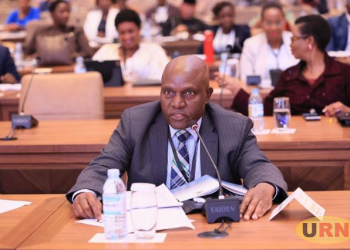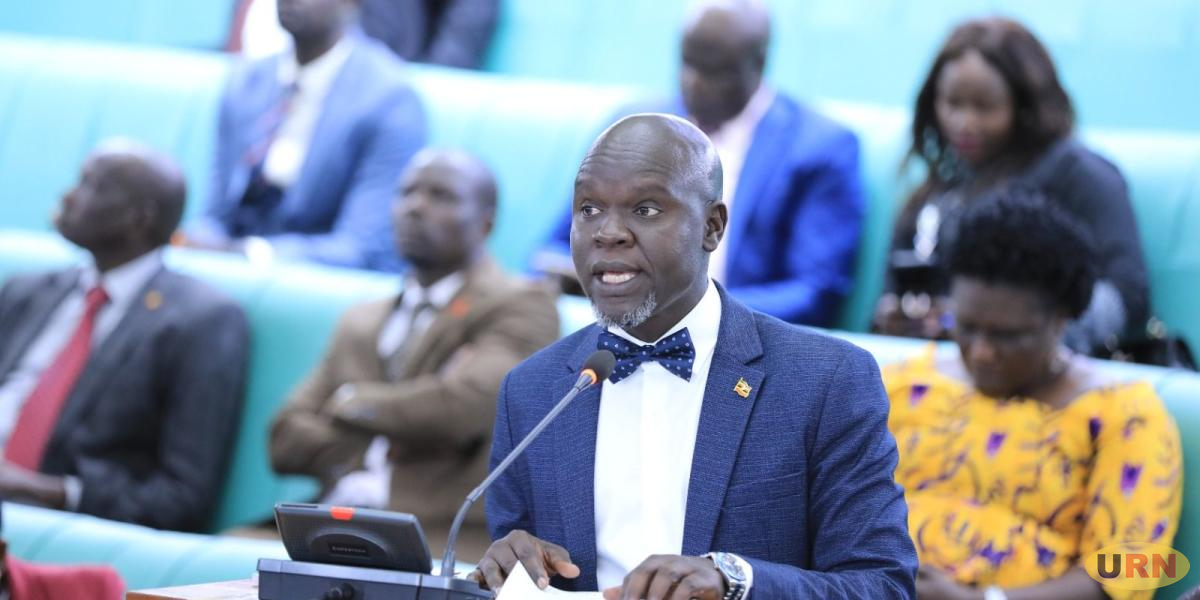
Martin Ojara Mapenduzi, the Member of Parliament for Bardege-Layibi Division, has urged Parliament to prioritize the welfare of local government leaders. Ojara Mapenduzi, the former Gulu District Chairperson, warned that decades of poor remuneration, shrinking fiscal autonomy and inadequate funding are undermining service delivery at the grassroots.
Addressing newly elected Members of Parliament during an induction session at Parliament, Mapenduzi said local governments remain the backbone of public service delivery but continue to receive limited financial support despite shouldering the bulk of responsibilities in education, health, roads and community services. “When you meet local government leaders, you will see from their faces the kind of anger they have. They look at Members of Parliament as the source of their problem,” Mapenduzi said.
“The district chairpersons will tell you they are paid about 2.3 million shillings gross, and when it is taxed, they take home about 1.7 million shillings. That has been the position for more than 20 years,” he said. He noted that the district chairperson is the political head of a district and provides both political and administrative leadership but earns far less than some individuals that he is supposed to supervise.

“Parliament needs to interest itself in these critical needs of local government and push so that we are able to support them as we expect them to deliver effective services,” said Mapenduzi. He noted that local governments have been allocated only about nine percent of the 84.3 trillion national budget for the 2026/27 financial year, an amount he said falls far short of what is required to deliver services at the grassroots.
“This financial year, local governments have been allocated only nine percent of the national budget. Look at how much they are expected to provide in terms of services and how little they are given. If Parliament does not care about local governments, then local governments will have very little to do for the citizens at the grassroots,” he said.
Mapenduzi said Parliament’s commitment to decentralisation should be reflected not only in legislation but also in budget appropriations, arguing that stronger local governments would translate into better governance, improved accountability and enhanced service delivery. He also attributed the current predicament at local governments to changes introduced under the Public Finance Management Act, 2015, which requires locally generated revenue to be remitted to the Consolidated Fund before being appropriated back to local governments.
“Before 2015, local governments would generate local revenue, plan, budget and spend it. But after the Public Finance Management Act, local governments have to mobilise local revenue and send it to the Consolidated Fund. Even when they collect more than what was planned, they cannot spend that money without Parliament approving a supplementary budget,” he explained.
Mapenduzi argued that the arrangement has significantly reduced the financial autonomy local governments previously enjoyed under Uganda’s decentralisation framework. He reminded legislators that Parliament had previously acknowledged concerns over the centralisation of local revenue when Wakiso District Woman MP Betty Naluyima tabled a motion in the 11th Parliament urging government to allow local governments to retain and spend locally generated revenue.
Parliament adopted the motion, but Mapenduzi noted that the resolution did not amend the law. “The Honourable Betty Naluyima moved a motion in the 11th Parliament urging government to reverse the decision to collect all locally generated revenue through the Consolidated Fund. But you cannot change the law by merely passing a resolution of Parliament. If we want to reverse that position, we must amend the law,” he said.
Mapenduzi also appealed to Members of Parliament to strengthen their engagement with district councils by attending council meetings, maintaining regular contact with local leaders and proactively supporting local governments rather than only intervening after problems arise.
“I would really plead with Members of Parliament to take responsibility and attend district council meetings. You cannot be busy throughout five years. If you cannot attend, ask for the council resolutions and follow up on the issues requiring parliamentary intervention. It is not about competing for power; it is about what you can offer your district and your people.”
He criticised Parliament’s oversight approach, saying committees often conduct “post-mortems” after funds have already been mismanaged instead of providing continuous oversight that prevents abuse. “There is a perception among local governments that Parliament only comes to investigate after things have gone wrong. We do a lot more post-mortem than proactively supporting local governments to perform better. Oversight should not only be about exposing failures but helping institutions succeed.”
Mapenduzi further called for increased funding for the Ministry of Local Government to facilitate a comprehensive review of Uganda’s decentralisation policy and amendments to the Local Government Act, saying several provisions no longer reflect the realities facing local governments.
His call received immediate backing from Kilak North MP Anthony Akol, who said Parliament has for years failed to address the glaring disparities between the salaries of political leaders and technical officers in local governments. “I have been in Parliament for 10 years and I have tried through the Budget Committee to push for the salaries of chairpersons to be increased,” Akol said.
“In a situation where the Chief Administrative Officer earns more than 10 million shillings, and the LC5 chairperson takes home less than two million shillings, how can the LC5 chairperson effectively supervise somebody who earns much more than them?”
Akol also questioned the academic qualifications required for some elected local government leaders, proposing the introduction of a minimum qualification for LC3 chairpersons.
“The level of education, especially in the LC3 system, is another concern. Some LC3 chairpersons cannot even write their names, yet they are supposed to supervise sub-county chiefs who are graduates and, in some cases, hold master’s degrees. Why don’t we put a minimum qualification of Senior Four? At least somebody who can read reports, understand figures and appreciate what is happening.”
Mapenduzi concluded that if Parliament expects local governments to improve service delivery, it must match those expectations with adequate financing, stronger institutional support and better welfare for the leaders charged with implementing government programmes at the grassroots.
“We expect local governments to do more, but we must also furnish them with what they need to perform. Coming together is a beginning, keeping together is progress, and working together is success.”-URN. Give us feedback on this story through our email: kamwokyatimes@gmail.com