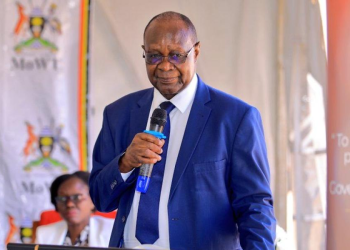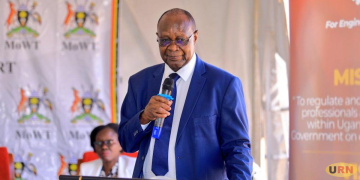
Dr. Chrispus Kiyonga, Second Deputy Prime Minister and Deputy Leader of Government Business in Parliament, has urged Members of Parliament to prioritize strengthening the healthcare system. Kiyonga, who has previously served as the Minister of Health, warns that recurring disease outbreaks expose gaps in the country’s preparedness and access to health services.

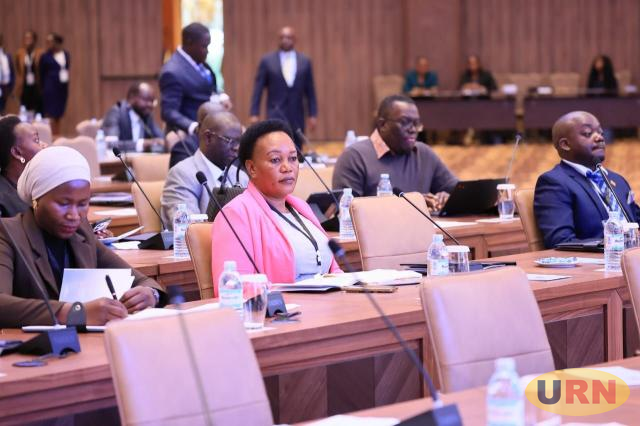
Speaking during the induction seminar for members of the 12th Parliament at Speke Resort Munyonyo, Kiyonga said recent epidemics should serve as a wake-up call for legislators to invest more in public health.
“The recent epidemics we have had, COVID-19 and, more recently, Ebola, are a crude reminder that our health system is still weak. If we can’t handle them and they kill people, it means there is something lacking,” Kiyonga said. He noted that diseases once believed to have been eliminated, including polio and measles, have re-emerged, underscoring the need to strengthen disease surveillance, preparedness and response.
“We must ask what we need to do to stop old diseases from returning and prepare for the new diseases that will certainly come. Our state of preparedness is critical to detect diseases early and quickly work out solutions to deal with them,” he said.
Kiyonga also challenged Parliament to pay greater attention to primary healthcare, arguing that effective health systems begin at the community level. “Our healthcare system has Health Centre II, Health Centre III and Health Centre IV, but you should ask why there is no Health Centre I. Health Centre I is where the people are,” he said.
This focuses on preparedness for future epidemics.
He emphasized the importance of prevention and early intervention within communities. Kiyonga, who doubles as the Chancellor of Makerere University, said Uganda’s development depends on leaders having a deeper understanding of political economy. He revealed that Makerere University has made political economy a compulsory course for all students, regardless of their field of study.
“Whether you are studying medicine, engineering or any other discipline, you must understand the basic source of survival,” he said. He explained that the programme is intended to help graduates appreciate how politics, governance and economics interact to shape national development. He said a sound understanding of political economy would enable future leaders and professionals to better appreciate Uganda’s national interests, regional integration and the global forces that influence economic growth.
Kiyonga also called on Parliament to support the government’s target of expanding Uganda’s economy to a Gross Domestic Product of 500 billion dollars under the Fourth National Development Plan. He said lawmakers should ensure that economic growth translates into improved household incomes and shared prosperity rather than benefiting only a small section of the population.
“We must ensure that we don’t just create a bigger economy while people on the ground have nothing. This growth must be broad-based and inclusive,” he said. Speaking about national interests, Kiyonga listed the need to improve the education system as one of the key priorities.
“National interest number six is in the education sector. The NRM brought UPE. I have met children myself in my area. A child is in P5, P6. If you ask him the mathematics tables, three times nine, he can’t answer you. Then children are being chased from the schools. All of us, I’m sure, I would be surprised to find an exception,” he noted.
“So, this is the place where we must discuss that issue and have it corrected. Otherwise, many of our young people are being left behind. And that can be said upwards”
Kiyonga further urged legislators to support regional integration through the East African Community and the African Continental Free Trade Area, saying access to larger markets is essential for Uganda’s agricultural and industrial development. He made the remarks while addressing newly elected legislators on the importance of promoting the national interest and the common good in parliamentary decision-making-URN. Give us feedback on this story through our email: kamwokyatimes@gmail.com