Kitgum High Court has intensified efforts to eliminate case backlog, with judicial officers expressing optimism that it will soon begin handling cases in real time.
This was revealed during Open Court Day held at Kitgum High Court on Thursday, where judicial officers engaged the public on access to justice, land disputes, delayed cases and the introduction of an audio-visual conferencing.
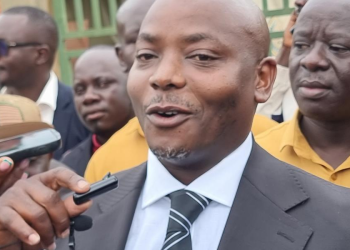
Kitgum Resident Judge, Phillip Willbrord Mwaka, said the High Court Circuit, which was opened in March 2024, has significantly reduced pending cases through plea bargaining, mediation and the use of technology.

“When we came here, we had about 851 cases. The criminal matters alone were more than 500. As of now, pending criminal cases stand at 181,” Mwaka said.
He said the court aims to reduce the total caseload to below 300 by the end of the year.
“It is our intention that by the end of this year, we shall have not more than 300 cases,” he said. “We are optimistic that we will be handling cases in real time.”
Mwaka attributed the progress to intensified plea bargain sessions conducted at Kitgum Main Prison and improved coordination between the judiciary, police and Office of the Director of Public Prosecutions.
“In March and April, we completed 70 plea bargains within six days while operating from Kitgum Main Prison,” he said.
The judge noted that the newly launched audio-visual conferencing system would improve efficiency by reducing the need to transport prisoners to court.
“Now that we can deal with the prison directly without travelling there, our output will increase,” he added.
The Open Court Day also highlighted challenges facing the justice system in Acholi, particularly land disputes arising from customary land ownership.
Mwaka said many land conflicts, which form the greater percentage civil matters, stem from the absence of surveys and proper documentation of customary land.
“Our land here tends to be customary land, is not surveyed, registered or documented, which makes adjudication difficult,” he said.
The judge revealed that the High Court had introduced a policy requiring survey reports before hearing major land disputes.
“It is now the policy of our court that before I entertain any land matter, there must be a survey report regarding that land,” he said.
Mwaka warned that many murder and assault cases handled by the court originate from unresolved land wrangles and urged communities to seek legal remedies instead of resorting to violence.
Senior Resident State Attorney Patrick Ojara called on the public to cooperate with law enforcement agencies by reporting crimes, supporting investigations and appearing in court as witnesses.
“We must all play our roles for the justice system to work well,” Ojara said.
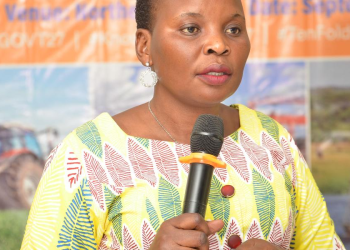
Principal Judge Jane Frances Abodo, in her remarks delivered by Kitgum Resident Judge Mwaka Phillip Willbrord, noted that delayed justice undermines public confidence in the justice system and negatively affects the lives of litigants, victims, accused persons, families, and communities.
“Prolonged disputes often tie up property, strain relationships, restrict freedoms, and impede socio-economic development,” Justice Abodo said.
She noted that as of the end of March 2026, the Judiciary’s pending cases stood at 202,005of which 51,199 are backlog.
Measures adopted aimed at reducing case backlog and improving access to justice include the promotion of Alternative Dispute Resolution mechanisms such as Plea Bargaining, Mediation, and the Small Claims Procedure; the Application of ICTs in the Courts’ business process and service delivery; and enhancing physical access to justice through the construction and expansion of Court infrastructure.
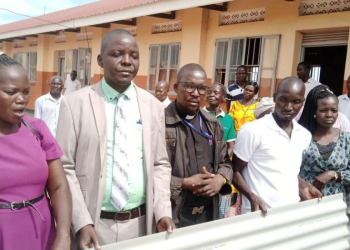
The Open Court Day brought together judicial officers, prosecutors, prison officials, lawyers, cultural leaders and members of the public to discuss ways of improving justice delivery in northern Uganda-URN. Give us feedback on this story through our email: kamwokyatimes@gmail.com