Residents of Kangole Town Council in Napak District have called for urgent connection to the motorised water supply system in Kangole Chini, saying the move would help ease the biting water crisis in the area.
Residents of Kangole Chini, Kangole Middle and neighbouring villages say they currently depend on a single borehole, whose water levels have significantly dropped due to the prolonged dry spell.
They are particularly concerned that the motorised water system established in Kangole Chini is supplying water to the town while leaving nearby communities without access to the facility. The water system was constructed by the Ministry of Water and Environment through the Water and Sanitation Development Facility-Karamoja (WSDF-Karamoja), with funding from the Government of Uganda, as part of the Kangole Rural Growth Centre water supply system.

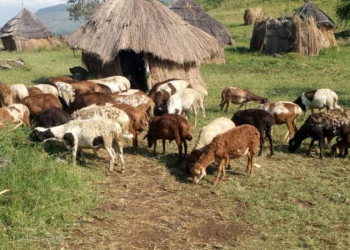
Abiba Moru, a resident of Kangole Middle, said the lack of clean and reliable water has exposed residents to numerous challenges, including health risks. Moru said residents are sometimes forced to share water from rivers with livestock or walk long distances to neighbouring villages in search of clean water.
She said the situation becomes worse during the dry season when river streams dry up, and the only borehole serving the community from another village comes under increased pressure. Moru said reliable access to water would also enable residents to grow vegetables to support their families.
“We are seeing our neighbouring village growing vegetables because they have borehole water. We also wish government could connect us to the water facility,” Moru appealed. Jacob Lokong, another resident, said the water crisis is difficult to understand given that the motorised water facility is only a few kilometres away.
Lokong said the shortage of clean water has forced residents to rely on unprotected water sources, exposing them to waterborne diseases. He added that women are particularly affected because they have to walk long distances in search of clean water.
“A lot of time is wasted in search of water, time that could have been spent on other productive family activities,” he said.
Sandra Apio said the struggle to access clean water has also contributed to domestic violence in some families.
“First you have to move kilometres to the borehole; upon reaching there, you find many people, and you have to wait. Because of that, you return home very late. Now the husband who has been drinking the whole day comes back home and starts complaining that we delay at the borehole with men; sometimes they even beat us,” Apio said
.Apio said some families have broken up as a result of conflicts linked, in part, to the water crisis. She also said the long distances girls travel to access water expose them to sexual abuse, as some use the opportunity to meet their boyfriends, with some encounters reportedly ending in abuse.
Apio appealed to the government to establish a borehole in the affected communities or connect them to the motorised water system.
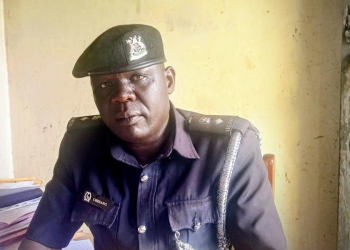
However, Andrew Timothy Amudu, the Napak District Assistant Production Officer who also doubles as a plumber, attributed the water shortage mainly to the prolonged dry spell, which has caused water tables to fall.
Amudu said the motorised water facility in Kangole Chini is among those affected by the declining water levels and is currently unable to supply water.
“For the entire Kangole Town Council, we are using one pump that pumps water to the Nasike water tank to serve the entire town council, whose water has also reduced,” he said. Amudu said the district is making efforts to revive the Kangole Chini pump to reduce pressure on the only functional system.
He acknowledged that residents of Kangole Chini and Kangole Middle have not been connected to the motorised water system but added that there are plans to connect them once the facility resumes operation.
Amudu further explained that the communities were not deliberately excluded, but the connection was disrupted after fast-flowing water destroyed pipes laid across the river to supply the communities-URN. Give us feedback on this story through our email: kamwokyatimes@gmail.com