Uganda’s principal public expenditure watchdog is facing mounting scrutiny over failure to audit the controversial digital number plates project, with Parliament giving the Auditor General, Edward Akol, until Tuesday to produce preliminary findings or be held in contempt for failure to perform his duties.
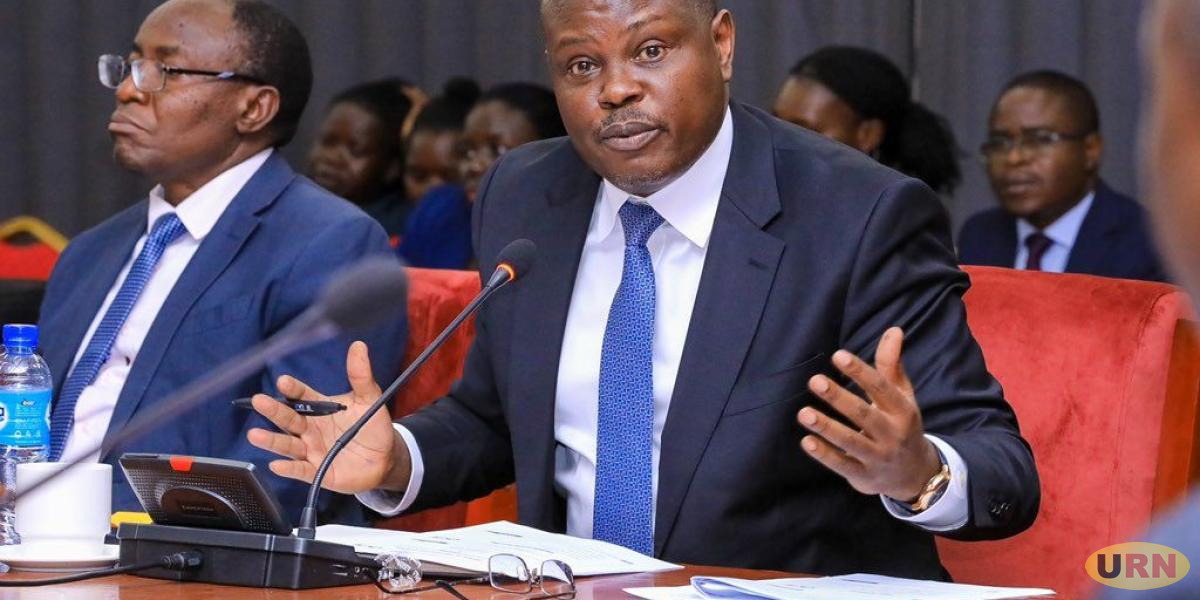
The ultimatum followed a tense engagement between Akol and Parliament’s Committee on Physical Infrastructure, chaired by Mbarara South Division MP Mwine Mpaka, as the Auditor General blamed staffing shortages and inadequate access to project documents among challenges affecting his office.
The committee however, queried why the Office of the Auditor General (OAG) had not audited revenue generated by the Intelligent Transport Monitoring System (ITMS), implemented under a 10-year public-private partnership agreement signed in 2021, despite previous parliamentary concerns and repeated correspondence with the relevant authorities.

The exchange has turned the spotlight on an institution constitutionally mandated to examine public expenditure and provide independent assessments of how government resources are managed. It has raised a broader accountability question: who scrutinises the Auditor General when Parliament believes the office has failed to perform its duties?
MPs expressed dissatisfaction with the quality of audit reports, arguing that weaknesses in OAG’s work could be allowing suspected financial irregularities to go undetected or inadequately investigated.
Zombo District Woman MP Topista Acamfua, said people are being charged exorbitant amounts for digital number plates, yet the receipts allegedly issued to them reflected significantly lower figures.
She cited complaints from motorists in her constituency who reportedly paid more than Shs2 million for number plates, despite receipts indicating Shs750,000, which she described as the recognised rate.
The MP questioned whether the discrepancies pointed to collusion among individuals involved in the implementation of the project and called for investigations.
James Waluswaka, the Bunyole County MP, proposed a mechanism to monitor the work of the Auditor General to ensure that the institution itself delivers accountability and value for money.
He argued that Parliament not solely rely on audit findings but also establish whether the audits conducted are sufficiently thorough to expose financial irregularities and protect public resources.
Fred Jalameso, the Ajuri County MP, said concerns about the Auditor General extended beyond the digital number plates project, pointing to what he described as persistent weaknesses raised by parliamentary accountability committees.
Patrick Nsamba Oshabe, the chairperson of Parliament’s Central Public Accounts Committee, also questioned the effectiveness of audit reports in helping Parliament hold public institutions and officials accountable, saying the weak reports make it difficult for parliamentary committees to establish responsibility for corruption, misuse of public funds and other financial irregularities.
The concerns point to a growing tension between Parliament and an institution whose reports are routinely used to question accounting officers, government agencies and state-owned enterprises over procurement, expenditure and suspected abuse of public resources.
The confrontation also brings into focus complaints by public officials appearing before parliamentary accountability committees about their interactions with the Auditor General’s staff.
During proceedings before the Committee on Commissions, Statutory Authorities and State Enterprises (COSASE), some officials have questioned the conduct and responsiveness of audit staff, with some describing their interactions as rude or unfriendly.
Edward Damulira, the Ministry of Finance undersecretary, told COSASE that some audit staff lacked the courtesy to even greet officials when conducting audits. He however withdrew the remarks after committee members challenged him to substantiate his claims.
The concerns raised by MPs come against the backdrop of the Auditor General’s 2024/2025 financial year reporting. According to the figures cited, 623 financial audit opinions were analysed for the year ended June 30, 2025. Of these, 606 were unqualified and 17 were qualified. The summary recorded no adverse or disclaimer opinions.
The 17 qualified opinions represented approximately 2.7 per cent of the total. An unqualified opinion generally indicates that financial statements present a fair picture, in all material respects, under the applicable reporting framework. A qualified opinion means that the statements are fairly presented except for specific material issues identified by the auditor.
Addressing the Physical Infrastructure committee on Thursday, Akol acknowledged that his office had not conducted all the audits required by law, attributing the shortfall largely to inadequate staffing and resources. He said the OAG was expected to undertake some 16,000 audits annually, excluding about 10,500 Parish Development Model (PDM) support structures, bringing the total to nearly 25,000.
However, the office has 600 staff, 450 of whom undertake field engagements with audited entities. The Auditor General’s office occupies a central position in Uganda’s accountability system, providing Parliament with independent assessments of how public funds are managed. Its reports inform investigations by parliamentary committees and can trigger administrative action, recovery of funds or referrals for further investigation-URN. Give us feedback on this story through our email: kamwokyatimes@gmail.com