By KT Reporter
The Minister for Health, Dr Jane Ruth Aceng has expressed deep concerns over the persistently low immunisation coverage in the Acholi sub-region despite the availability of vaccines in government health facilities.
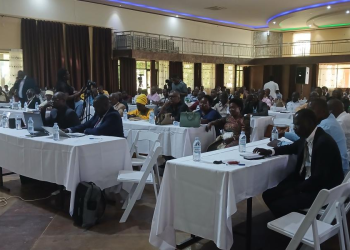
Dr Aceng highlighted the concerns on Friday while officiating at the National World Malaria Day celebrations held at Kaunda Parade grounds in Gulu city. The event was held under the theme “Eliminate Malaria Now”.

Dr Aceng noted that due to the poor immunisation coverage, the mortality rate from vaccine-preventable diseases in the sub-region remains high, yet the Ministry has stocked the health facilities with vaccines. The health Ministry immunisation schedule has 14 vaccines that are administered during childhood.
The Minister, however, noted that the Acholi Sub-region in particular still lags in vaccination uptake, unlike other parts of the country.
She encouraged the leaders within the sub-region to work harder and emulate other regions so that they don’t end up lagging again in administering the recently launched malaria vaccine for children.
The Health Ministry launched the R21/Matrix-M malaria early this month in Apac district, targeting some 1.1 million children under two years in 105 high and moderate transmission districts across Uganda. The vaccine will be administered in four doses at 6, 7, 8, and 18 months.
The Minister, however, urged Ugandans to take malaria seriously, arguing that many people have become insensitive to the disease and treat it as a routine part of life rather than a serious health threat.
Gulu City Health Officer Dr Daniel Okello, while presenting the situational report for malaria in Gulu city, noted that the health department has achieved a tremendous decline in inpatient malaria mortality in the last two financial years, 2022/24 and 2023/24.
For instance, in the 2023/24 financial year, the city health department saw a 37 percent decline from 49 to 31 per 100,000 of the population. In the financial year 2023/24, there was a 35 percent decline from 110 to 71 per 100,000 of the population.
Dr Okello also noted that in the same period, confirmed malaria cases reduced from 347 per 1,000 population to 335 per 1,000 population, with the test positivity rate reducing 33 percent to 28 percent.
However, in a bid to sustain the achievements, Dr Okello recommended the need to prioritise maternal services, increase distribution of insecticide-treated mosquito nets, combat transmissions and enhance diagnostic services in remote areas.
Betty Aol Ocan, the Gulu City Woman Member of Parliament, emphasised the need for upgrading the existing health centre IIIs to Health Centre IVS so that they offer effective health services. She also highlighted that while the government is committed to fighting malaria, problems of drug stockouts remain a major hindrance in treating malaria.
Gulu City health department currently operates four level three health centres. They are Aywee Health Center III, Laroo Health Center III, Bardege and Layibi Teco Health Center IIIs.
The Deputy Speaker of Parliament, Thomas Tayebwa, in a written message read by Dr Aceng, noted that the government is committed to eliminating malaria by 203,0, citing tremendous progress made so far in reducing the malaria burden. He explained that so far, such achievements have been made possible through the delivery of effective malaria prevention and control interventions.
Uganda is ranked number three, and the third highest contributor of global malaria cases and the tenth highest contributor to deaths. According to the Health Ministry data, 30 to 40 percent of outpatient visits are due to malaria, while 20 percent of admissions are due to malaria, with the disease accounting for 10 percent of the inpatient deaths-URN. Give us feedback on this story through our email: kamwokyatimes@gmail.com