Health experts and local government leaders in the Acholi Sub-region have called for prompt establishment of District Service Commissions (DSCs) to speed up the recruitment of critical health workers to address persistent staffing gaps in public health facilities.
The recommendation follows concerns over the shortage of medical personnel in both lower and higher-level government health facilities partly attributed to delays in recruitment caused by the absence or inactivity of substantive District Service Commissions.
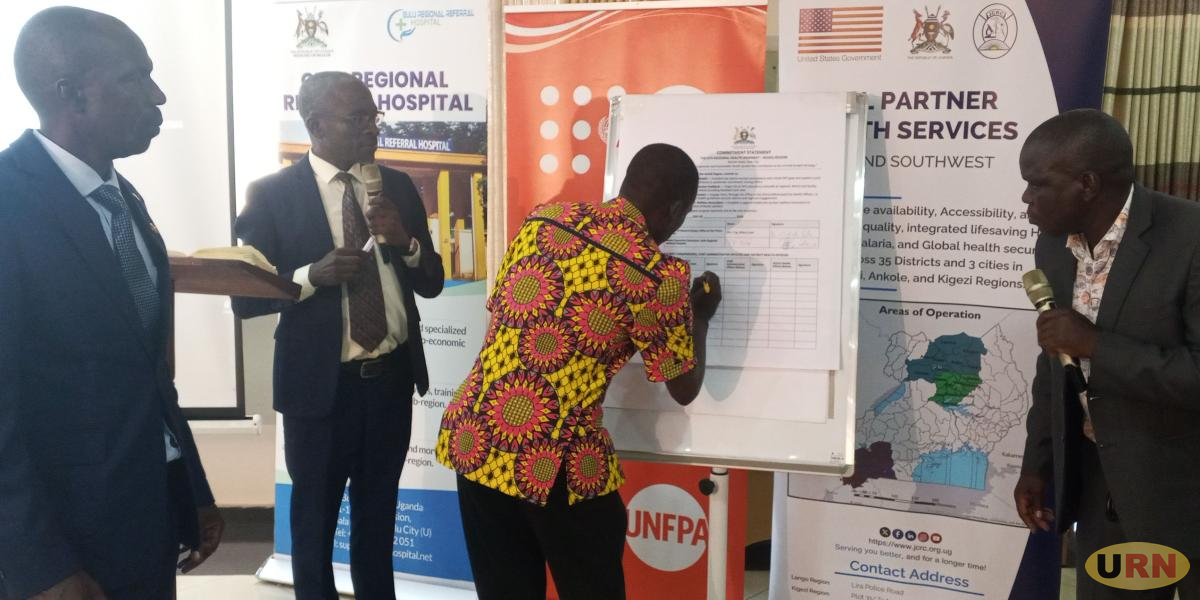
The proposal was among key issues raised and adopted for implementation on Friday at the close of the 3-day Sixth Regional General Assembly convened by Gulu Regional Referral Hospital in Gulu City.

Health officials, Resident District Commissioners and accounting officers at the assembly identified inadequate staffing as one of the major barriers to effective health service delivery in the region.
Dr Peter Mukobi, Senior Executive Consultant at Gulu Regional Referral Hospital, said the Acholi Sub-region is facing a significant shortage of health workers, with the average human resource capacity estimated at only 30 percent.
Dr Mukobi attributed the staffing gap largely to inadequate funding for the wage bill, which he said affects districts across the sub-region and called for stronger advocacy by regional leaders to secure additional funding for recruitment and retention of health workers.
Dr Mukobi said the sub-region is also advocating for affirmative action to increase the health sector wage bill and enable districts to recruit more medical personnel.
He further called for the appointment of substantive District Health Officers (DHOs) in all districts, noting that some areas currently rely on acting officers, while substantive principal medical officers are only available in Kitgum Municipality and Gulu City.
In Agago District, the Health Officer, Dr Kimpton Opiyo said the absence of a substantive DSC affected the recruitment of five key health workers at Patongo HCIV, leaving the facility severely understaffed.
Dr Opiyo said the district had a wage allocation of about 650 million Shillings for the 2025/26 financial year, but the money was returned to the Consolidated Fund because the district lacked a functioning service commission to conduct recruitment.
“We couldn’t utilize this wage and unfortunately, it went back because of government bureaucracy. We haven’t also received this money this financial year,” Dr. Opiyo said.
Agago District LCV Chairperson Wilson Otto said efforts were underway to recover the funds as the district prepares to formally establish a substantive District Service Commission on September 28.
The health stakeholders subsequently agreed that districts with functional service commissions should support neighboring districts in recruiting critical health workers.
They also recommended the establishment of a joint regional mechanism involving District Service Commissions and critical human resource personnel to facilitate recruitment, including publishing joint regional job advertisements for the districts.
The assembly also highlighted inadequate access to health facilities and ambulance services in several districts, exposing residents to increased risks, particularly during medical emergencies.
Nwoya and Amuru were cited among districts facing significant challenges, with each relying on only one ambulance despite their large populations and limited health facility coverage.
Isaac Okello Wonyima, Acting Nwoya District Health Officer in charge of Maternal and Child Health, asked the government to intervene in strengthening the district’s referral services.
Okello said relying on a single ambulance was unsustainable and continued to undermine emergency health service delivery in the district.
Osborn Oceng, the Amuru Resident District Commissioner and whip of Resident Commissioners in Acholi Sub-region, said access to health facilities and ambulance services remained a major challenge.
Oceng said Amuru has only one ambulance, relying heavily on Atiak Health Centre IV as its largest health facility, whose location, he noted, does not adequately serve the district’s wider population other resolutions
Other resolutions adopted at the assembly included joint lobbying for improved health infrastructure in the sub-region and the introduction of routine client satisfaction feedback, targeting at least five percent of Outpatient Department clients annually.
The stakeholders also resolved that private health practitioners should align their operations with Ministry of Health guidelines. They further recommended the establishment of a regional health workers’ welfare association to strengthen the welfare and support of health workers across the Acholi Sub-region-URN. Give us feedback on this story through our email: kamwokyatimes@gmail.com