As conflicts multiply across the Horn of Africa and external powers deepen their involvement in the continent’s crises, African mediation is facing searching questions about its future. Diplomats and peace negotiators who helped end some of the region’s past wars are increasingly asking whether the mediation frameworks that emerged after the Cold War remain fit for purpose. Some argue they require major reform; others believe the continent needs an entirely new approach to preventing and resolving conflict.
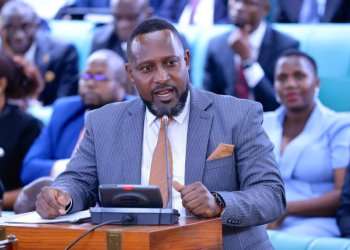
URN has been following this debate through statements delivered at regional peace forums, policy discussions, think-tank publications and diplomatic exchanges, particularly those focusing on the war in Sudan. At one such forum, Kenya’s Prime Cabinet Secretary and Cabinet Secretary for Foreign and Diaspora Affairs, Musalia Mudavadi, chose to be “a little blunt” when reflecting on international efforts to end Sudan’s devastating conflict.
He challenged African mediation practitioners to examine whether the continent itself is enabling the growing influence of what he described as a more transactional approach to peace. “Whether it is us ourselves who are giving advantage to people who have more of a transactional approach, the advantage and opportunity to drive the process,” Mudavadi said.

He then posed a question that has increasingly preoccupied African policymakers: “When you go to mediation, are you going there as a business negotiator? Are you going there as an arbitrator of transactions? Or are you going there genuinely as a mediator to see peace in the countries that are facing conflict?”
The questions capture a growing concern that mediation itself is changing. In an increasingly fractured geopolitical environment, peace initiatives are no longer driven solely by the search for political settlements. They are increasingly shaped by strategic competition, shifting alliances and transactional diplomacy.
Mudavadi recalled attending a series of international meetings on Sudan, including conferences in Paris, Addis Ababa and London. The London conference, he said, offered a revealing glimpse into the challenges confronting contemporary mediation. “After about one and a half days of deliberation, it was more on the humanitarian aspects. But after one and a half days of deliberation, that conference was unable to come up with a joint and agreed communiqué.”
The failure, he noted, was particularly striking because the Sudanese parties themselves were absent. “No players from Sudan were present. No joint communiqué came out. Why? Because inside the London meeting, external players could not agree.” The London Sudan Conference was held in April 2025 on the second anniversary of the conflict. It was co-chaired by the United Kingdom, France, Germany, the African Union and the European Union.
By then, the war between the Sudanese Armed Forces (SAF), the Rapid Support Forces (RSF) and allied armed groups had created one of the world’s worst humanitarian crises, displacing millions of Sudanese inside the country and across its borders.
For Mudavadi, the London conference illustrated how geopolitical divisions increasingly complicate efforts to resolve African conflicts. Even where there is broad agreement on humanitarian priorities, competing international interests can frustrate attempts to build a common diplomatic position.
Those realities, he argued, demand a fresh look at how mediation is conducted in Africa.”First, protracted and mutating conflicts, marked by fragmentation of actors, are testing the limits of traditional approaches to peace processes. Secondly, rapidly shifting global dynamics and growing pressures on multilateralism are impacting the coherence, predictability, and effectiveness of mediation efforts.”
His assessment reflects a broader shift in Africa’s security landscape. Armed conflicts increasingly involve multiple state and non-state actors, while external powers play a more prominent role in shaping negotiations. At the same time, regional institutions must navigate a world in which consensus among major powers can no longer be taken for granted. Mudavadi argued that African ownership of peace processes has become more, not less, important.
“African ownership in addressing African conflicts remains essential in ensuring legitimacy, sustainability, and long-term success.” He stressed that regional organisations such as the Intergovernmental Authority on Development (IGAD) remain uniquely positioned to coordinate peace efforts in the Horn of Africa but require stronger political and financial backing from their own member states.
“Member States must take primary responsibility for financing IGAD programmes in a predictable, adequate and sustainable manner.” While acknowledging the importance of international partnerships, he cautioned against allowing external support to become the foundation of regional peace initiatives. “We value and welcome the support of international partners. However, such support should remain complementary and supplementary, and not foundational.”
Mudavadi reserved his sharpest criticism not for foreign governments but for African leaders themselves. He argued that the continent often undermines its own institutions by placing greater confidence in mediation initiatives led from outside Africa than in proposals developed by regional organisations.
“The people who tend to discredit our own African institutions are Africans themselves. You have the African Union. They make propositions, reasonable propositions. They put them on the table. You refuse to look at them. You refuse to understand them. The same proposition is taken by a friend outside the continent. They call you to their capitals. They give you the same thing you refused to appreciate when it was given to you by the African Union or by IGAD. You then sign the same document that you refused to sign when it was offered to you by your own institution.”
The consequence, he suggested, is a gradual erosion of African agency in resolving African conflicts. “So, who really then is undermining the mediation process on the continent?”
Mudavadi also linked peace and mediation to the region’s economic future, arguing that conflict continues to prevent neighbouring countries from benefiting from shared infrastructure and natural resources. On the disruptions caused by conflict in Sudan and instability elsewhere, he pointed to the unrealised potential of regional energy cooperation.
“Can you imagine? South Sudan has oil, Mozambique has gas, Tanzania has gas. But because of conflict, we can’t get the oil from South Sudan or Sudan, and we can’t draw the gas from Mozambique.” Successful mediation, he argued, could unlock opportunities extending far beyond political stability. “Can you imagine if this mediation process unlocked all this? And allowed Ethiopia to have its fuel from the neighbourhood, Kenya to have its gas from the neighbourhood, Tanzania to sell their gas to us, Mozambique to do the same. It would be tremendous for all of us, and for the citizens of the Horn of Africa and the continent.”
For Mudavadi, the debate over mediation is ultimately about more than diplomacy. It is about whether Africa can preserve its capacity to shape its own political future in an era of intensifying geopolitical competition. His questions, whether mediation is becoming transactional, whether African institutions are being sidelined, and whether the continent is undermining its own peace architecture, set the stage for a wider debate that is likely to shape African diplomacy for years to come.
IGAD Executive Secretary Dr. Workneh Gebeyehu widened the lens, arguing that the challenges confronting African mediation reflect a much broader transformation of the international order. “We gather today at a moment of profound consequence, not only for our region, but for the very idea of peace mediation itself,” Workneh said, warning that the foundations that once sustained mediation “are under visible and growing strain.”
According to Workneh, the world that enabled mediation through shared international norms and effective multilateral institutions “is fragmenting before our eyes.” Rather than experiencing another cycle of crises, he argued, “we are living through a transformation” in which mediation is increasingly shaped by geopolitical competition, competing initiatives and diminishing international consensus.
“The space for principled, consensus-based engagement is narrowing, while short-term deal-making is gaining ground,” he said, echoing Mudavadi’s warning that mediation risks becoming transactional rather than genuinely focused on ending conflict. Sudan, he argued, illustrates the consequences of that shift.
“Three years into a devastating war, mediation has not stopped the carnage. This is failure. And it must be acknowledged.” He warned that Sudan has become more than a national tragedy. “Sudan is fast becoming the epicenter of a deeper crisis, the erosion of mediation itself. If mediation cannot make a difference in Sudan, its credibility everywhere is at risk.”
For him, the challenge extends beyond any single conflict. “We cannot normalize permanent war. We cannot accept fragmentation as destiny,” he said, arguing that mediation must become “unified, politically anchored, and strategically coherent” if African institutions are to regain the initiative in resolving the continent’s conflicts-URN. Give us feedback on this story through our email: kamwokyatimes@gmail.com