Construction of the Gulu University Constituent College in Moroto has reached 80 percent, but the university has missed its target of admitting its first cohort of students in August 2026.
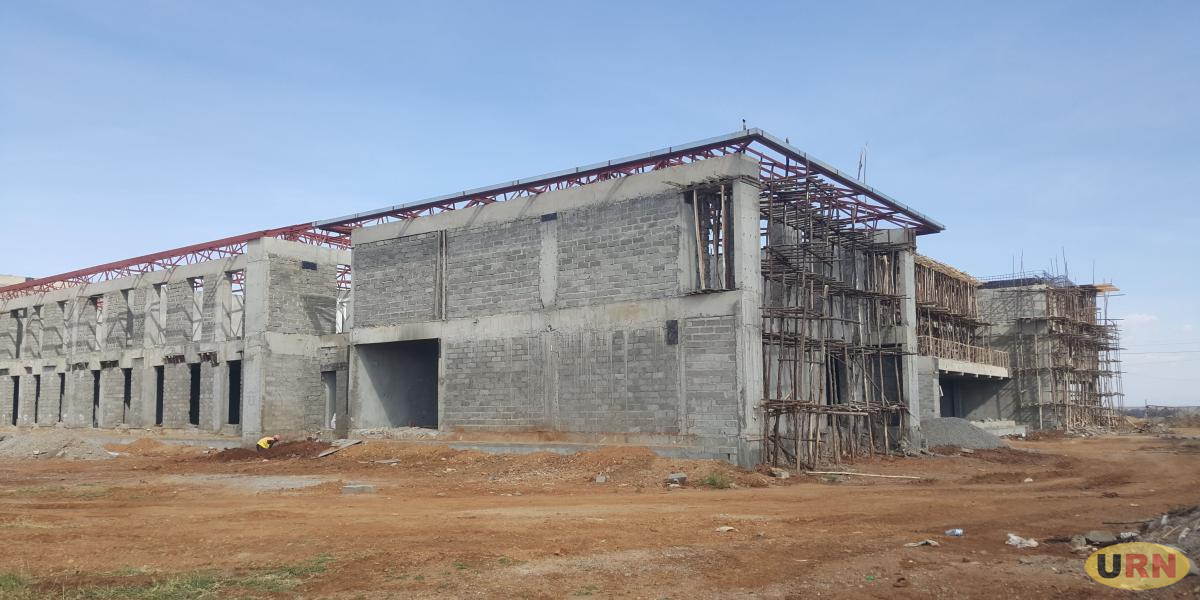
A URN visit to the campus found construction work ongoing, although at a slow pace, while some facilities required for the admission of students were yet to be installed.
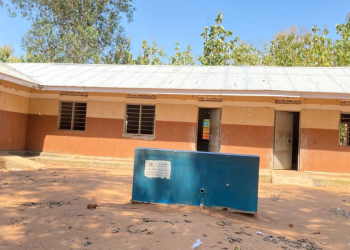
The pioneer block, which is expected to accommodate the first students, was largely complete but lacked wash facilities and some other installations.

University management said the wash facilities will be installed inside the pioneer building once a plumber is engaged to complete the work.
The multipurpose building under construction will house lecture rooms, laboratories and offices for the proposed Constituent College of Agriculture.
The facility, valued at 39 billion shillings, is being constructed by the National Enterprise Corporation (NEC), the commercial arm of the Uganda People’s Defence Forces (UPDF).
Construction started in 2017 and was initially expected to be completed within three years.By 2025, however, only 28 percent of the construction had been completed.
The university subsequently announced plans to admit its first 40 students in August 2026 for a Bachelor of Science in Agriculture.
The project has faced delays attributed to a prolonged compensation process, the effects of the COVID-19 pandemic and inadequate funding.
The university has now pushed back the admission plan after failing to meet all the minimum requirements needed to invite the National Council for Higher Education (NCHE) to assess the campus and authorise it to begin operations.
Dr Sidonia Angom Ochieng, the chairperson of the Taskforce for the Gulu University Constituent College Moroto, said the university expects the main multipurpose building to be completed next year.
Angom said the university is currently operating from the pioneer block as it prepares for the admission of students.
“We shall be admitting 40 students pursuing Bachelor of Science in Agriculture, and lectures shall be conducted from the pioneer building that is shared with administration offices,” Angom said.
She said the institution’s immediate challenges include accommodation for students and the absence of a medical facility.
Angom said the college will focus on degree programmes and will not admit diploma and certificate students because similar programmes are already offered by existing technical institutions in the region.
She said the university is working to meet the minimum requirements before inviting NCHE to inspect the campus.
Angom attributed some of the delays to inadequate funding, saying the institution is currently operating on a government allocation of six billion shillings to facilitate its activities.
“Although we had planned to have students in August this year, it became impossible due to inadequate funding because we realised we need to put some installations before students are let in,” Angom said.
She said the taskforce has set September as the new target for completing the preparations required for admission.
Dr Collins Okello, the Dean of the Faculty of Agriculture and Environment at Gulu University, said university management had tasked his faculty with completing preparations for the admission of the pioneer students.
Okello said construction is ongoing, while the pioneer block is being prepared to allow the university to begin the admission process before the larger facility is completed.
“The bigger facility will take a little bit longer and what we are doing is to finalise the most needed facilities to admit the first cohort of students. After completing the preparations, we will now invite the National Council for Higher Education to assess the facility and grant us permission to admit students,” Okello said.
He said the university hopes to admit the first students before the end of the year, although the process has already been delayed.
“We are at 80 percent prepared and we expect to start the admissions very soon before the end of this year,” Okello said.
Okello acknowledged that accommodation remains a major challenge because the campus is located about 18 kilometres from Moroto town in an area with limited surrounding development.
He called on the private sector to establish hostels, shops and other services around the campus to support students and staff and make the institution more attractive to learners.
Okello said that in the absence of accommodation near the campus, the university could be forced to transport students daily from Moroto town to the institution, increasing the cost of running the college.
The university has also signed a memorandum of understanding with the National Agricultural Research Organisation (NARO) station at Nabuin to provide facilities for agricultural practical training.
The Gulu University Constituent College of Agriculture is the first university constituent college in the Karamoja sub-region. It is intended to expand access to higher education in the region while contributing to agricultural development and local food security-URN. Give us feedback on this story through our email: kamwokyatimes@gmail.com