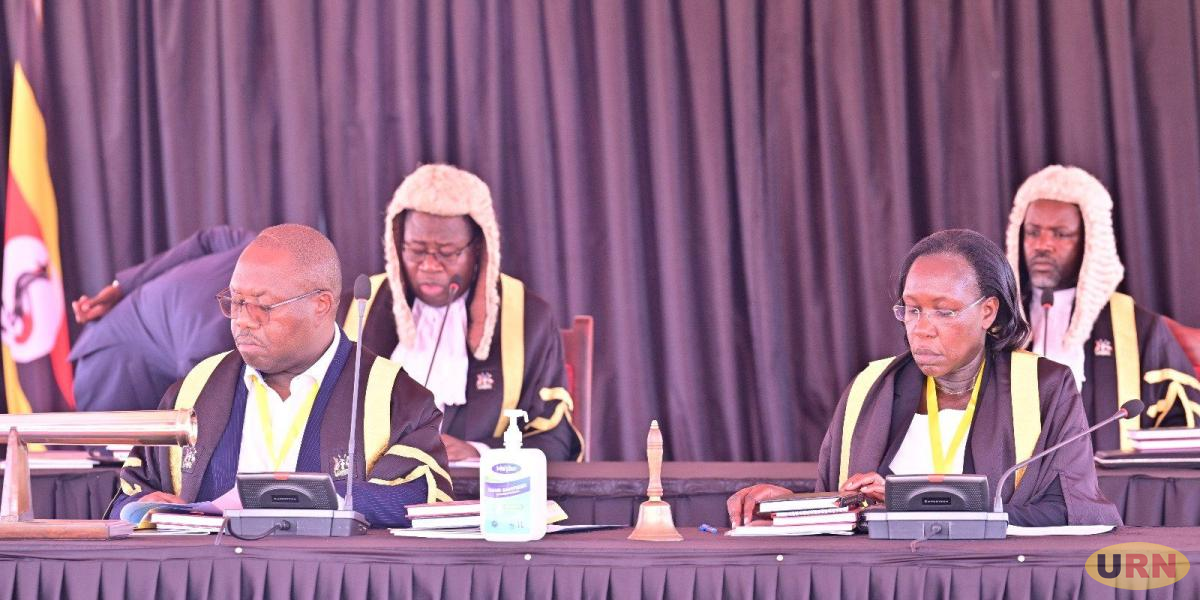
President Yoweri Kaguta Museveni presented the government’s legislative programme to Parliament. He said the executive plans to table 38 Bills during the current session of the 12th Parliament. Museveni said the legislative programme contains a wide range of proposed laws that will be tabled by the Prime Minister and respective line ministers.
“I present the government’s legislative programme to Parliament. It is in Annex Two. There are so many,” Museveni said. The proposed laws cover a range of sectors, including finance, health, education, energy, agriculture, internal affairs, transport, tourism, lands, and information technology.
The Ministry of Finance, Planning, and Economic Development will dominate the legislative calendar with twenty Bills. These included the Income Tax (Amendment) Bill, 2027, the Excise Duty (Amendment) Bill, 2027, the Value Added Tax (Amendment) Bill, 2027, the Stamp Duty (Amendment) Bill, 2027, and the Tax Procedures Code (Amendment) Bill, 2027.

The ministry will also present the Appropriation Bill, 2027, which authorises government expenditure for the new financial year, alongside the Draft Estimates of Revenue and Expenditure for FY2027/28, the National Budget Framework Paper for FY2027/28–FY2031/32, and the Budget Speech for FY2027/28. The planned legislation signals the continuation of government efforts to strengthen domestic revenue mobilisation and refine Uganda’s tax regime amid growing expenditure demands and public debt obligations.
The forthcoming tax bills follow a series of reforms enacted in recent years, including amendments to the Income Tax Act, Value Added Tax Act, Excise Duty Act, Stamp Duty Act, and the Tax Procedures Code Act. Those reforms introduced investment incentives, revised tax exemptions, adjusted excise duty rates, and strengthened tax administration systems.
Among the notable changes were the removal of stamp duty on agreements and mortgage deeds to lower the cost of doing business and improve access to credit, as well as measures aimed at improving taxpayer registration and compliance.
As Parliament prepares to scrutinise the new proposals, attention is expected to focus on whether the amendments can raise government revenue without increasing pressure on businesses and households. Beyond finance, several ministries are expected to introduce significant sector reforms.
The Ministry of Health will table three amendment Bills targeting the Pharmacy and Drugs Act, the Nurses and Midwives Act, and the Allied Health Professionals Act. The Ministry of Education and Sports will present three bills, including amendments to the Universities and Other Tertiary Institutions Act and the Education (Pre-Primary, Primary and Post-Primary) Act, 2008, as well as a new Curriculum, Assessment and Admissions Bill.
The Ministry of Internal Affairs will reintroduce the Small Arms and Light Weapons Control Bill, 2023, while the Ministry of Energy and Mineral Development is expected to present the Building Substances Bill, 2025. The Ministry of Lands, Housing and Urban Development will table the Real Estate Bill, 2025, aimed at strengthening the regulation of Uganda’s growing property sector.
Other proposed legislation includes the National Legal Examinations Centre Bill, 2026, under the Ministry of Justice and Constitutional Affairs; the Information and Communications Bill, 2023, under the Ministry of ICT and National Guidance; and the Workers Compensation (Amendment) Bill, 2024, under the Ministry of Gender, Labour and Social Development.
The Ministry of Works and Transport will present the Uganda Railway Bill, 2026, while the Ministry of Agriculture, Animal Industry, and Fisheries will seek parliamentary approval for the Food and Agriculture Regulatory Authority Bill, 2026, and the Animal Disease (Amendment) Bill, 2026.
The Ministry of Local Government will table amendments to the Local Government Act, while the Ministry of Tourism, Wildlife and Antiquities will introduce the Uganda Tourism (Amendment) Bill, 2025. The Office of the President will also present an Intelligence Services Policy Framework.
The Ministry of Finance’s programme further includes reports on public debt, loans, grants and guarantees, tax expenditures, multi-year commitments, and the Petroleum Fund, all of which are expected to inform parliamentary consideration of the country’s fiscal direction ahead of the FY2027/28 budget.
Speaker of Parliament Jacob Marksons Oboth-Oboth said consideration of the legislative agenda would commence immediately after the presentation of the national budget, setting the stage for what is expected to be an intense legislative season-URN. Give us feedback on this story through our email: kamwokyatimes@gmail.com