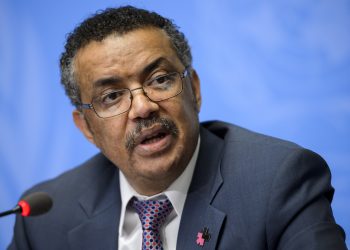
Medical professionals and student leaders have rejected the proposed National Education and Training for Health Policy, arguing that it threatens the welfare of medical interns, undermines healthcare training standards, and could worsen Uganda’s health workforce shortage. Dr Frank Asiimwe, the President of Uganda Medical Association, and others accused the Ministry of Health and the Ministry of Education of introducing reforms without adequate consultation.
He described the policy as “draconian, shambolic and dead-on arrival,” accusing policymakers of attempting to redefine medical interns as students rather than qualified graduates undertaking supervised professional practice. According to Dr. Asiimwe, interns have already completed all academic requirements for their degrees and should not be subjected to policies that delay recognition of their qualifications. “Once someone has fulfilled the requirements for the award of a degree, they cease to be a student. They are doctors, pharmacists, nurses, or dental surgeons undergoing supervised practice,” he said.
He rejected the suggestion in the new policy requiring that doctors who have qualified from the different medical schools should be subjected to another year of internships at the Universities where they qualified from. “You cannot take someone who has completed all the requirements for a degree and push them back into student status. That would create problems for professional regulation and the entire internship framework,” he added.

The policy has attracted criticism over provisions that could alter internship arrangements and remuneration for healthcare graduates. Dr. Asiimwe argued that internship has historically been recognised as a critical stage of professional training in Uganda’s healthcare system and warned against removing financial support for interns.
He said doctors have traditionally received remuneration during internship and accused policymakers of attempting to reverse long-established practices. “We are dealing with human lives. Internship is supervised practice, not classroom learning. If the government chooses not to employ interns, that is its decision, but it should not impose what amounts to forced labour,” he said.
They also questioned the legality of introducing major changes to medical training through policy directives rather than legislative processes. They argued that any reforms affecting professional training, internship structures, and licensing requirements should be subjected to broad consultations involving universities, professional councils, and healthcare workers.
He wondered whether a policy could override existing laws governing professional training and employment, warning that the proposed reforms could negatively affect the quality of healthcare delivery by demoralising young professionals entering the workforce. National Education and Training for Health Policy seeks to rationalize the health professional training framework and provide guidance and strategic direction on meeting the professional conduct of education for health.
The drafters of the policy say it was designed to ensure the quality of health trainees, to provide adequate training materials and equipment, and to increase the quantity and quality of professional health trainers, among others.
Dr. Asiimwe, together with the former Uganda Medical Association Secretary General, Dr. Ekwaro Obuku, was addressing a press conference convened by Uganda Law Society on Thursday. Dr. Obuku, now a law student, challenged the government’s justification for reducing support to interns, arguing that medical trainees generate significant value for the healthcare system.
Obuku said the annual cost of supporting approximately 2,000 interns is estimated at 24 billion shillings. He said the amount he described as modest compared to expenditures like the amount of money spent on Parliament and other sectors.
Using caesarean sections as an example, he argued that intern doctors already contribute substantially to healthcare delivery. He said an intern who performs at least one caesarean section per month generates medical services worth approximately 12 million shillings annually, adding that many interns perform far more procedures than that during their training.
“It is not that the interns are taking money without returning immediate value to the economy. If each doctor performs even one caesarean section a month, the value generated runs into billions of shillings. When you add other surgeries and services they provide, they recover far more than the money the government spends on them,” Obuku said.
He argued that public hospitals depend heavily on interns who often work extended hours in emergency, maternity, and surgical units while facing occupational risks, including exposure to infectious diseases. “These interns stand between life and death every day. They are the frontline health workers in our hospitals. We cannot send them to fight Ebola and other health emergencies without proper facilitation and then expect them to remain motivated,” he added.
“Government should not abdicate its responsibility to pay interns. These young professionals provide essential services and generate value for the health system,” Obuku said.
Meanwhile, Dr. Stephen Lutoti, President of the Pharmaceutical Society of Uganda, said the policy should not be implemented in its current form because it was developed without adequate consultation among key stakeholders. Lutoti said the Pharmaceutical Society of Uganda rejects the internship-related provisions and wants implementation suspended pending wider consultations.
According to Lutoti, the policy itself acknowledges major challenges facing health training in Uganda, including shortages of supervisors, internship training centres, equipment, medicines, and welfare support for interns. He argued that the policy’s own situational analysis recognizes that Uganda faces a shortage of health workers and requires additional health training institutions to meet national demand.
“The policy itself acknowledges deficits in the health workforce. It recognizes shortages of supervisors, training centres, equipment, and even poor welfare for interns. It also says the country requires more health training institutions. So how do we move from that analysis to a conclusion that suggests measures which may further discourage interns?” Lutoti asked.
He also questioned provisions that would allow interns to remain classified as students despite having completed their degree requirements, arguing that such changes would contradict existing professional training and licensing structures.
“We reject the policy in regard to internship and say its implementation should be suspended. Let there be adequate consultations, let there be consensus, and let us improve what currently exists rather than introducing provisions that create more uncertainty,” he said. He warned that attempts to classify interns as students would undermine established professional training structures and could create legal and regulatory complications for professional licensing bodies.
Precious Grisha Achen, a finalist pursuing a Bachelor of Pharmacy degree at Makerere University and President of the Uganda Pharmaceutical Students Association, said students and pre-interns were prepared to boycott internship placements unless the policy is reviewed.
“We want to make our stand clear. Unless this policy is reviewed and looked into, we are not showing up for the internship come August. We are speaking not only for the current pre-interns but also for those who are still in training and hope to join the profession in the future,” Achen said. The stakeholders further questioned whether the proposed changes could lawfully override existing legislation governing professional training, labour rights and employment standards.
They accused policymakers of failing to adequately consult universities, professional councils and healthcare workers before drafting the reforms. They also demanded that the government maintain support for internship programmes, arguing that investing in interns is critical to sustaining Uganda’s healthcare workforce and improving service delivery across the country-URN. Give us feedback on this story through our email: kamwokyatimes@gmail.com