Weak planning, poor coordination and inadequate accountability are undermining the country’s budgeting process, according to an assessment under the Office of the Prime Minister. The assessment finds that some ministries and agencies prepare plans that are not aligned with national priorities, cost projects unrealistically and, in some cases, alter targets without authorisation.
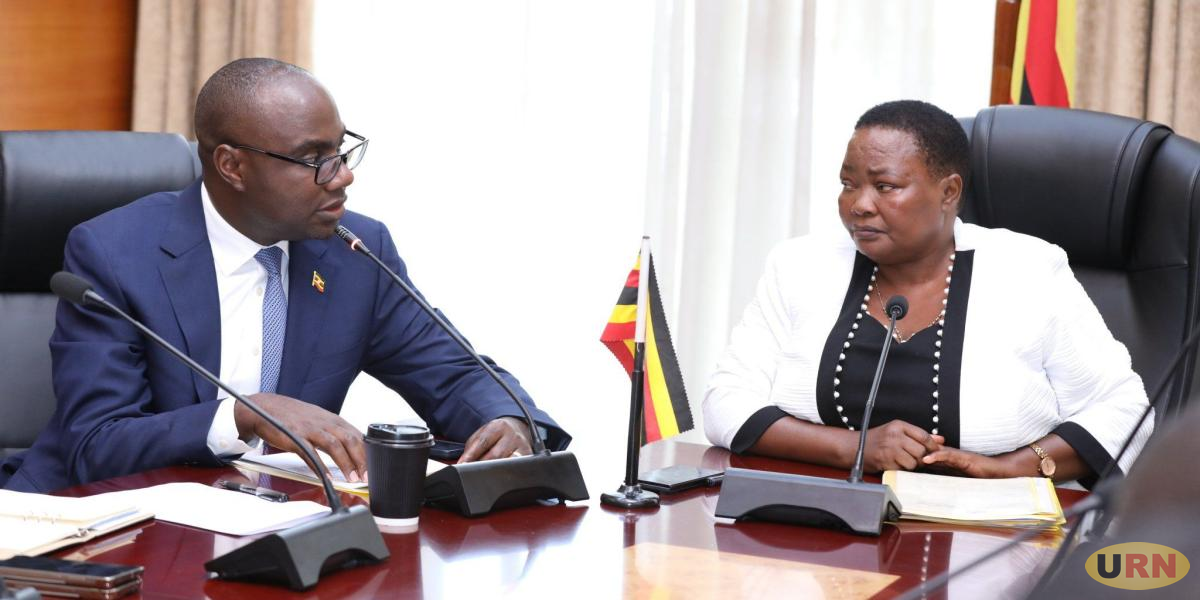
The findings are contained in the government’s annual performance assessment for the financial year 2025/26, presented by Julius Victor Nkeramihigo, Permanent Secretary for Government Policy Coordination in the Office of the Prime Minister. The assessment covered 58 central government votes and examined their implementation of the Fourth National Development Plan (NDP IV) and the Ten-Fold Growth Strategy.
Nkeramihigo said the assessment identified weaknesses across the government policy cycle, from planning and budgeting to execution, monitoring and reporting. He said the problems begin with what he described as a coordination deficit in government, where institutions continue to operate in silos despite the shift to a programme-based approach.

“One of the problems we need to address very urgently is the coordination deficit in the government policy implementation cycle,” Nkeramihigo said. He said government evaluations since the first National Development Plan had continued to show limited cooperation and weak follow-up, hindering the achievement of development results.
The assessment found that a number of government votes had deviated from the objectives, interventions and targets contained in NDP IV and the Ten-Fold Growth Strategy.
Nkeramihigo said the deviations included omitting planned outputs, introducing outputs that were not part of the national plan, altering performance indicators and using terminology and coding different from what is prescribed in the national development plan.
The assessment also found that some government institutions had not adequately incorporated the Ten-Fold Growth Strategy into their plans.
Several votes did not mention the strategy in their plans at all, while others prepared separate documents for programme working groups that were not incorporated into their final strategic plans.
None of the 58 votes assessed had a quantified Ten-Fold Growth Strategy traceability matrix showing how their interventions, targets and budgets contribute to the strategy’s anchors, enablers and accelerator tracks.
Nkeramihigo said this makes it difficult for government to establish how individual institutions are contributing to national development priorities.
“And this makes it difficult for government to determine how each vote is contributing to the 10-fold growth agenda and how these contributions aggregate nationally,” he said.
The assessment also identified weaknesses in the costing of government interventions, raising questions about the credibility of some budgets before implementation even begins.
Nkeramihigo gave an example where an institution planned to spend 4.8 trillion shillings on an intervention despite having an indicative budget ceiling of only 1.7 trillion shillings.
“How realistic is that? And how are you going to achieve that? How good is that kind of a plan?” he asked.
He said such unrealistic costing undermines the usefulness of government plans as instruments for allocating resources and measuring performance.
The assessment further found that some institutions had failed to comply with prescribed planning procedures, including requirements for strategic plans to originate from departments and pass through senior and top management before approval.
In some cases, plans had been submitted and approved without evidence that they had been internally considered and adopted by the institutions responsible for implementing them.
Only six of the assessed votes met the required standard for internal deliberation and approval of annual work plans and budgets.
Nkeramihigo said budgets and work plans in many institutions were effectively being prepared and submitted by a small number of officials, weakening ownership and transparency.
The assessment also found significant delays in preparing and approving strategic plans. Under the planning framework, institutions are required to have approved strategic plans aligned with the National Development Plan within six months of the plan’s approval.
However, some institutions submitted their strategic plans as late as 15 months after the prescribed deadline.
Nkeramihigo this meant some government votes began implementing the first year of NDP IV without certified strategic plans to guide implementation and accountability.
“Such delays in preparation, submission and certification of strategic plans imply that votes began implementing the first year of NDP IV without certified strategic plans to serve as a reference point for performance and accountability,” he said.
He linked the planning weaknesses partly to the low attainment of intended results. The problems identified by the assessment continue even after budgets have been approved.
Nkeramihigo said government institutions faced unexplained delays in the release of funds and shortfalls in quarterly releases.
In some cases, large amounts of money were released at the last minute, leaving institutions with insufficient time to implement planned activities before the financial year ended. He said some of the money was subsequently returned to the Treasury.
“Last minute release of large sums of money gets swept back to the Treasury because votes do not have adequate time to properly utilize them,” he said.
The assessment also found that unrealistic indicative planning figures sometimes resulted in the need for supplementary allocations when government was later forced to provide funds for activities that had been inadequately budgeted for.
He noted that such supplementary allocations disrupt approved programmes and undermine the credibility of the national budget.
At the level of individual government votes, the assessment found cases where quarterly financial releases were not properly communicated to management and staff.
In some institutions, finance committees were allegedly used as rubber stamps, while funds were allocated unilaterally.
The assessment also found instances of expenditure deviating from allocations approved by finance committees, delays in implementing planned activities and diversion of funds from their original purposes.
Nkeramihigo said the practice of changing the purpose of funds, commonly referred to as “repurposing”, was widespread among the assessed institutions.
“It was rampant and, in our assessment, we are calling it a euphemism for diversion,” he said.
He said the detailed findings would be shared with the affected government votes and programmes for discussion and corrective action.
He said fixing the budgeting process requires attention to three broad areas: discipline, competence and integrity across the planning, budgeting, execution and reporting cycle.
He also singled out accountability and what he described as impunity as a major problem.
The assessment comes amid the government’s push to implement NDP IV and the Ten-Fold Growth Strategy, which requires public resources to be aligned with national priorities and translated into measurable development results.
He said strengthening coordination and follow-up is therefore critical if government is to improve the link between its plans, budgets and actual development outcomes.
A separate concern raised by development partners was the recurrence of audit findings across fiscal years.
They said repeated findings point to weaknesses in accountability, implementation of corrective measures and institutional learning, and called for stronger mechanisms to track and implement recommendations from the Auditor General’s reports-URN. Give us feedback on this story through our email: kamwokyatimes@gmail.com