The ongoing crackdown on taxis operating in dangerous mechanical condition (DMC), locally known as Ganyegenya, has driven up the cost of spare parts and repairs, taxi owners and mechanics say.
On August 20, the Minister of Works and Transport, Fred Byamukama, announced a 100-day crackdown on taxis operating in dangerous mechanical condition.
Four days later, on August 24, police began enforcing the directive, leading to a reduction in the number of taxis operating in Kampala metropolitan area and other cities across the country.

Toyota Hiace 14-seater vans are the main vehicles used as taxis for public transport in Uganda.
For years, the Toyota Hiace commonly known as Kigege was the dominant 14-seater taxi used by Ugandans. However, in 2018, the government banned the importation of vehicles, including taxis, that were 15 years or older from their date of manufacture.
The ban contributed to the emergence of a newer type of 14-seater taxi, commonly known as Drones, a name derived from their reputation for high speed.
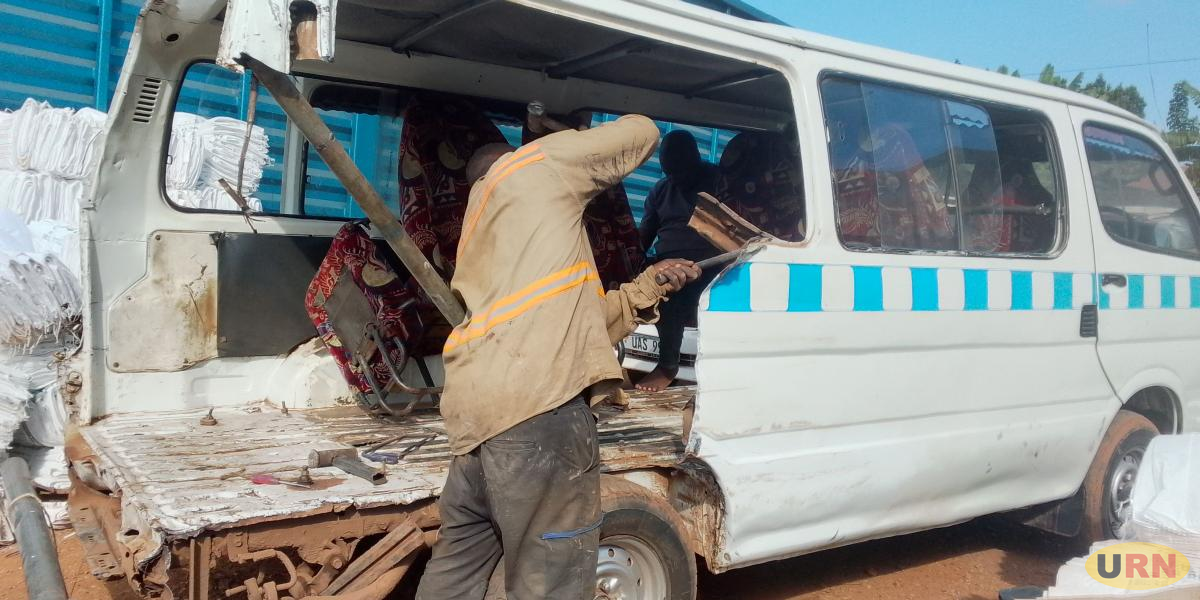
Michael Sseruwagi, a taxi owner who was found at Gwanda Garage in Kisenyi, told URN that bringing a taxi up to the standards required by police can cost between Shs1.5 million and Shs2 million, depending on its condition.Sseruwagi said panel beating and spraying to remove dents from the body of a taxi can be particularly expensive.
He explained that several types of fillers are used to repair dents, but high-quality fillers that can withstand wear for a long time are expensive. Many taxi owners thus opt for cheaper alternatives, which can peel off within a month, making the vehicle appear to be in poor mechanical condition.
He added that because the older Toyota Hiace Kigege models were banned from importation, owners who still operate them have largely relied on maintenance and repairs to keep them on the road. However, the crackdown has increased demand for their scarce spare parts, pushing up prices.
Sseruwagi said a reverse switch that previously cost Shs30,000 now sells for about Shs50,000. He also said many taxis have faulty handbrakes, forcing owners to replace the cables, whose price has risen from Shs25,000 to Shs50,000. Sseruwagi said spare parts for the older taxi models have become increasingly difficult to find in garages and on the market.
He noted that some parts are picked from old vehicles that are no longer in service.
Mudashir Ssembajwe another taxi owner, said some operators are turning to parts manufactured in China and Taiwan because they are cheaper, although less durable than Japanese parts.
He gave the example of a Japanese ball joint that costs about Shs70,000, compared with one from Taiwan or China that costs about Shs25,000.
The crackdown has also exposed taxi owners who have been operating without the required licences and permits.
Ssembajwe explained that some of the taxis operating in dangerous mechanical condition had also been operating without the necessary licences, with their owners allegedly avoiding traffic police enforcement for a long time.
He said a taxi operator must meet several regulatory requirements and pay various fees before a vehicle can legally operate on the road. These include a PSV licence costing Shs300,000, an income tax-related payment of Shs280,000, third-party insurance, inspection fees and KCCA park-user fees of Shs180,000 for three months.
Ssembajwe said the combined costs place a huge financial burden on taxi owners, particularly those who do not have enough money to meet the requirements. He noted that maintaining the older models has become increasingly expensive because their spare parts are scarce on the market.
The 100-day crackdown announced by Minister Byamukama has already forced many Kanyegenya taxis off the road, while others remain in garages undergoing rehabilitation. The reduction in number of taxis has left many passengers struggling to find transport to work and other destinations.
The crackdown comes at a time when learners are preparing to return to school on Monday for the third term. Taxis are among the major means of transport to and from school.
With the crackdown still ongoing, taxi owners face rising repair and spare-parts costs, while passengers may continue to experience transport shortages if more vehicles are taken off the road-URN. Give us feedback on this story through our email: kamwokyatimes@gmail.com