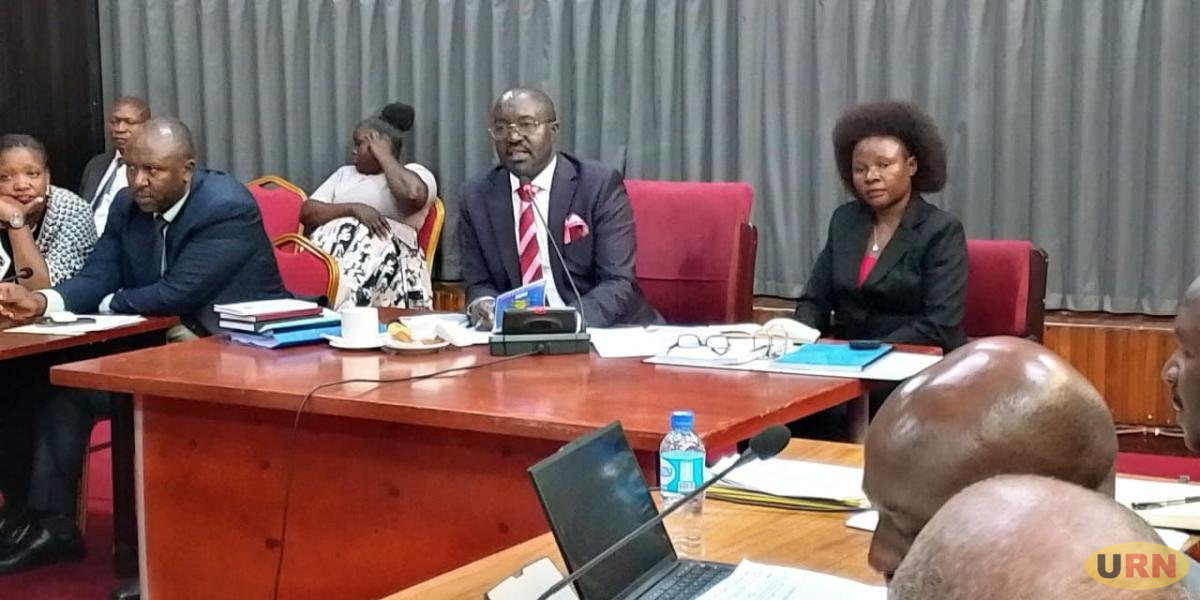
Delayed payments to contractors are crippling Uganda’s energy sector, forcing companies into heavy debt with commercial banks, delaying electricity projects and slowing rural electrification, Parliament’s Public Accounts Committee (PAC) has heard.
The contractors made the revelations while appearing before the committee, chaired by Patrick Nsamba Oshabe, during scrutiny of the Auditor General’s report. The report highlighted delayed projects, abandoned works, financial losses and their impact on electricity access.
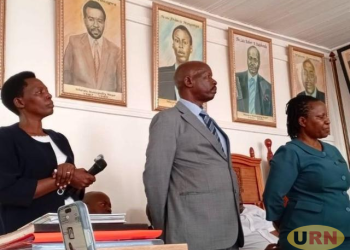
Officials from the Ministry of Energy and Mineral Development, led by Permanent Secretary Eng. Irene Bateebe, appeared before the committee alongside Commissioner for Rural Electrification Eng. Abdon Atwine and several local contractors implementing government-funded electrification projects.

A common concern raised by nearly all contractors was the government’s failure to pay certified interim payment certificates on time.
Fredrick Tinka, the Operations Manager at OnTrack Technical Services Uganda Ltd, described delayed payments as the company’s biggest operational challenge despite being one of the ministry’s top-performing contractors. He said the company finances nearly 70 per cent of its projects through commercial bank loans, making timely government payments critical.
“We don’t use our own money. We depend on bank financing. Once payments are delayed, banks penalise us with more interest. The longer government delays, the more money we lose to the banks,” Tinka told the committee.
He appealed to Parliament to ensure government agencies honour payment timelines or, at the very least, communicate with contractors whenever delays are unavoidable.
Although the COVID-19 pandemic disrupted the importation of transformers from Turkey, Tinka said delayed payments, not supply chain disruptions, have been the primary cause of prolonged project completion. He explained that when the government eventually releases funds, banks often recover most or all of the payment to clear outstanding loans and accumulated interest, leaving contractors without the working capital needed to continue construction.
Despite completing several electrification projects and obtaining completion certificates, OnTrack has struggled to win new government contracts because its bids reflect the true cost of executing projects under the current financing environment.
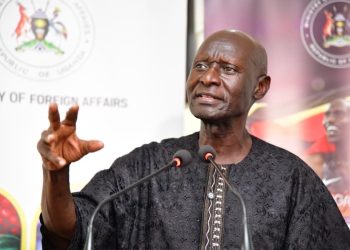
Former Dakabela County MP and proprietor of C&G Group Ltd, Cosmas Elotu, said commercial banks have become increasingly reluctant to finance projects funded directly by the Government of Uganda. According to Elotu, banks are more willing to finance donor-funded projects backed by institutions such as the World Bank because payments are more predictable.
“The moment banks realise a project is funded by the Government of Uganda, they hesitate to support it,” he said. Without access to letters of credit, contractors are forced to import costly electrical equipment using cash, placing additional strain on their finances.
C&G Group told the committee it is owed 5.2 billion Shillings in unpaid certificates, in addition to about USD 2 million inherited from contracts under the former Rural Electrification Agency (REA). Elotu urged Parliament to increase funding for rural electrification, arguing that prompt payments would enable local contractors to complete projects faster and at lower cost.
Global Komolo Joint Venture shared a similar experience. The company won a 12.1 billion Shillings rural electrification contract in 2019 covering Butambala, Gomba, Masaka, Lwengo, Kiruhura and Rakai districts.
Although it completed about 70 per cent of the work, prolonged payment delays led to loan defaults. Company spokesperson Tom Oluka said bank penalties alone had accumulated to about 3.5 billion Shillings by the time government paid certified works. Unable to recover financially, the company failed to complete the project, forcing the government to hire another contractor to finish the remaining works.
Babcon Uganda Ltd also reported losing about 2 billion Shillings in bank interest while implementing the 28 billion Shillings Muzizi substation project, whose completion period stretched from the planned 18 months to nearly four years.
Silver Technical Services Ltd said it waited more than a year to receive payment for a 5.2 billion Shillings interim payment certificate submitted in March 2025. The company added that the government eventually paid the amount in instalments over an extended period.
Responding to the concerns, Permanent Secretary Eng. Irene Bateebe acknowledged that delayed payments are largely caused by inadequate government funding. She said the ministry received only 35 billion Shillings for government-funded rural electrification projects in the previous financial year, far below the programme’s requirements.
However, she welcomed Parliament’s decision to increase the allocation to 161.15 billion Shillings in the current financial year. Bateebe said the rural electrification programme requires about 200 billion Shillings annually to avoid unpaid certificates and stalled projects.
She added that once funds are available, the ministry can process certified payment certificates within one to two months. “As long as financing is available, certification, internal audit and payment processing are within our control,” she said.
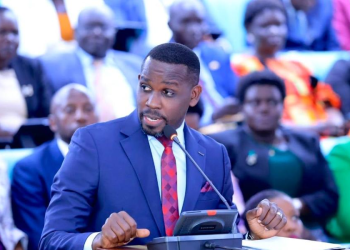
Committee chairperson Patrick Oshabe Nsamba urged the ministry to strengthen stakeholder engagement by involving Members of Parliament and local leaders throughout project implementation to reduce disputes over project scope and improve accountability.
MPs also raised concerns about reductions in project scope, vandalism of electricity infrastructure, overloaded transformers and communities that remain without electricity despite living near completed substations and hydropower facilities.
The committee further questioned why some contractors with strong performance records have failed to secure new government contracts, while others previously accused of poor performance or abandoning projects continued to receive work-URN. Give us feedback on this story through our email: kamwokyatimes@gmail.com