The Commercial Division of the High Court has hailed Alternative Dispute Resolution (ADR) for significantly reducing case backlog and unlocking more than 90.6 billion shillings through the mediation of banking, loan and credit disputes.
The results were unveiled on Friday during the presentation of the Commercial Division Mediation Fortnight Report at the Judiciary headquarters in Kampala.
The event brought together senior judicial officers, the Governor of the Bank of Uganda, chief executive officers of commercial banks, legal practitioners, accredited mediators and representatives of the Uganda Bankers Association.

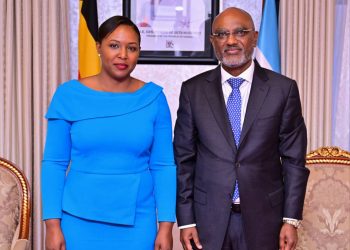
Presenting the report, Lady Justice Anna Mugenyi, Head of the Commercial Division of the High Court, said 527 cases involving banking, loan and credit disputes were listed during the Mediation Fortnight held from May 18 to May 29, 2026.
Mediation, however, continued beyond the official fortnight under the Judiciary’s 60-day mediation framework.
By July 16, a total of 417 cases had been concluded, representing a completion rate of 79.73 percent.
Of these, 97 disputes were successfully settled through mediation, releasing 90.6 billion shillings that had previously been tied up in commercial litigation.
Lady Justice Mugenyi said the settlements enabled businesses to avoid lengthy court battles, reduce legal costs, preserve commercial relationships and quickly recover funds that would otherwise have remained locked in litigation.
She described the initiative as one of the Judiciary’s most successful ADR interventions, saying it had eased pressure on the Commercial Court while directly supporting economic growth.
Among the notable settlements was a dispute between Bank of India (Uganda) Limited and Qualicoff (U) Ltd involving 5.29 billion shillings, which was resolved through mediation within 82 days.
Another longstanding commercial dispute between FERDSULT Engineering Services Ltd and ABSA Bank Uganda, valued at more than US$2.16 million, was settled within 89 days after six years in court.
A separate case involving ABSA Bank Uganda and a customer identified only as “Joe Doe” was concluded in just 30 days, demonstrating the speed and efficiency of mediation.
Speaking at the event, Bank of Uganda Governor Dr Michael Atingi-Ego said the mediation exercise had demonstrated that commercial justice should not only end with court judgments but should provide practical solutions that restore economic activity.
He recalled that discussions on commercial mediation began during a Judiciary colloquium in April before evolving into engagements between the Judiciary and commercial bank chief executive officers, culminating in the Mediation Fortnight.
According to Dr Atingi-Ego, Uganda still has nearly 600 unresolved banking disputes involving approximately 7 trillion shillings, funds that remain unavailable for productive investment because of prolonged litigation.
“Capital, like blood, serves the body only when it is in motion. When money remains locked in commercial disputes, it does not benefit the economy,” he said.
He noted that the central bank also participated in the mediation exercise as a litigant in its capacity as liquidator of former financial institutions, including Crane Bank Limited and EFC Uganda Limited.
Dr Atingi-Ego said mediation enables parties to negotiate practical repayment arrangements and mutually beneficial settlements that are often difficult to achieve through conventional court judgments.
He, however, acknowledged several challenges affecting commercial mediation, including delays in implementing consent judgments, lengthy approval procedures within financial institutions, limited decision-making powers of some bank representatives attending mediation sessions, and litigants who use mediation to delay proceedings.
To strengthen the process, he proposed extending mediation timelines, streamlining electronic processing of consent judgments, standardizing ADR clauses in financial contracts and referring suitable disputes to mediation immediately after filing.
He said predictable and efficient dispute resolution systems are critical for financial stability, investor confidence and economic growth.
Chief Justice Flavian Zeija, represented at the event by Principal Judge Jane Frances Abodo, praised the Commercial Division for demonstrating that mediation is not an alternative to justice but a more efficient means of delivering it.
According to the Chief Justice, every commercial dispute resolved through mediation restores business relationships, rebuilds confidence and enables parties to move forward without the delays associated with prolonged litigation.
“As a Judiciary, our strategic direction is to promote appropriate dispute resolution, reduce case backlog and improve public confidence in the courts. The Commercial Division continues to lead by example,” she said.
She also commended the Governor of the Bank of Uganda for mobilising commercial bank chief executive officers to support the initiative, saying the partnership had strengthened collaboration between the Judiciary and the financial sector.
Uganda Bankers Association Chairperson Wilbrod Owor welcomed the results, saying the release of more than 90 billion shillings into the economy demonstrates the enormous potential of mediation.
He said the banking industry had already begun reviewing its internal performance indicators to encourage faster dispute resolution and improve loan recovery processes.
“We are taking this seriously. Under the leadership of the Governor, mediation is becoming part of the banking industry’s way of doing business because it benefits everyone,” Owor said.
Eve Nabadda, Legal Officer at FINCA Uganda, described mediation as an effective mechanism for preserving long-term business relationships and called on the government to expand the civil jurisdiction of magistrates’ courts to handle higher-value commercial disputes outside Kampala.
Professor Andrew Khaukha, Executive Director of the Judicial Training Institute, attributed the success of commercial mediation to the Judiciary’s sustained commitment to promoting Alternative Dispute Resolution under the leadership of the Chief Justice, Deputy Chief Justice and Principal Judge.
The Commercial Division recommended continued sector-specific mediation drives, increased public awareness, early referral of suitable disputes to mediation, appointment of dedicated mediation officers by banks, stronger cooperation from advocates and greater transparency in foreclosure processes.
Meanwhile, accredited mediator Kenneth Barungi was recognised as the best-performing mediator during the Mediation Fortnight after successfully concluding 40 cases.
Veronica Bichetero followed with 26 cases, while Frederick Ruhindi concluded 10.
George Bamugemereire and former Uganda Law Society President Francis Gimara were also recognised for their contributions to the mediation programme-URN. Give us feedback on this story through our email: kamwokyatimes@gmail.com