Thousands of coffee seedlings distributed to farmers in Katakwi District have dried up after the government launched the programme during a prolonged dry spell, prompting farmers to demand better planning, irrigation and training before more seedlings are distributed.
The farmers say the coffee project, which is intended to promote commercial agriculture in Teso, was rolled out without adequate consideration of the region’s weather conditions, leaving many of them unable to keep the seedlings alive. In June, Vice President Jessica Alupo launched a campaign to distribute more than 80 million high-value coffee seedlings across the Teso Sub-region as part of efforts to shift farmers from traditional dependence on cotton and subsistence crops to more profitable commercial enterprises.
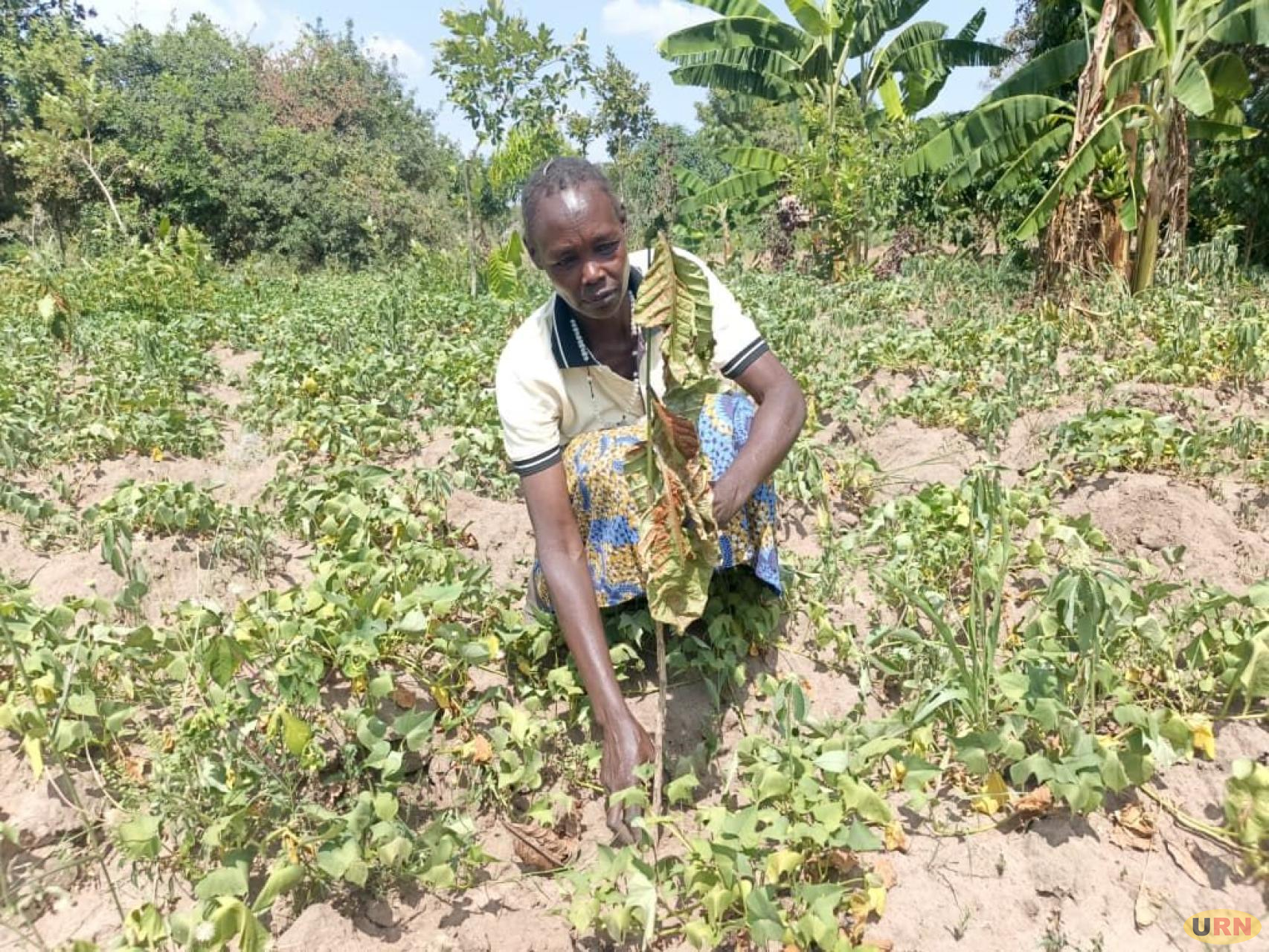
However, farmers in Katakwi say the timing of the distribution has undermined the programme, with many seedlings drying up before they could establish. Merio Anna, a farmer, said she collected more than 50 seedlings but could not plant all of them because of the intense heat. “I brought more than 50 seedlings, but I did not plant them all. I kept some under the shade since it was very hot. The ones I first planted dried, and even those which were in the shade dried up,” she said.

Merio said the government should have first prepared farmers with access to water and small-scale irrigation systems to help them maintain the seedlings during dry periods. “The government needed to prepare very well before giving us these seedlings. They should have empowered farmers on how to access nearby water wells or boreholes. Our soil is not good; whenever sunshine hits it, it all dries up,” she said.
Betty Akoluot, another farmer, said she received more than 100 seedlings after being convinced that coffee would help transform livelihoods in Teso. “I have more than 100 seedlings, but they have all dried up. We even lack knowledge on how to handle coffee because nobody taught us how to grow it,” Akoluot said. James Ayunya from Palam Sub-county said the seedlings should have been distributed at the beginning of the rainy season.
“This might have worked if it was distributed at the right time, not during this harsh weather. When the rains begin, that’s when the government should distribute the seedlings, not waiting for the sunshine to hit,” he said. Ayunya also questioned the suitability of coffee for parts of Teso, arguing that farmers facing food insecurity need crops that can withstand the local conditions and provide food and income.
“Our soil here is not suitable for coffee; when the rain disappears, coffee cannot survive. The government should tell people the truth and promote growing cassava, soya, and sweet potatoes instead,” he said. He also criticised the government’s wealth-creation programmes for failing to take local conditions into account. “How does the government say, ‘let’s all get rich,’ and then introduce seedlings during harsh weather? The projects are good, but they do not benefit the poor; they mostly benefit those who are well-off,” Ayunya said.
Charles Chemeri questioned whether coffee seedlings sourced from Western Uganda could adapt to the soil and climatic conditions in Teso. “Coffee seedlings from Western Uganda cannot survive in Teso; they will all die. The government needs to start bedding the seedlings here so they can acclimatise to the local soil,” Chemeri said. Chemeri also warned that the coffee programme could suffer the same fate as previous agricultural initiatives, including orange and moringa growing projects.
He cited the experience of farmers who grew oranges under the Northern Uganda Social Action Fund (NUSAF II), saying some later suffered losses after their produce failed to meet the quality requirements of the fruit processing plant in Soroti. “The government should ensure that what it introduces to farmers benefits them, unlike how they distributed orange seedlings under NUSAF 2. When the government brought the fruit factory in Soroti, our oranges were rejected for not meeting the machine’s quality requirements, leaving farmers in Katakwi in dire situations without answers from the government,” Chemeri said.
Richard Okwangor, the LC1 Chairperson of Amiriai, said the government should introduce agricultural programmes according to local weather conditions. “The government should ensure that programmes are introduced at the right time. The coffee seedlings have faced severe weather conditions. If this project was meant to benefit local communities, farmers should be organised into groups and provided with mini irrigation schemes,” Okwangor said.
Okwangor also criticised the distribution of agricultural inputs without adequate farmer training, citing previous experiences with government programmes. “Last time, the government brought cassava stems, and the cassava began to rot shortly after planting. Most times, the government launches initiatives without providing adequate training for farmers,” he said. He further called for reliable markets to be established before farmers are encouraged to take up new commercial crops.
“They never tell you where the market is. We planted oranges and ended up with losses, and the government has never offered any resolution to farmers,” Okwangor said. The farmers are now calling on the government to conduct soil testing and identify areas in Teso that are suitable for coffee production before distributing more seedlings. They also want authorities to provide adequate training, improve access to water and irrigation, ensure farmers receive planting materials suited to the local climate and establish reliable markets for the crop.The farmers say they are not opposed to coffee production but want the programme properly adapted to Teso’s climatic and agricultural conditions to prevent losses to both farmers and government-URN. Give us feedback on this story through our email: kamwokyatimes@gmail.com