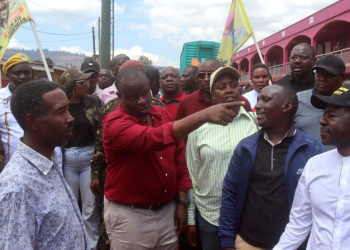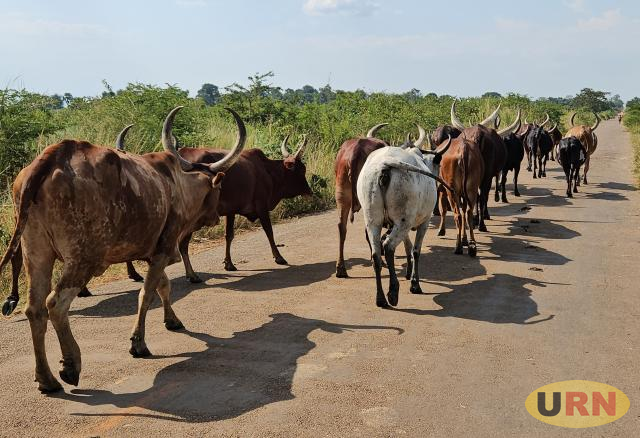
On the afternoon of June 26, 2026, Frank Tumwesigye drove his herd toward a familiar watering point in Maruzi Ranch, expecting another routine day. Instead, he found angry residents blocking the access road, but this time, residents blocked the access road leading to the watering point, accusing his animals of destroying crops and demanding 500,000 Uganda shillings before allowing him to pass.
For Tumwesigye, a pastoralist from Kiryandongo District now grazing his cattle in Maruzi Ranch in Apac District, the confrontation was more than a dispute over a road. It reflected a growing struggle over shrinking natural resources, with prolonged drought and changing weather patterns pushing pastoralists and farming communities into increasing competition for land and water.
Tumwesigye is among the migrant cattle keepers commonly known as Balaalo, many of whom have moved from Uganda’s cattle corridor into northern Uganda in search of pasture after prolonged drought left grazing fields and water sources depleted. Unlike many others caught up in the ongoing eviction campaign, Tumwesigye says he legally acquired land in Maruzi Ranch and has lived there for more than three years. Until recently, he says, relations with neighboring communities had remained largely peaceful.

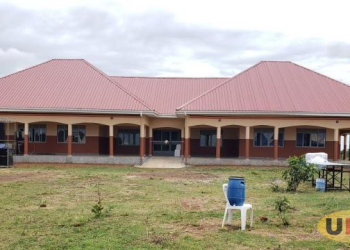
Authorities estimate that more than 20,000 head of cattle are currently being grazed in Maruzi Ranch alone. Maruzi Ranch is a government-owned 64-square-mile agricultural property located in the Akokoro and Ibuje sub-counties of Apac District, Uganda. It is where the government plans to relocate the National Livestock Resources Research Institute (NaLIRRI) headquarters, splitting the land for palm oil production, and using portions for livestock breeding and agricultural research.
But the growing livestock population has intensified disputes over access to land and water, with local leaders reporting increasing cases of crop destruction, blocked access routes and violent confrontations between pastoralists and farming communities. What is unfolding in Apac mirrors a wider trend across East Africa, where climate change is accelerating human migration and exposing long-standing tensions over land ownership, livelihoods and identity.
According to Uganda’s National Adaptation Plan, average temperatures have increased by about 1.3 degrees Celsius since 1960, while droughts have become more frequent, particularly across the country’s cattle corridor, forcing pastoralists to move further north in search of grazing land. Similar patterns have been reported in neighboring Kenya and Tanzania, where recurring droughts continue to displace livestock keepers.
“I came here because where we were, there was no pasture and no water for the animals,” Tumwesigye explains. Patrick Opio, a farmer in Ibuje Sub-county, says the arrival of large numbers of cattle has transformed daily life for farming communities. He accuses some pastoralists of allowing their livestock to stray into gardens, destroying crops that families depend on for food and income.
“We used to cultivate some areas inside the ranch before we were stopped. Now thousands of cattle graze there while our gardens continue to be destroyed,” he says. Opio says community access roads leading to water sources have also become flashpoints because livestock frequently stray into nearby fields. Land rights experts say climate change is exposing deeper structural problems in Uganda’s land governance rather than creating entirely new conflicts.
Judy Adoko, the founder of the Land and Equity Movement in Uganda (LEMU), argues that increasing pressure on land, shrinking grazing areas and weak protection of customary tenure are making disputes between pastoralists and farming communities more likely.
“Land conflict is bound to increase in Uganda’s cattle corridor as pressure on land grows and pastoralists face diminishing access to pasture and water,” Adoko observed in research examining the links between climate change, land governance and conflict. She argues that climate stress is colliding with unresolved land tenure challenges, making communities more vulnerable to disputes over natural resources.
As tensions escalated, the Ugandan government defended its eviction campaign, arguing that the conflict extends beyond climate-induced migration to questions of land ownership and compliance with existing laws. Officials argue that while climate change has increased livestock movement, many of the disputes arise because some cattle keepers occupy land illegally, fail to fence grazing areas and allow animals to destroy crops.
The government’s response intensified after President Yoweri Museveni issued Executive Order No. 3 of 2023 directing the removal of cattle keepers found to have illegally occupied land, failed to fence grazing areas or allowed livestock to destroy crops in northern Uganda.
The Minister for Disaster Preparedness and Refugees in the Office of the Prime Minister, Sam Engola, says the ongoing eviction exercise is anchored in President Museveni’s Executive Order No. 3 and is intended to restore order rather than target any particular ethnic group.
Engola says the government distinguishes between lawful landowners and illegal occupants through land ownership records, insisting that those with valid documentation have nothing to fear. He argues that individuals unable to prove ownership must vacate the land in accordance with the law.
“Those who are genuine owners know their land. If government asks someone to leave, they should be able to prove ownership,” he says. He rejects claims that the exercise is driven by tribal or ethnic considerations, maintaining that it is purely a constitutional and administrative process.
Former Aruu County MP and lawyer Samuel Odonga Otto, without providing evidence, argues that the eviction exercise masks what he believes are broader government plans to facilitate the settlement of foreign nationals in northern Uganda, an allegation government official have repeatedly denied.
Despite the government’s insistence that the operation is lawful, more than 300 pastoralists challenged the evictions in court, arguing that the exercise violated constitutional protections on property rights and due process because it failed to distinguish between legitimate landowners and illegal occupants. The petition has become one of Uganda’s most closely watched legal battles over land rights, mobility and pastoral livelihoods.
In 2025, then Chief Justice Alfonse Owiny-Dollo transferred one of the key cases from Kampala to Gulu High Court, highlighting the regional significance of the dispute. For Tumwesigye, the debate over executive orders, court battles and constitutional rights ultimately comes down to survival. Like thousands of pastoralists across East Africa, he moved not in search of opportunity but in search of grass and water.
As climate change continues to reshape landscapes across the region, experts warn that unless governments strengthen land governance, expand climate adaptation measures and establish clear mechanisms for managing pastoral migration, disputes over land and water are likely to become more frequent and more violent.
In northern Uganda, the struggle between farmers and herders is no longer simply about cattle or crops. It is becoming a test of how communities, governments and legal systems respond to a changing climate that is redrawing the boundaries between survival, land ownership and peaceful coexistence-URN. Give us feedback on this story through our email: kamwokyatimes@gmail.com