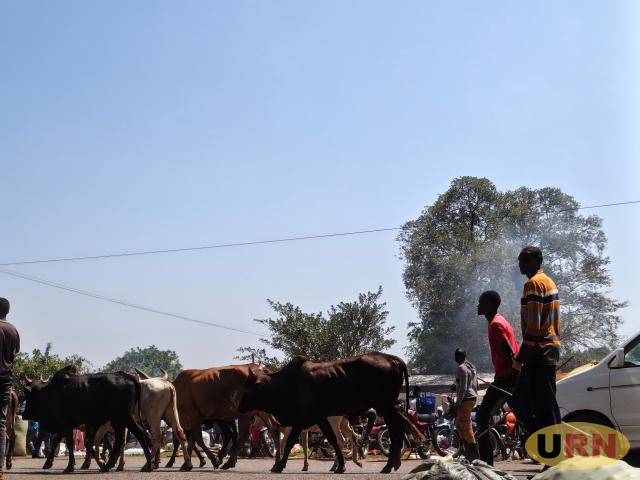
Traders at Bukedea weekly cattle market have asked the Town Council to review and clearly publicise market charges before awarding the market to a new contractor, following complaints that previous operators imposed excessive fees on vendors.
The traders made the call after the Town Council took over management of the market and began collecting market dues while searching for a new contractor. The takeover followed the failure of Orongat Contractors and Vendors Association to remit more than 216 million shillings in accumulated government revenue.
Traders accuse the former tenderer of manipulating market charges and increasing fees beyond the approved rates, saying the high costs drove away vendors and buyers who previously travelled to the market from across Uganda, Kenya and South Sudan. Phoebe Arionget, a produce dealer, said the government should establish clear rules for tenderers and closely monitor their operations after they are awarded markets.

She said authorities should regularly visit markets and compare the charges imposed by tenderers with the approved rates. “Authorities should continue to follow up with the tenderers even after they have signed a contract agreement to manage the collection of market dues. In most cases, those tenderers charge beyond what was agreed. Before, we were charged over 10,000 shillings for a vendor selling his or her produce. We have felt cheated for a long period of time, yet the government did not intervene on time,” Arionget said.
She said the high charges had affected the popularity of the market, with fewer traders and buyers now visiting the facility. “This market had gained popularity, and even people from Kenya and South Sudan began coming here to purchase animals and crops. But look at how the market is now; there are no people. I believe it’s the high taxes levied on them that have chased most of them away,” she said.
Jimmy Emorut, a cattle vendor, said the charges have since fallen after the Town Council took over collection. He said cattle vendors now pay 20,000 shillings per animal, compared with 26,000 shillings charged under Orongat Contractors.
“It has dropped to 20,000 for those dealing in cattle, compared to when Orongat Contractors were charging 26,000 shillings per head of cattle. It is a bit fair because there is a very big gap between the Town Council and the tenderer,” Emorut said. He also accused the former tenderer of imposing additional charges on traders who had already paid market dues.
Emorut said vendors would first pay market dues and later be required to pay for movement permits, which he said discouraged many traders from using the market. “We have lost many vendors because of the hiked taxes, and most of them feared that the market charges were higher. This is a big market meant to benefit both the local communities and the government, not for exploitation,” he said.
Ben Opus urged the Town Council to learn from the previous arrangement when selecting a new tenderer and ensure that the operator does not create conflict with vendors while meeting its revenue obligations to government. “Let the Town Council learn from the past. At this point, when they are looking for the tenderer, they should get someone who will not cause tension among the vendors while ensuring the government does not lose revenue by not accepting to remit what they collect,” Opus said.
Andrew Milton Kamalingin Chelengat, the new Chief Administrative Officer of Bukedea District, said the district was aware of complaints over market charges and had an approved charging policy that should guide all collections. Chelengat said the immediate priority was to sensitise vendors about the official rates so they can identify and challenge unauthorised charges.
“As the district has taken over, what needs to be done is to popularize the authentic charging policy. People need to be sensitized so they know what those selling goats and cattle are charged respectively,” Chelengat said. He said the district would also investigate allegations of overcharging and determine whether the approved rates had been followed.
“I am yet to establish through receipts what the issue is, and the internal auditor will be assigned to investigate how this has been done. There should be adherence to the charge policy because there is already a benchmark on that. They cannot start charging their own prices; it does not work that way,” he said.
Chelengat said the district was pursuing legal avenues to recover the 216 million shillings owed by Orongat Contractors and Vendors Association. “We are going the legal route to recover from Orongat Contractors and Vendors Association because this is already a company registered and recognized by the government. We know their directors, and the agreements and commitments regarding how much they did not pay are in place,” he said.
Ben Ononge, the NRM entrepreneur for Bukedea District and interim chairperson of the market under the Town Council, said the council reduced the charges after discovering that the previous rates were too high. He said the charge for cattle was reduced from 26,000 to 20,000 shillings, while the fee for goats dropped from 16,000 to 10,000 shillings, with other market dues restored to the approved rates.
“We have dropped those charges and maintained the Town Council policies. The cow that had been charged 26,000 shillings is now at 20,000 shillings; the goats, which had been at 16,000 shillings, have been reduced to 10,000 shillings, and general market dues have also returned to normal according to the commodity. In the meantime, the market is regaining its footing,” Ononge said.
Ononge said the lower charges had not necessarily reduced revenue, arguing that the council collected eight million shillings from the market on a single Monday. “Every month, the dues we collect and deposit to the Town Council account is Shillings 32 million after all the expenses—far beyond what Orongat was paying monthly. The arrears were substantial, and yet the market dues were higher, which was not good,” Ononge said.
However, Sam Okimat, the Chairperson of Orongat Contractors and Vendors Association, attributed the higher charges to the amount the contractor was required to remit to government each month. He said the company was required to pay 24 million Shillings monthly, creating pressure to collect more from traders.
Okimat said the high monthly obligation placed on the tenderer made it difficult to operate without increasing the charges imposed on vendors. The Town Council is expected to continue managing the market as the process of identifying a new tenderer and recovering the outstanding government revenue from the previous operator proceeds-URN. Give us feedback on this story through our email: kamwokyatimes@gmail.com