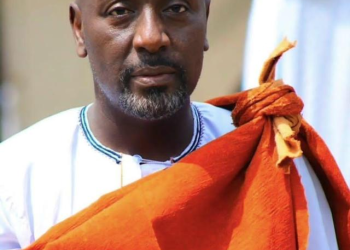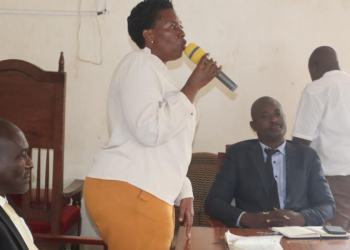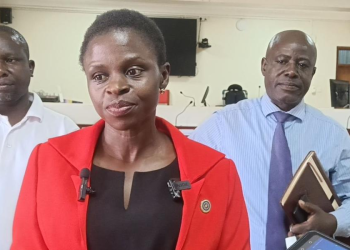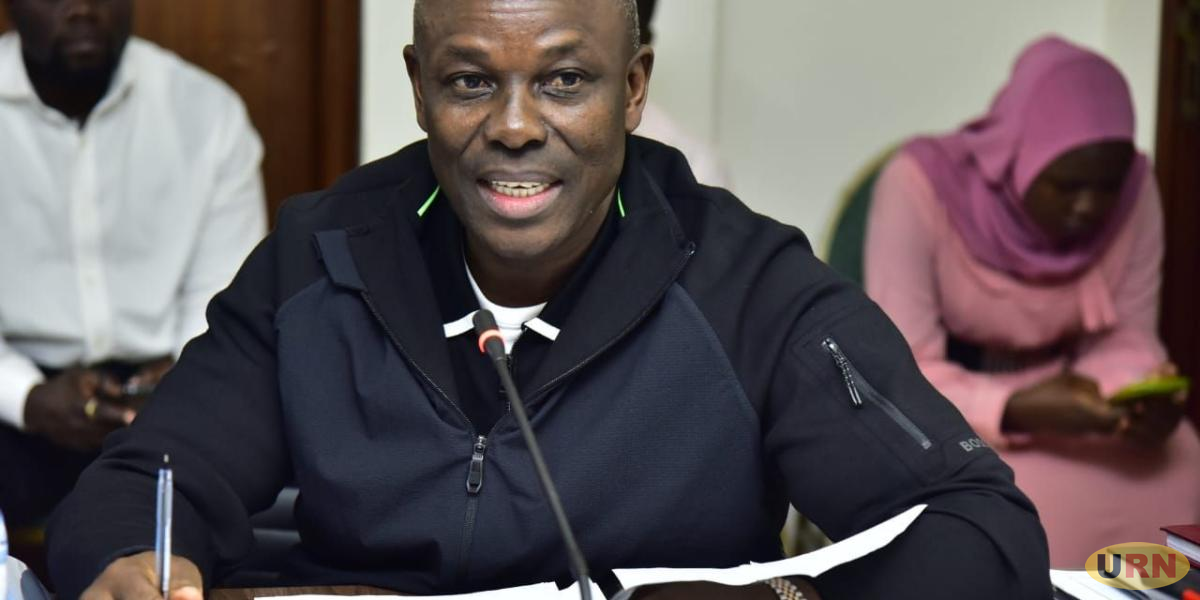
Businessman Hassan Basajjabalaba is seeking compensation from the government over the cancellation of a 2001 deal to redevelop Kampala’s City Square, as a fresh proposal to commercialise part of the same public space fuels a new dispute over its future.
Appearing before Parliament’s Committee on Commissions, Statutory Authorities and State Enterprises (COSASE) on Wednesday, Basajjabalaba said his company won a tender in 2001 to redevelop the approximately 2.5-acre site. He paid 1.635 billion Shillings to the then Kampala City Council as a premium.
Under the proposed arrangement, he told MPs, the green space would have been preserved at ground level, while commercial facilities would have been constructed underground. The agreement provided for an initial five-year lease beginning in 2002, with an option to extend it for another 49 years.

The deal was subsequently halted and became entangled in a wider series of compensation claims arising from cancelled market and property arrangements involving companies associated with Basajjabalaba’s Haba Group.
He told the committee that he was therefore surprised by a recent proposal seeking to develop the same public space. The latest proposal was submitted by businessman Hajji Hassan Bulwadda, who, in a letter dated August 18, 2026, asked the government to allow him to develop about two acres of City Square into an eco-friendly commercial complex comprising a hotel, shopping mall and other facilities powered by solar energy.
On August 30, President Yoweri Museveni directed Kampala Capital City and Metropolitan Affairs Minister Minsa Kabanda to study the proposal in consultation with the Kampala Capital City Authority (KCCA) and report back to him. But the proposal has since met resistance from city authorities and civil society groups.
Kampala Lord Mayor Ronald Balimwezo Nsubuga has opposed any redevelopment, arguing that City Square should remain an open public space because of its environmental, recreational and emergency-response value. He has also cited the constitutional and statutory obligations relating to public land held in trust by KCCA.
The renewed controversy has also drawn Basajjabalaba back into the debate, indicating that he intends to challenge any attempt to allocate the site to another developer while his claim relating to the earlier agreement remains unresolved.
Basajjabalaba’s City Square claim is part of a much larger and contentious history involving his companies and the government. Between 2000 and the early 2010s, companies associated with the businessman obtained management or lease arrangements involving several Kampala markets and Constitution Square, also known as City Square.
Following the cancellation of some of those arrangements, the government paid or became liable for compensation running into more than Shs140 billion. The payments subsequently attracted scrutiny over both the basis and amount of the claims.
The legal dispute reached the Supreme Court last year. In September 2025, the court set aside orders issued by the Constitutional Court in litigation involving Basajjabalaba and Legal Brains Trust, holding that the Constitutional Court had lacked jurisdiction to determine a fact-heavy enforcement dispute under its constitutional-interpretation jurisdiction. The ruling therefore forms part of the wider legal history surrounding the compensation dispute, rather than serving as a blanket judicial endorsement of the redevelopment of City Square.
City Square sits in the heart of Kampala, close to major government institutions and the Independence Monument. Its prominent location has made it attractive to developers, but previous attempts to commercialise the space have repeatedly encountered resistance. A 2007 government designation also identified the square as a protected historical and monumental site-URN. Give us feedback on this story through our email: kamwokyatimes@gmail.com