Finance Minister Henry Musasizi and World Bank Division Director for Uganda, Kenya, Somalia and Rwanda, Qimiao Fan, have agreed that all projects must undergo the Public Investment Management System (PIMS) process before consideration for approval and financing.
This measure is aimed at ensuring that development projects are properly prepared and implemented within approved budgets and timelines.
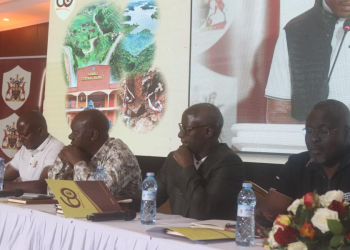
The meeting took place at the Finance Ministry ahead of the 2026 Annual Meetings of the International Monetary Fund and the World Bank Group next month in October.

A Public Investment Management System (PIMS) is a framework used by governments to plan, allocate, and manage public funds for infrastructure and development projects to maximize economic value and service delivery.
The Minister said all projects must be aligned with the national development agenda, adding that the current priorities of government are the standard gauge railway, electricity generation and transmission, irrigation and value addition.
“We are looking at one agenda of efficiency and effectiveness, and this will greatly improve with PIMS. This will also cure the challenge of poor absorption of funds. We have to do the right job at every stage so that we see impact on the ground,” said Musasizi.
The World Bank Division Director explained the process of allocation of resources by the World Bank and challenged Uganda to streamline processes to shorten the time between project preparation, Government approvals, negotiations, procurement, implementation and results on the ground.
He highlighted the need to accelerate inclusive growth to create jobs for thousands of young people who join the job market annually.
The Permanent Secretary and Secretary to the Treasury, Ramathan Ggoobi, called for a balance of prudence with efficiency and speed, adding that implementing agencies and the Development Committee must ensure that projects deliver tangible and sustainable results.
The meeting also discussed progress on the USD 500 million Development Policy Operation to support the Tenfold Growth Strategy and the International Development Association (IDA 21) pipeline projects, including UgIFT 2.0, revised INVITE, and infrastructure development in Greater Kampala.
Uganda’s World Bank portfolio stands at approximately US$4.62 billion, with US$1.48 billion disbursed, according to figures presented at the recent Country Portfolio Performance Review-URN. Give us feedback on this story through our email: kamwokyatimes@gmail.com