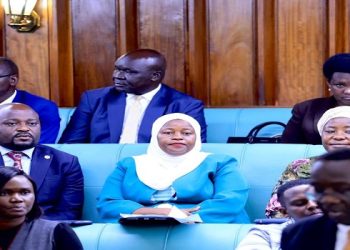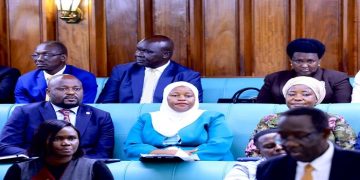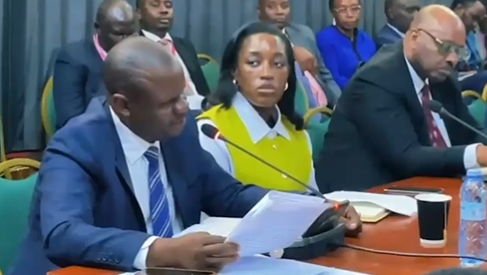
Minister of Local Government Balaam Barugahara has called for stronger accountability and anti-corruption measures in local governments, warning that the misuse of public funds is undermining service delivery across the country. Balaam was speaking during the official opening of the Financial Year 2027/2028 National Negotiations between the central government and local governments, convened by the Local Government Finance Commission.
The negotiations are intended to enable central and local governments to agree on programmes to be financed through conditional grants, as well as the conditions and financial arrangements required for their implementation.
Balaam said the success of fiscal decentralisation should not be measured by the amount of money transferred to local governments, but by whether the funds are adequate, equitably distributed, properly utilised and translated into better services for citizens. He identified corruption as one of the biggest challenges affecting local government financing, saying funds allocated for schools, health facilities, roads and other public services are sometimes misused or stolen.

“Every shilling lost to corruption is a shilling that cannot build a classroom, support a health facility, maintain roads, provide clean water or strengthen a productive community,” Balaam said. He cited cases of poorly constructed facilities and inadequate sanitation infrastructure as examples of how corruption and weak oversight can undermine government programmes.
The minister urged local government leaders and other stakeholders to strengthen procurement controls, financial management, monitoring, verification and accountability mechanisms. He also called for greater involvement of communities, journalists and local leaders in monitoring government projects to ensure that citizens know what is being implemented in their areas and can hold officials accountable.
Balaam warned local government officials against bypassing established systems, recounting an incident in Mbarara where a town clerk allegedly took over procurement and payment functions after sending away the procurement officer. He said such practices expose local governments to the abuse of public resources and undermine institutional accountability.
The minister also urged participants in the negotiations to focus on reducing financing gaps while making government resources more predictable and equitable. He welcomed efforts to increase local government revenue collections, noting that collections had risen from slightly over 200 billion shillings to nearly 600 billion shillings.
Balaam challenged local government leaders to work towards raising collections to one trillion shillings in the new financial year. He further urged the negotiating teams to prioritize areas such as capital development and agro-processing, saying the negotiations should ultimately focus on programmes capable of improving the livelihoods of citizens.
Balaam asked participants to approach the negotiations through partnership, evidence, prioritisation, integrity and accountability rather than confrontation.
Adam Babale, the Secretary of the Local Government Finance Commission, noted that local governments are financed through two main channels: central government transfers and locally generated revenue. He said the bulk of central government transfers, roughly 95 percent, comes as conditional grants, meaning the money is earmarked for specific services and comes with reporting requirements.
He added that, by law, the conditions attached to these grants must be negotiated between local governments and the central ministries, departments and agencies that oversee them, rather than simply imposed from above.
Babale said the outcome of the talks will feed directly into regional budget consultative workshops that the Ministry of Finance holds across the country and will ultimately be incorporated into formal agreements used to revise the guidelines governing how local governments spend conditional grant money.
The negotiators focused on two programmes, Private Sector Development and Manufacturing, where private sector discussions were led by the Ministry of Trade, Industry and Cooperatives. They covered how welfare and livelihood initiatives, including the Youth Livelihood Programme, women’s empowerment schemes, Emyooga, the Parish Development Model and the Agricultural Credit Facility, are supporting private sector growth.
Zackey Kalega, the Commissioner for Internal Trade, presented a document from the Ministry of Trade, Industry and Cooperatives seeking a commercial extension services grant of eight billion shillings.
According to Kalega, the eight-billion-shilling commercial extension services grant seeks to provide financing to Emyooga SACCOs, de-risk local government projects and businesses operating within local government areas through insurance.
Kalega urged local governments to integrate risk management into projects implemented under the programme. He noted that eligible projects should have insurance cover based on the nature and risks of the project.
Kigozi Musaazi James, the Wakiso District Commercial Officer, urged the Ministry of Trade to link insurance companies with local communities and strengthen partnerships with local governments to ensure the proper execution of their mandates.
Babale said this round of negotiations marks a shift from tracking activities towards measuring results and outcomes, framed around the country’s “10-fold growth” strategy, which aims to grow Uganda’s economy to $500 billion a year by 2040.
This year’s negotiations span eight government programme areas: agro-industrialisation, tourism development, private sector development, manufacturing, human capital development, sustainable urbanisation and housing, natural resources and environment, and transport infrastructure.
The Human Capital Development Programme is described as the largest, bringing together the ministries responsible for education, gender and social development, and water. The negotiations mark the formal opening of the national budget formulation calendar and set the terms under which central government ministries release funding to local authorities-URN. Give us feedback on this story through our email: kamwokyatimes@gmail.com