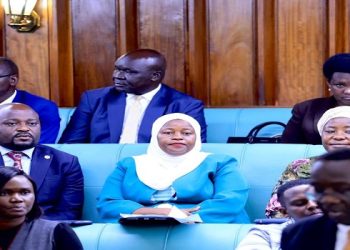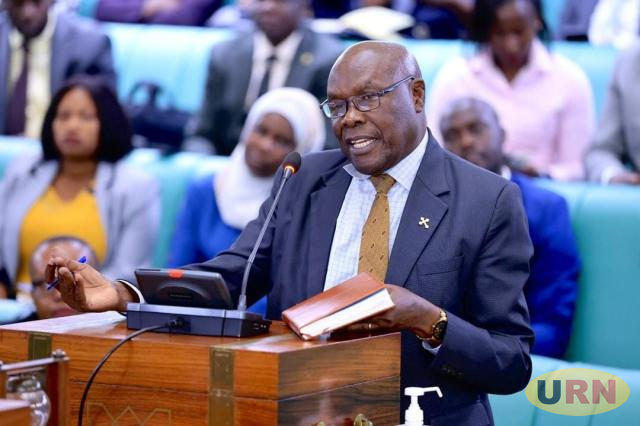
Members of Parliament are expressing frustration over persistent power blackouts, limited grid coverage and communities that remain without electricity despite years of government promises. The debate, which had been deferred last week, resumed on Tuesday. Members of Parliament demanded clearer timelines, more funding and action to extend electricity to underserved communities.
For constituencies such as Ik County in Kaabong District, the issue is not simply about unreliable electricity. It is about communities that have never been connected to the national grid. Ik County MP Hilary Lokwang said he had been requesting electricity for his constituency since 2016, but his repeated appeals had not received the desired response.
He questioned the government’s commitment to affirmative action for marginalized communities, arguing that remote and disadvantaged areas should not have to rely on political connections to receive basic services.

Lokwang demanded that the Ministry of Energy provide specific timelines for when electricity would reach Ik County and when the promised projects would be completed.
The MP linked the absence of electricity to challenges in education, healthcare and the government’s push for digital transformation.
The Deputy Speaker of Parliament, Thomas Tayebwa, also drew attention to the plight of the Ik, describing them alongside the Tepeth, Batwa and Banyabindi as among communities facing serious marginalisation.
Tayebwa urged the Energy Ministry to give the Ik special attention, noting the difficult geographical conditions in which the community lives.
Several legislators said large numbers of households in their constituencies remain off the electricity grid, despite the importance of power to education, health, small businesses and local economic development.
Bunyaruguru County Cadet Benjamin Buturo cited more than 11,000 households in his constituency without access to the electricity grid, translating into about 61,000 people. He argued that Uganda could not achieve meaningful economic transformation without expanding access to reliable electricity.
Other MPs raised concerns over rural electrification projects, arguing that some areas have electricity transmission lines passing through them while nearby communities, schools and businesses remain unconnected.
Responding to the concerns, Minister of State for Energy Sidronius Opolot Okaasai outlined several ongoing and planned electricity projects.
Okaasai said seven lots under the government-funded rural electrification project were ongoing for Shs145 billion, covering major parts of the country.
He also cited projects targeting small and medium enterprises, additional grid extensions and the second phase of the grid densification programme supported by the German government through KfW.
The minister explained that grid densification would help connect areas where medium-voltage lines already exist, but transformers and other infrastructure needed to supply electricity to communities are still lacking.
He also announced planned projects under the Uganda Rural Electrification Access Project Phase Two, which he said would cover 49 districts and target schools, health centres and small-scale enterprises.
Another planned initiative, the Last Mile Electrification Support Project, is expected to cover 34 districts, with electricity extensions targeting schools, health centres and small and medium enterprises.
Okaasai said another proposed project would extend the grid to support the Parish Development Model and that several of the projects were at stages where they would require approval and financing. However, MPs remained focused on the gap between government plans and the reality experienced by communities in rural Uganda-URN. Give us feedback on this story through our email: kamwokyatimes@gmail.com