The ageing Soroti Regional Referral Hospital is struggling to cope with increasing patient numbers because of dilapidated infrastructure, severe understaffing, inadequate equipment and limited space, prompting calls for construction of a new regional referral and teaching hospital.
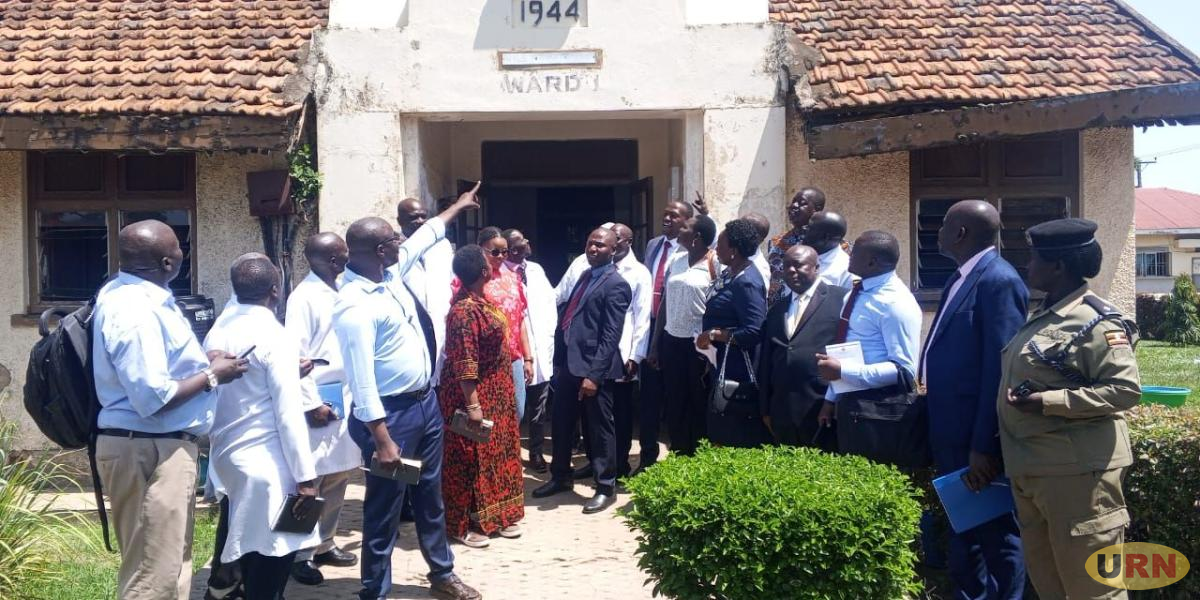
The concerns emerged on Wednesday, September 9, when the Parliamentary Health Committee inspected the facility and found serious gaps affecting service delivery across the outpatient department, casualty, emergency unit, general wards, maternity and theatre. The committee, led by chairperson Dr Monday Julius Rude, said the condition of the hospital was unacceptable for a regional referral and teaching facility serving thousands of people from the wider Teso sub-region.
“We have visited but have seen the worst of Soroti Regional Referral Hospital,” Dr Rude said. He said the maternity unit has only six delivery sets, while the theatre has just two operating tables, making it difficult for the facility to cope with the number of patients requiring surgery. “This is unacceptable. This is a facility that is only having two beds in a theatre and a very small-sized theatre building,” he said.

Hospital officials told the committee that the limited theatre space has forced medical workers to operate in shifts, including working on weekends, to manage the workload. Soroti Regional Referral Hospital Executive Director Dr Watmon Benedict said the facility has a traditional bed capacity of 278, but its staffing level is only about 23 percent of the approved establishment.
He said the hospital has 283 staff, only slightly above the 267 recorded in 2021, while only 15 specialists are available against the hospital’s needs. The ageing infrastructure is also raising safety concerns. Dr Watmon said the hospital has an old electrical wiring system and underground cables that require a complete overhaul.
“We have the very old wiring system. Each time we are trying to improve but some underground wires, they need to overhaul the whole system,” he said. The hospital has since involved Uganda Electricity Distribution Company Limited-UEDCL and engineers from Soroti University to assess the electrical system, with both assessments recommending a complete overhaul.
“We need an overhaul of the electrical system,” Dr Watmon said. Officials told the committee that a doctor was previously electrocuted in the theatre, raising further concern over the safety of staff and patients. Dr Rude said the problems could not be solved through piecemeal renovations and called for a modern regional referral and teaching hospital.
“We think the health of every Ugandan matters and must be put first,” he said. The proposed new hospital could be built on 50 acres of land offered by Soroti University. Prof Samuel Kabwigu, Dean of the university’s School of Health Sciences, said the land had been offered to facilitate expansion of the hospital and strengthen Soroti’s role as a regional teaching and referral centre.
“There is a willingness from government to help fund and construct a modern hospital. It is actually long overdue,” Prof Kabwigu said. Dr Watmon said the Ministry of Health has already expressed interest in constructing a new hospital on the university land and that development partners, including JICA, could support the project. However, he said alleged encroachment on the university land is making it difficult to secure a title for the 50 acres.
“We want that encroachment title cancelled so that we get a title, so that JICA comes and starts its project, and so that the Ministry of Health starts the other project,” Dr Watmon said. Staff shortages are also placing pressure on the regional referral hospital as lower-level health centres struggle to function effectively. Soroti City Health Officer Dr Okiror Noah said understaffing is one of the biggest challenges affecting health service delivery.
“Most of them want to run away, especially given the kind of numbers that we find there. We need to have staff,” he told the committee. He said even raising staffing levels to 50 percent would significantly improve service delivery. The committee was informed that 104 positions had been declared to the Health Service Commission for recruitment, while the hospital submitted a request for clearance to recruit additional workers to the Ministry of Public Service on August 20.
Soroti City East MP Attan Moses Okia said Soroti East Division Health Centre III has only 10 workers out of an approved 55, while Soroti West Division Health Centre III has 12 out of 55. He said this shortage is contributing to congestion at the regional referral hospital because patients who should be managed at Health Centre IIIs are instead being referred to Soroti.
“We have a hospital under a lot of pressure. There are many cases that are not referrals, but they are as a result of the dysfunctional Health Centre IIIs,” Attan said. The committee also heard that the hospital has 377 million shillings in pension arrears accumulated between 2019 and 2022 and 221 million shillings in gratuity arrears. Officials said some pensioners have died while waiting for their payments.
The hospital has also experienced difficulties migrating from the Integrated Personnel and Payroll System (IPPS) to the Human Capital Management System, while the absence of an internal auditor since January 2025 has complicated the processing of some payments.
At Princess Diana Health Centre IV, which supports the regional referral hospital during emergencies and power outages, the committee was told that the theatre is dilapidated and the operating table is in poor condition. The facility has only 39 staff against an approved establishment of 130. Attan also raised concerns about Otatai Health Centre III, saying construction had been completed, but the facility lacked staff, equipment and electricity.
The hospital itself does not have a dedicated electricity line and therefore experiences frequent power interruptions. Attan said major regional referral hospitals such as Mbale, Lira and Gulu have dedicated power lines and asked Parliament to push the Ministry of Energy and the Ministry of Health to provide one for Soroti. The hospital’s 16-slice CT scanner was also reported to be non-functional because of servicing challenges and is considered outdated compared with newer machines being deployed elsewhere.
Dr Rude recommended that Soroti benefit from the Ministry of Health’s new equipment programme, including a 128-slice CT scanner. The committee also raised concern over allegations of extortion in the handling of dead bodies and post-mortem examinations. Dr Rude said post-mortem services are supposed to be free and warned health workers and police officers against demanding money from grieving families.
“I must be on record to say that issues of extortion that are even involving police for dead bodies to collect money is unacceptable,” he said. He directed that the allegations be investigated. “No Ugandan should be made poor because they don’t have money to access services,” he said.
The committee said the matter had been referred to the relevant police authorities for investigation. Despite the challenges, Dr Rude commended the hospital for improving the management of medicines and medical supplies, saying it was experiencing fewer drug stock-outs than many other facilities.
He also warned health workers against absenteeism and called for persistent cases to be investigated and, where necessary, referred to police. The committee tasked the Soroti City and district health authorities with strengthening supervision of lower-level facilities and investigating why some health centres are not operating effectively, particularly at weekends.
Dr Rude said Parliament would also scrutinise the utilisation of funds at Katakwi General Hospital, including the 145 million shillings allocated to the facility. He commended health workers at Soroti Regional Referral Hospital for continuing to serve despite the difficult conditions, singling out senior specialists Prof Epodoi and Prof Ajiko. “We are honoured that indeed you still consider serving Ugandans with your experience and expertise. You could have run away, but you have chosen to stay and stand with us, the suffering Ugandans,” he said.
The committee said it would table the concerns before Parliament and engage the Ministry of Health and other government agencies on the construction of a new hospital, recruitment of staff, infrastructure improvement and provision of equipment. Dr Rude said the ultimate goal is to secure a modern regional referral and teaching hospital that can adequately serve the population of Teso and reduce pressure on health facilities in Kampala-URN. Give us feedback on this story through our email: kamwokyatimes@gmail.com